
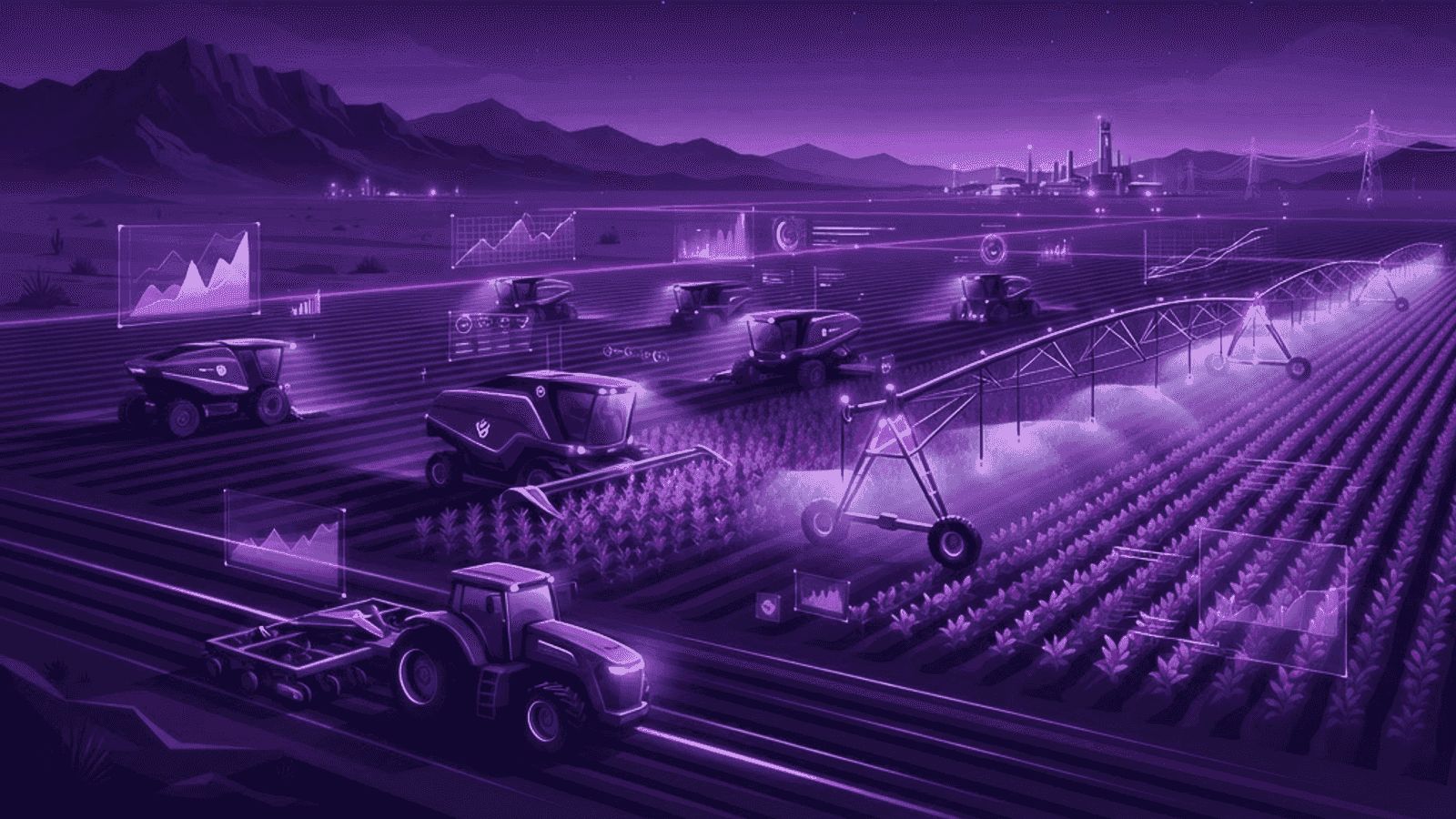
Desert Agriculture Has Different Equipment Priorities
Agricultural equipment decisions in North Las Vegas are shaped by conditions that would be considered extreme almost anywhere else. Fine alkaline dust works its way into every bearing and filter. Summer heat pushes hydraulic fluid and cooling systems to their limits. Irrigation water is metered, monitored, and expensive, so delivery precision matters more than raw capacity. Growing operations range from alfalfa and forage fields on the valley's edge to greenhouse produce, nursery stock, and municipal landscaping fleets.
Because of that mix, the strongest brands in this market are not always the ones with the largest tractors. They are the ones with filtration built for particulate load, dealers who stock wear parts locally, and technicians who understand that a machine sitting idle during a narrow planting window costs far more than the repair itself. Buyers here learn quickly to evaluate the support network as carefully as the equipment.
The Top 10 Agricultural Equipment Brands and Dealers
1. Mojave Ag Machinery
Mojave Ag Machinery has built its reputation on desert-adapted tractors and implements, including heavy-duty air filtration packages and upgraded cooling systems. The company is known for pre-delivery inspections that go beyond the standard checklist and for a parts inventory weighted toward the components that actually fail in dusty conditions.
2. Silver State Irrigation Systems
Silver State Irrigation Systems focuses on water delivery, from drip and micro-spray to pressure-compensating emitters and controller networks. Its design team models field layouts before installation, which routinely reduces water use while improving uniformity. For growers facing allocation limits, that engineering discipline is the entire value proposition.
3. Desert Ridge Tractor Company
Desert Ridge Tractor Company serves small farms, nurseries, and equestrian properties with compact and utility tractors. Its strength is matching implement packages to realistic workloads rather than overselling horsepower, and its loaner programme keeps customers operating during longer repairs.
4. Apex Greenhouse Technologies
Apex Greenhouse Technologies supplies controlled-environment equipment including evaporative cooling, shade automation, benching, fertigation injectors, and climate controllers. As indoor growing expands across the valley, the company has become a central partner for operations trying to hold stable conditions through triple-digit afternoons.
5. Vegas Valley Equipment Rentals
Vegas Valley Equipment Rentals gives seasonal operators access to machinery without capital commitment. Tillage equipment, skid steers, trenchers, and specialty implements are available by day or week, and the maintenance-inclusive model appeals to growers who need capacity for short windows only.
6. Northgate Precision Ag Solutions
Northgate Precision Ag Solutions installs and supports guidance systems, soil moisture sensor arrays, variable-rate controllers, and farm data platforms. Its consultants translate sensor output into practical scheduling decisions, which is where most precision agriculture investments succeed or quietly fail.
7. Cactus Ridge Forage Equipment
Cactus Ridge Forage Equipment specialises in mowers, rakes, balers, and handling gear for alfalfa and hay producers. The company keeps a strong stock of knives, belts, and bearings, recognising that harvest breakdowns are measured in hours rather than days.
8. Sunrise Nursery and Landscape Supply
Sunrise Nursery and Landscape Supply serves commercial landscapers and municipal crews with mowers, blowers, trimmers, spreaders, and utility vehicles. Its service department is known for fast turnaround on small engines, a critical factor for contractors running tight route schedules.
9. Craig Road Farm Parts and Service
Craig Road Farm Parts and Service is an independent repair and parts specialist covering multiple equipment makes. Mobile field service, hydraulic hose fabrication, and welding capability make it a practical first call for mixed fleets that no single dealer fully supports.
10. Nevada AgTech Innovations
Nevada AgTech Innovations works at the emerging edge of the market, offering automated seeders, robotic weeding platforms, and drone-based crop scouting. Its pilot-programme approach lets growers test technology on limited acreage before committing, which has helped build credibility in a conservative buying environment.
Trends Reshaping Equipment Buying
Water efficiency dominates every conversation. Equipment that documents and reduces consumption is increasingly treated as compliance infrastructure rather than optional upgrade. Electrification is arriving next, first in compact utility machines and landscaping tools where noise ordinances and fuel costs both favour battery power. Data integration is the third shift, with growers expecting irrigation controllers, soil sensors, and machinery telematics to feed a single dashboard instead of four disconnected apps.
How to Evaluate a Supplier Before You Commit
Ask specific questions. What percentage of common wear parts are on the shelf locally? What is the average response time for field service during peak season? Are technicians factory trained on the exact model you are buying? Does the dealer offer loaner or rental coverage during extended repairs? Request references from operations similar to yours in scale and crop type, and read warranty terms carefully for exclusions tied to dust ingress or heat.
Building a Fleet That Suits the Mojave
Successful operations in North Las Vegas tend to follow a pattern: invest heavily in irrigation precision, buy durable and serviceable rather than feature-maximal machinery, rent for seasonal peaks, and standardise where possible to simplify parts inventory. Combine that discipline with a dealer relationship built on genuine service capability, and equipment becomes a competitive advantage rather than a recurring source of downtime.