
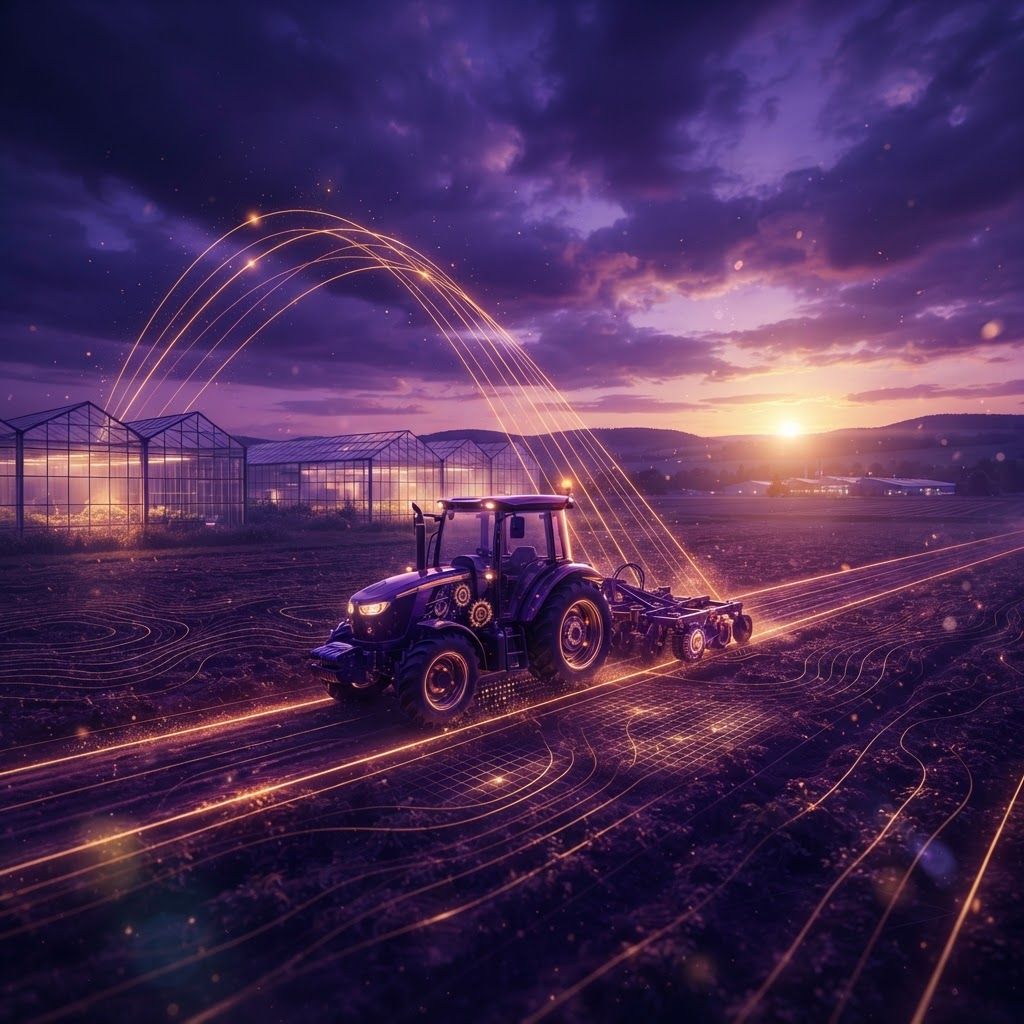
Equipment Decisions on Limited Acreage
Agricultural equipment buying in Newport News looks different from buying in Virginia's large rural counties. Farms here are typically smaller, fields are irregular, and access lanes are often tight. A machine sized for a thousand-acre grain operation is simply the wrong tool for a forty-acre diversified vegetable farm on the peninsula.
That reality has made compact and utility tractors, specialized implements, and controlled-environment systems the dominant categories locally. Buyers here prioritize maneuverability, multi-purpose capability, parts availability, and serviceability over raw horsepower. A tractor that can pull a bed shaper in spring, run a mower in summer, and handle a loader in winter earns its keep far better than a single-purpose machine.
How to Evaluate Agricultural Equipment Brands
Four factors matter most. Dealer support comes first, because downtime during a planting or harvest window is far more expensive than a price difference at purchase. A brand with responsive local service and stocked parts beats a cheaper brand supported from three hours away.
Second is implement compatibility. Standard three-point hitch categories and common PTO specifications keep future options open. Third is resale value, which varies substantially by brand and directly affects true ownership cost. Fourth is operator ergonomics and safety, since equipment that is comfortable and well-guarded gets used correctly and reduces injury risk during long days.
The Top 10 Agricultural Equipment Brands in Newport News
1. John Deere. The benchmark for dealer network depth and resale value. Their compact utility range suits peninsula acreage well, and integrated precision technology is mature and well-supported. The premium price is generally offset by strong residuals.
2. Kubota. Widely favored among small and mid-sized local farms for reliable diesel engines, excellent compact tractor ergonomics, and competitive pricing. Their sub-compact models handle greenhouse and orchard work where larger frames cannot fit.
3. New Holland. Strong in hay and forage equipment, which matters for the livestock and grazing operations in and around the city. Their utility tractors offer good visibility and loader performance.
4. Case IH. Best known for larger row-crop machinery, and relevant locally for contract operators serving surrounding counties. Their precision guidance systems are well-regarded for reducing overlap and input waste.
5. Massey Ferguson. A value-oriented choice with a long service history and straightforward mechanical design. Simpler systems appeal to operators who prefer to handle their own maintenance.
6. Mahindra. Increasingly common on small acreage for its price-to-capability ratio and robust build. Strong loader specifications at accessible price points have made it popular with part-time and beginning farmers.
7. Bobcat. Compact track loaders and skid steers dominate site work, manure handling, composting, and material movement. Attachment versatility is the core appeal, with a single machine covering many tasks.
8. Toro. A leader in irrigation systems, drip tape, controllers, and turf equipment. Water management is critical on sandy peninsula soils, and reliable irrigation hardware directly protects yield during dry spells.
9. Stihl. Handheld power equipment including chainsaws, trimmers, and blowers. Every farm needs dependable small equipment for fence lines, windbreaks, and storm cleanup, and reliability here saves considerable labor.
10. Rimol Greenhouse Systems. High tunnel and greenhouse structures engineered for coastal wind and snow loads. Season extension is one of the highest-return investments available to small growers, and structural quality determines whether a tunnel survives a nor'easter.
Trends in Farm Machinery
Precision agriculture has moved downmarket. GPS guidance, section control, and variable-rate application were once limited to large operations but are now available as retrofit kits affordable for mid-sized farms. The payback comes from reduced seed, fertilizer, and fuel waste rather than from dramatic yield gains.
Electrification is emerging at the small end. Battery-powered utility vehicles, compact loaders, and handheld tools reduce noise, eliminate exhaust in enclosed spaces like greenhouses and barns, and lower maintenance. Range and charging remain limitations for full-day field work, but the category is advancing steadily.
Automation is the longer-horizon trend. Autonomous weeding, robotic harvest assistance, and sensor-driven irrigation are in active deployment on specialty crop farms. For Newport News operations focused on high-value vegetables, labor-saving automation may prove more transformative than horsepower ever was.
Buying Advice for Local Farms
Match the machine to the narrowest access point on your property, not to the largest field. Many buyers regret oversizing after discovering a tractor cannot turn in a hoop house or pass between rows. Demo equipment on your own ground before purchasing, since brochure specifications rarely reveal how a machine handles wet coastal soil.
Consider used equipment seriously. A well-maintained tractor with moderate hours from a reputable dealer often delivers better value than a new budget-brand machine, particularly when parts availability is strong. Finally, budget for implements. New buyers routinely spend their entire allocation on the tractor and then discover they cannot afford the tools that make it useful.
Final Thoughts
The right agricultural equipment for Newport News is defined by fit rather than size. Compact, versatile, well-supported machinery paired with quality irrigation and season-extension infrastructure delivers the best return on the peninsula's smaller, higher-value farms. The brands listed here all have earned places in that mix, and the best choice depends less on badge loyalty than on honest assessment of your ground, your crops, and your service support.