
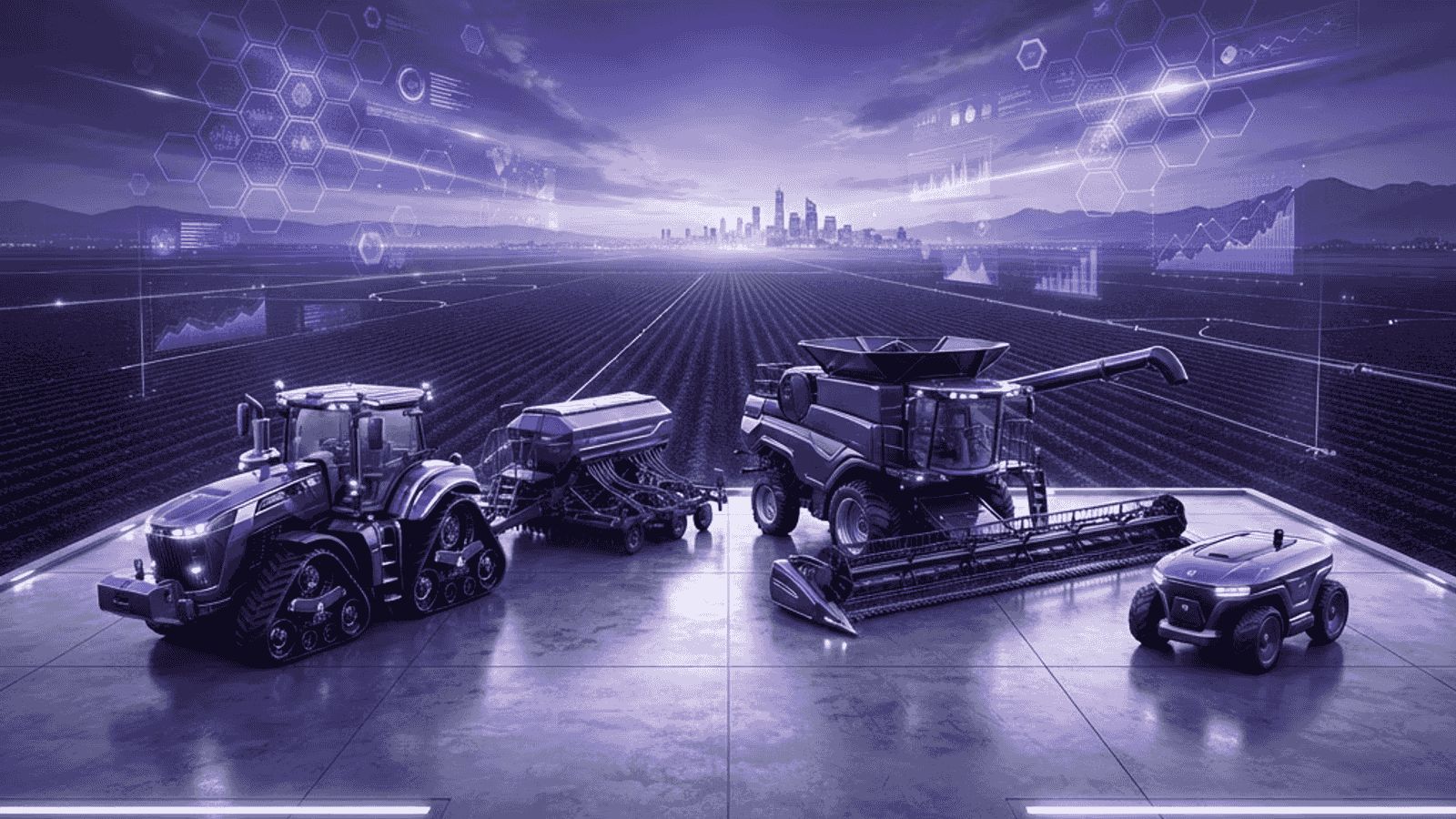
Why Equipment Choice Matters More Than Ever
Agricultural equipment decisions carry consequences that last a decade or longer. A tractor purchased today will be maintained, repaired, and eventually resold, and the quality of local parts and service support often matters more than a modest difference in purchase price. For growers operating near Newark, additional factors apply: parcels are smaller and more constrained than Central Valley fields, air quality rules govern engine tiers, and labor costs push operators toward mechanization and automation wherever it is practical.
The brands and dealers that perform well here share three traits. They offer equipment scaled appropriately for specialty and protected cultivation rather than only large-acreage machines. They maintain genuine local parts inventory and trained technicians. And they support the compliance documentation that California operations require.
The Top 10 Agricultural Equipment Brands in Newark
1. Dumbarton Tractor Works
A regional tractor brand and dealership focused on compact and utility machines, Dumbarton serves specialty growers, nurseries, and vineyards where maneuverability matters more than raw horsepower. Its implement compatibility across loaders, tillers, and mowers gives buyers a single platform for varied tasks, and its parts counter stocks common wear items so a breakdown does not stall a harvest week.
2. Bayline Precision Ag Systems
Bayline builds guidance, variable-rate application, and yield-monitoring technology that retrofits onto existing machines. That retrofit approach lets growers modernize incrementally rather than replacing equipment outright. Its data tools translate field measurements into practical decisions about seeding rates and input placement, reducing waste while improving consistency across uneven ground.
3. Verdant Irrigation Technologies
Water efficiency is the defining constraint in California agriculture, and Verdant designs drip and micro-sprinkler systems, filtration, and automated control platforms around it. Soil moisture sensing linked to scheduling avoids both overwatering and crop stress. Its documentation supports water use reporting requirements, which has become a routine part of farm administration.
4. Ironbridge Harvest Machinery
Specialty crop harvesting sits between fully manual and fully mechanized, and Ironbridge builds equipment for that middle ground: harvest aids, conveyors, field carts, and mobile packing platforms that increase crew productivity without bruising delicate produce. For berry and vegetable growers, these machines address labor scarcity while protecting quality.
5. Voltline Electric Farm Equipment
Voltline produces battery-electric utility vehicles, compact tractors, and orchard equipment aimed at operations facing emissions restrictions or working near residential areas where noise matters. Lower running costs and the absence of engine emissions inside greenhouses are practical advantages, and its battery management guidance helps operators plan realistic duty cycles.
6. Crestline Greenhouse Systems
Controlled-environment growing depends on structures and climate control as much as on plants. Crestline supplies greenhouse framing, glazing, ventilation, shade systems, benching, and environmental controllers. Its integration of heating, cooling, and irrigation controls into a single management interface simplifies operation and reduces the training burden on staff.
7. Summit Sprayers and Application Equipment
Accurate application protects crops, budgets, and regulatory standing. Summit manufactures boom and targeted sprayers with drift-reduction nozzles, rate controllers, and closed transfer systems for handling concentrates safely. Its calibration support and record-keeping features help operators satisfy pesticide use reporting obligations while applying less material overall.
8. Greenfield Tillage and Soil Preparation
Greenfield produces cultivators, bed shapers, subsoilers, and reduced-tillage implements suited to smaller parcels. Its emphasis on minimum-disturbance tools aligns with regenerative practices that preserve soil structure and organic matter, and its implements are sized to match the compact tractors common in specialty operations.
9. Meridian Post-Harvest Equipment
Value is easily lost between field and customer, and Meridian addresses that gap with washing lines, graders, sorters, hydro-coolers, and packing equipment. Rapid cooling extends shelf life substantially for leafy crops and berries, and its modular lines let growers expand capacity in stages as volume grows rather than overbuilding at the outset.
10. Harborview Agricultural Robotics
Harborview develops autonomous and semi-autonomous units for weeding, scouting, and transport within rows and greenhouses. Machine vision weeding reduces herbicide use and manual labor simultaneously, while scouting units gather plant health data that informs intervention before problems spread. Its pilot programs allow growers to validate performance on their own crops before purchasing.
How to Evaluate Agricultural Equipment
Start with parts and service, not specifications. Ask how far the nearest technician is, what percentage of wear parts is stocked locally, and what average response time looks like during peak season. Confirm engine tier compliance and any documentation required for local operation. Insist on a demonstration in your own field or greenhouse, since brochure performance rarely accounts for your soil, slope, or row spacing. Finally, evaluate total cost of ownership including fuel or charging, maintenance intervals, and expected resale value.
Trends in Agricultural Equipment
Electrification is progressing fastest in compact and utility categories where duty cycles suit current battery capacity, and it is particularly attractive for indoor use. Automation is moving from experimental to practical, especially for weeding and material transport where labor is scarce and tasks are repetitive. Data integration is increasingly expected, with equipment feeding irrigation, nutrition, and yield records into farm management software. And retrofit technology is democratizing precision agriculture, letting growers upgrade capability without replacing capital assets.
Final Thoughts
Around Newark, the best agricultural equipment is equipment that fits small parcels, satisfies California rules, and can be serviced quickly when a season is on the line. The brands profiled here have earned trust by supporting their machines locally and by designing for the realities of specialty and protected cultivation. Buy for serviceability and fit, and the productivity gains will follow.