
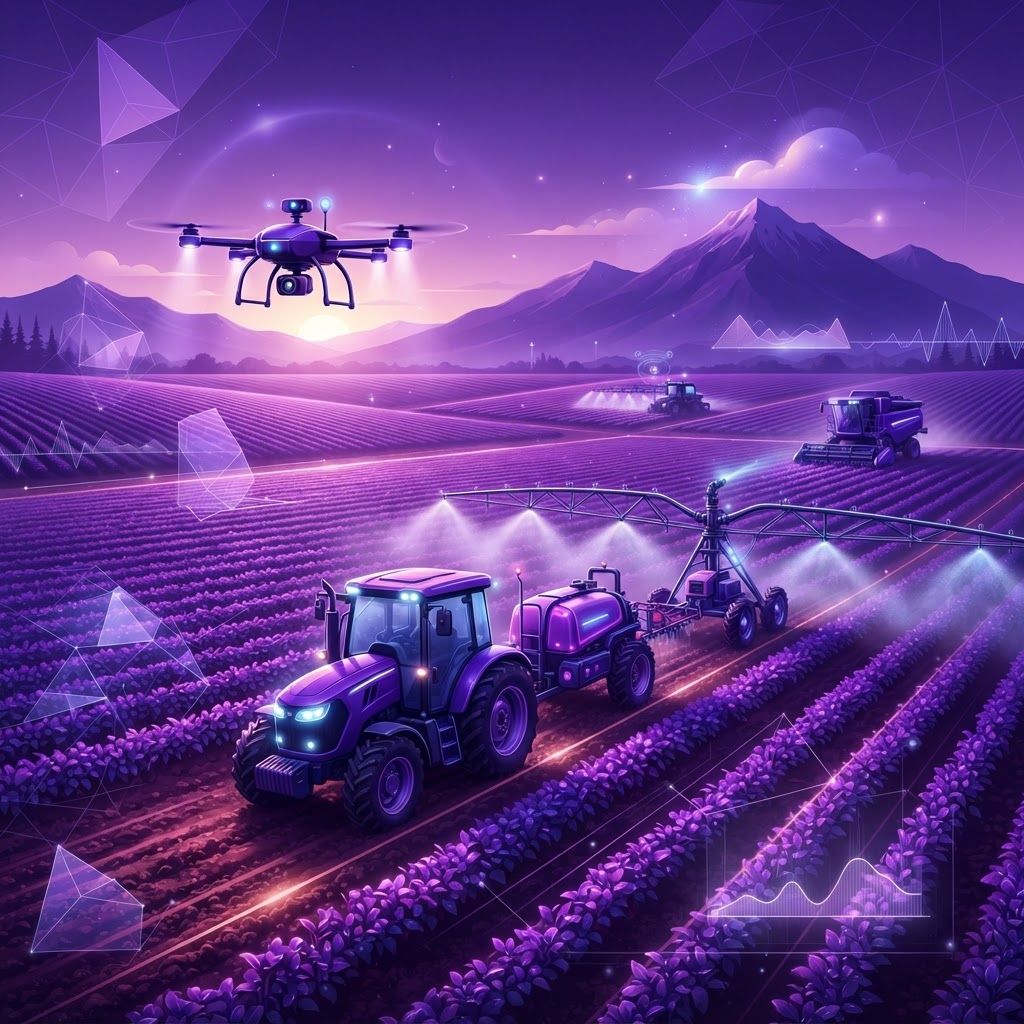
Agricultural Equipment for Inland Growing Conditions
Farming around Moreno Valley demands equipment suited to specific conditions: compact operations working between urban development, groves and nurseries requiring maneuverable machines, extreme summer heat that stresses engines and hydraulics, and water scarcity that makes irrigation technology the single highest-value investment on many properties.
Equipment selection here differs from Central Valley row crop farming, where scale favors the largest available machines. Local growers more often need versatile, compact, and precision-oriented equipment that performs multiple jobs on limited acreage, along with dealer support that keeps machines running through critical windows.
Equipment Categories That Matter Most
Understanding the categories helps growers prioritize capital spending.
- Tractors and utility vehicles: Compact and mid-size machines for cultivation, hauling, and loader work.
- Irrigation systems: Drip, micro-sprinkler, filtration, and control technology.
- Sprayers and application equipment: Precision application that reduces chemical use and drift.
- Harvesting and handling: Bins, conveyors, platforms, and specialty harvest aids.
- Precision agriculture technology: Sensors, guidance systems, and farm management software.
Top 10 Agricultural Equipment Brand Categories in Moreno Valley
1. Compact Utility Tractor Brands
Sub-compact and compact tractors dominate local operations because they fit between tree rows and handle loader, mower, and tiller attachments. Hydrostatic transmissions and quick-attach implements deliver the flexibility small farms need.
2. Drip Irrigation System Brands
Emitter tubing, filtration, and pressure regulation products form the backbone of water-efficient farming. Reliable emitter uniformity and clog resistance matter more than headline cost per foot.
3. Micro-Sprinkler and Fan Jet Brands
Widely used in groves and nurseries where wider wetting patterns suit tree root zones, with options tuned to specific flow rates and spacing.
4. Irrigation Control and Automation Brands
Controllers, flow meters, and soil moisture sensors that automate scheduling. These systems often deliver the fastest payback of any equipment purchase through water savings alone.
5. Orchard and Vineyard Sprayer Brands
Air-blast and targeted sprayers designed for tree and vine canopies, with drift reduction technology increasingly important under California application regulations.
6. Tillage and Cultivation Implement Brands
Discs, cultivators, subsoilers, and bed shapers matched to compact tractor horsepower, chosen based on soil type and moisture conservation goals.
7. Mowing and Vegetation Management Brands
Flail mowers, rotary cutters, and orchard mowers used for cover crop management, fire fuel reduction, and grove floor maintenance.
8. Greenhouse and Nursery Equipment Brands
Benches, potting machines, environmental controls, and shade systems supporting the region's substantial nursery and controlled environment sector.
9. Harvest Handling and Bin Equipment Brands
Field bins, trailers, conveyors, and picking platforms that reduce labor intensity and product damage during harvest.
10. Electric and Autonomous Equipment Brands
Battery-powered tractors, autonomous mowers, and robotic tools entering the market as emissions regulations tighten and labor availability constrains operations.
Trends in Agricultural Equipment
Precision technology has moved from experimental to practical. GPS guidance, variable rate application, and sensor-driven irrigation now deliver measurable input savings on operations far smaller than once assumed, and the data these systems generate helps growers make planting and pruning decisions with real evidence.
Electrification is arriving steadily. California emissions regulations affecting off-road diesel engines, combined with improving battery performance, have made electric compact tractors and utility vehicles genuinely viable for many local operations, particularly those near residential areas where noise matters.
Autonomy is progressing in specific tasks rather than wholesale. Autonomous mowing, spraying, and monitoring have proven most practical, addressing labor shortages in repetitive work while keeping skilled operators focused on judgment-intensive tasks.
How Growers Should Evaluate Equipment
Prioritize dealer support over brand prestige. A machine that sits waiting for parts during harvest costs far more than the price difference between brands. Ask about local parts inventory, technician availability, response times, and loaner equipment policies before committing.
Match horsepower and hydraulic capacity to implements deliberately, since undersized tractors struggle and oversized machines waste fuel and compact soil. Demand a field demonstration under your actual conditions, including slope, soil, and row spacing.
Finally, calculate payback on irrigation and precision technology specifically. Water savings, reduced chemical application, and labor reduction often justify these investments within a few seasons, making them higher priority than replacing a functioning tractor.
Maintenance Practices for Extreme Heat
Inland summer conditions accelerate wear in ways that catch newer operators by surprise. Cooling systems work harder, hydraulic fluid thins at high temperature and reduces efficiency, tire pressures rise, and rubber components degrade faster under ultraviolet exposure. Adjusting maintenance intervals to reflect actual operating conditions, rather than following manuals written for moderate climates, prevents the mid-season failures that occur precisely when equipment is needed most.
Practical steps make a substantial difference. Cleaning radiator screens and cooling fins frequently in dusty conditions, checking hydraulic fluid condition rather than only level, greasing pivot points more often during heavy use, and storing equipment under shade or cover all extend service life. Battery maintenance matters as well, since heat shortens battery life considerably more than cold does.
Irrigation systems require their own maintenance discipline. Filters clog, emitters plug with mineral deposits, and pressure regulators drift out of calibration, all of which create uneven water distribution that shows up as inconsistent crop performance long before anyone inspects the hardware. Regular flushing, periodic emitter uniformity checks, and monitoring flow against expected values catch these problems early. Growers who maintain irrigation as rigorously as they maintain tractors consistently see better yields and lower water bills.
Final Thoughts
Agricultural equipment available to Moreno Valley growers spans compact tractors, irrigation and automation, sprayers, tillage, mowing, nursery systems, harvest handling, and emerging electric and autonomous machines. Choosing equipment based on local support, right-sizing, and demonstrated payback produces far better outcomes than selecting on specifications or brand loyalty alone.