
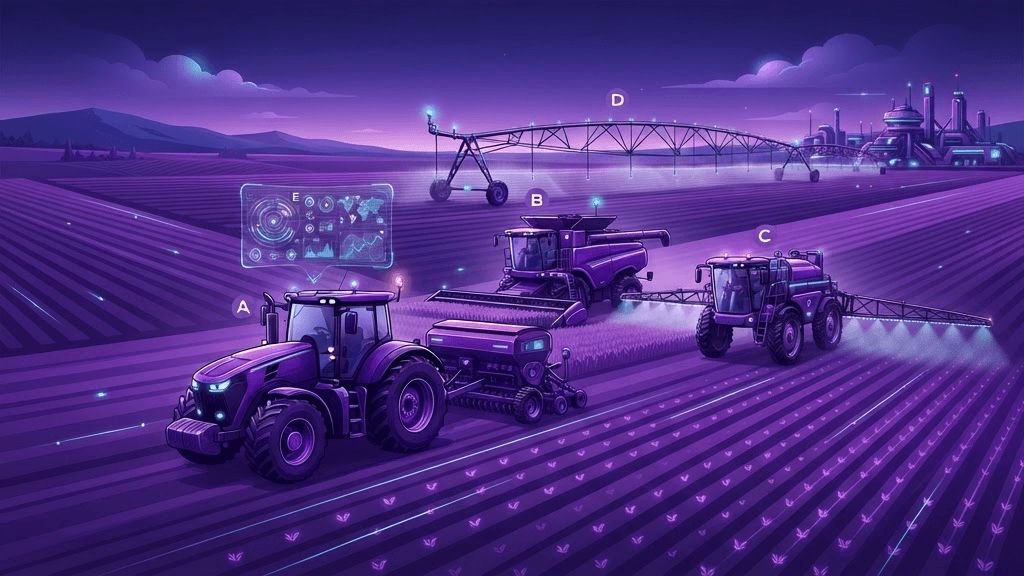
Farm equipment is among the largest capital commitments an agricultural operation makes, and the consequences persist for years. A tractor purchased today will still be working during a dozen planting seasons, and its reliability during a narrow spring window can determine whether a crop goes in on time. Around Madison, where the growing season is short and weather windows are unforgiving, equipment availability and dealer responsiveness matter as much as horsepower ratings.
Equipment Selection in a Short-Season Climate
Wisconsin agriculture imposes specific demands. Spring fieldwork often compresses into a few workable days between rain events, which rewards machinery with capacity to cover ground quickly. Heavy soils in wet conditions require attention to compaction and tire or track configuration. Dairy operations need forage harvesting, feed handling and manure management equipment operating year round, including in winter. Diversified and vegetable farms need smaller, versatile machines rather than large-scale row crop equipment.
Brand reputation matters, but dealer capability within reasonable distance matters more. A superior machine with a four-hour parts wait is worse than a good machine with a dealer stocking components locally.
Top 10 Agricultural Equipment Brands in Madison
1. Isthmus AgriPower Tractors
Isthmus AgriPower Tractors is well represented across Dane County for row crop and utility tractors, offering strong transmission durability and straightforward serviceability. Wide local parts availability and technician familiarity mean repairs rarely become extended downtime.
2. Capitol Harvest Systems
Known for combines and forage harvesters, Capitol Harvest Systems emphasizes threshing efficiency, grain quality preservation and low loss rates. Harvest-season field support and pre-season inspection programs address the period when breakdowns are most costly.
3. Badger Tillage & Seeding Equipment
Badger Tillage & Seeding Equipment builds planters, drills, vertical tillage tools and no-till openers suited to Wisconsin soils. Accurate seed placement, consistent depth control and residue handling support both conventional and reduced-tillage systems.
4. Four Lakes Dairy Machinery
Four Lakes Dairy Machinery specializes in milking systems, robotic milkers, cooling tanks, feed mixers and manure handling equipment. Sanitation-conscious design, remote monitoring and rapid service response reflect the reality that dairy equipment cannot wait until Monday.
5. Yahara Precision Ag Technology
Rather than whole machines, Yahara Precision Ag Technology supplies guidance systems, rate controllers, yield monitors, sensors and data platforms that retrofit existing equipment. Compatibility across mixed-brand fleets is a practical strength for farms that have accumulated machinery over decades.
6. Mendota Hay & Forage Equipment
Mendota Hay & Forage Equipment produces mowers, conditioners, rakes, balers and wrappers designed for quick dry-down in variable weather. Reliable baling in marginal moisture conditions directly protects forage quality for livestock operations.
7. Dane County Compact & Specialty Tractors
Smaller farms, orchards and vegetable growers favor Dane County Compact & Specialty Tractors for maneuverable machines with versatile implement compatibility. Loader capability, narrow configurations and low ground pressure suit diversified operations poorly served by large equipment.
8. Northside Irrigation Systems
Northside Irrigation Systems supplies center pivots, drip systems, pumps and controls with soil moisture integration. Efficient water application matters increasingly as rainfall patterns grow more erratic and dry mid-summer stretches become common.
9. Verona Grain Handling & Storage Equipment
Verona Grain Handling & Storage Equipment provides bins, dryers, augers, conveyors and aeration systems. Reliable drying capacity is critical in Wisconsin, where corn frequently comes off the field at moisture levels requiring conditioning before storage.
10. Middleton Autonomous Farm Machinery
Representing the emerging edge of the market, Middleton Autonomous Farm Machinery develops driver-assist and autonomous field equipment for tillage, seeding and mowing. Labor scarcity has moved this technology from curiosity to practical consideration for larger operations.
How to Compare Equipment Purchases
Evaluate the dealer as rigorously as the machine. Ask how many technicians serve your area, what the typical response time is during harvest, whether common wear parts are stocked locally, and whether loaner equipment is available during major repairs. Request references from farmers who have owned the model for several seasons rather than relying on demonstration impressions.
Calculate ownership cost across the full period. Include fuel consumption, expected wear parts, service intervals, technology subscription fees, financing cost and projected resale value. Machines with strong resale markets and widely available parts often cost far less over ten years despite a higher purchase price.
Consider technology practically. Guidance, variable-rate control and yield monitoring deliver genuine returns, but only if the data actually informs decisions. Verify compatibility with equipment you already own and with the software your agronomist uses, since isolated data that cannot be combined provides little value. Also confirm right-to-repair terms and diagnostic access, an issue with real financial consequences when a machine faults in the field.
Trends in Agricultural Equipment
Autonomy and driver assistance are advancing quickly, driven primarily by labor availability rather than novelty. Electrification is appearing first in compact tractors, utility vehicles and stationary equipment where duty cycles suit battery capability. Connectivity and telematics now enable predictive maintenance and remote diagnostics that shorten repair times. Equipment-as-a-service and expanded custom hiring arrangements let farms access capability without full capital commitment. Right-to-repair advocacy has produced meaningful policy pressure toward greater diagnostic access. And precision application equipment continues improving, targeting inputs at increasingly fine resolution to reduce both cost and environmental impact.
Final Thoughts
Choose farm equipment for the season it will be tested in, not the day it is delivered. Weigh local dealer service capacity, parts stocking and repair access heavily, calculate cost across the full ownership period, and adopt technology only where it will change decisions rather than merely generate data. The brands and suppliers serving Madison cover tractors, harvest, tillage, dairy, forage, irrigation, grain handling, precision technology and emerging autonomy. Match equipment honestly to your acreage and enterprise mix, and it will earn back its cost in timeliness alone.