
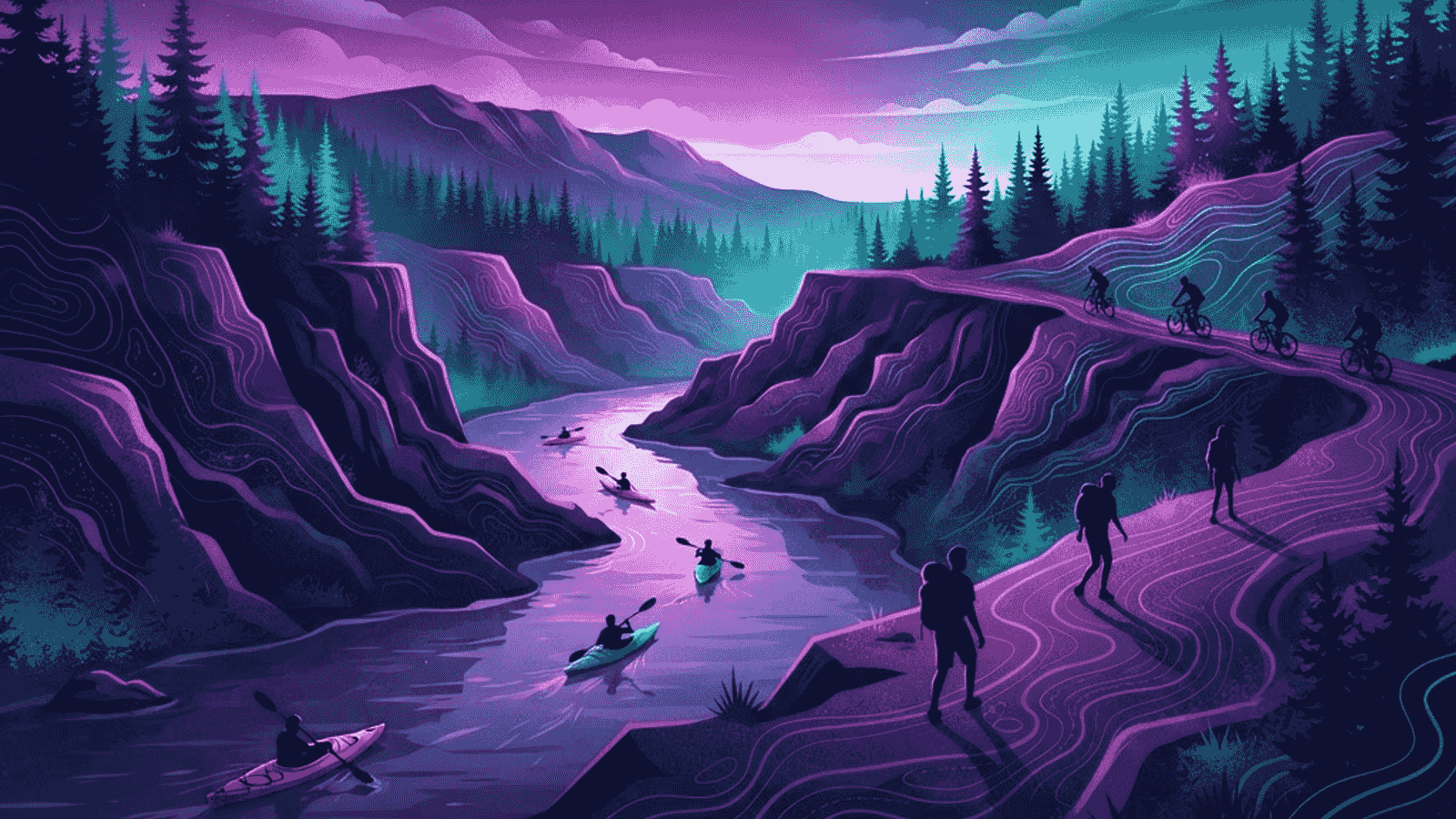
Adventure Access From Minnesota's Capital
Few mid-sized American cities sit as close to serious outdoor terrain as St. Paul does. The Mississippi River gorge runs directly through the metro, offering paddling and riverside trail systems within minutes of downtown. Drive a few hours north and you reach the Boundary Waters Canoe Area Wilderness, one of the most significant paddling destinations in North America. Head east and the St. Croix River valley provides bluffs, rock climbing, and quiet water. Head northeast and Lake Superior's North Shore delivers waterfalls, ridge hiking, and winter ice climbing.
This proximity has produced a mature outfitting industry. Local companies range from urban day-trip operators to full expedition services handling permits, gear, food planning, and shuttle logistics for multi-week wilderness routes.
Categories of Adventure Available
Paddling dominates, including canoeing, kayaking, and stand-up paddleboarding on rivers, lakes, and wilderness routes. Cycling covers both extensive paved trail networks and gravel routes through farmland and river valleys. Climbing options include river-valley crags and indoor training facilities. Winter activity is a genuine season here rather than an off-period, encompassing cross-country skiing, fat biking, ice climbing, snowshoeing, and dogsledding.
Ten Adventure Companies to Know
1. Wilderness Inquiry
A nationally respected organization based in the Twin Cities that runs inclusive outdoor adventures designed for participants of all abilities. Its canoe programs on the Mississippi and expeditions across North America are known for strong safety culture and genuine accessibility.
2. Above the Falls Sports
Offering guided paddling and rentals on the Mississippi within the metro, this outfitter makes urban river adventure accessible without a long drive. Trips typically combine paddling instruction with river history and ecology.
3. Midwest Mountaineering
A cornerstone of the local outdoor community, providing gear, expertise, and clinics for backcountry travel. Its staff knowledge and educational programming make it a natural first stop for anyone planning a wilderness trip.
4. Piragis Northwoods Company
An Ely-based outfitter widely regarded for Boundary Waters canoe trips. Services include lightweight canoe rental, permit assistance, route planning, food packing, and guided expeditions for paddlers of varied experience.
5. Voyageur North Outfitters
Another established Boundary Waters outfitter offering complete and partial outfitting packages. Trip planners value its route recommendations calibrated to portage tolerance and desired solitude.
6. Vertical Endeavors
Operating indoor climbing facilities in the metro, this company provides instruction, training, and a pathway to outdoor climbing. It functions as year-round preparation for climbers who head to the river valleys and North Shore in season.
7. Trailhead Cycling Adventures
A cycling-focused operator running supported rides on regional trail systems and gravel routes. Trips generally include mechanical support and route navigation, which lowers the barrier for newer riders.
8. Boundary Waters Guide Service
Specializing in fully guided wilderness canoe trips, this operation handles camp logistics and navigation so participants can focus on the experience. Popular with first-time wilderness travelers and family groups.
9. Positive Energy Outdoors
Providing guided paddling, skiing, and team-based outdoor programming, this company emphasizes skill development and environmental education alongside recreation.
10. North Country Expeditions
Focused on winter adventure including dogsledding, snowshoeing, and cold-weather camping instruction. It is a strong option for travelers who want to experience the Minnesota winter deliberately rather than endure it.
Choosing the Right Trip
Be honest about fitness and experience. Boundary Waters routes vary enormously in difficulty, and portage length and frequency matter more than total mileage. Ask outfitters direct questions about daily distances, portage counts, weight carried, and expected weather. For guided trips, confirm guide certifications, wilderness first aid credentials, group size, and the ratio of guides to participants.
Clarify what outfitting includes. Complete packages typically cover canoe, paddles, life jackets, tents, sleeping systems, cooking gear, food, permits, and shuttle service. Partial packages assume you bring personal equipment. Understanding the split prevents arriving without something essential.
Safety and Seasonal Planning
Water temperatures in Minnesota remain dangerously cold well into spring, making immersion a serious risk during early-season paddling. Insects peak in early summer, particularly in the north woods. Late summer and early fall often deliver the best combination of warm days, cool nights, and reduced insect pressure. Winter travel requires legitimate cold-weather systems, and reputable operators will inspect your clothing before departure rather than assume readiness.
Trends in Adventure Travel
Demand has shifted toward shorter, higher-quality trips that fit limited vacation time. Gravel cycling continues to expand rapidly across Minnesota's rural road network. Winter recreation participation has grown, with fat biking and cross-country skiing drawing new audiences. Outfitters are placing more emphasis on Leave No Trace practices, permit compliance, and reducing pressure on heavily used entry points. Accessibility programming has also improved substantially, with adaptive equipment becoming more widely available.
Final Thoughts
St. Paul's real advantage is range: a paddler can spend a weekday evening on the Mississippi and a long weekend deep in wilderness with no flight involved. Start with a guided day trip if you are new, build skills through local clinics, then progress to self-supported wilderness travel with outfitter support. Choose companies that ask about your experience before selling you a route, because that question is the clearest sign of a responsible operator.