
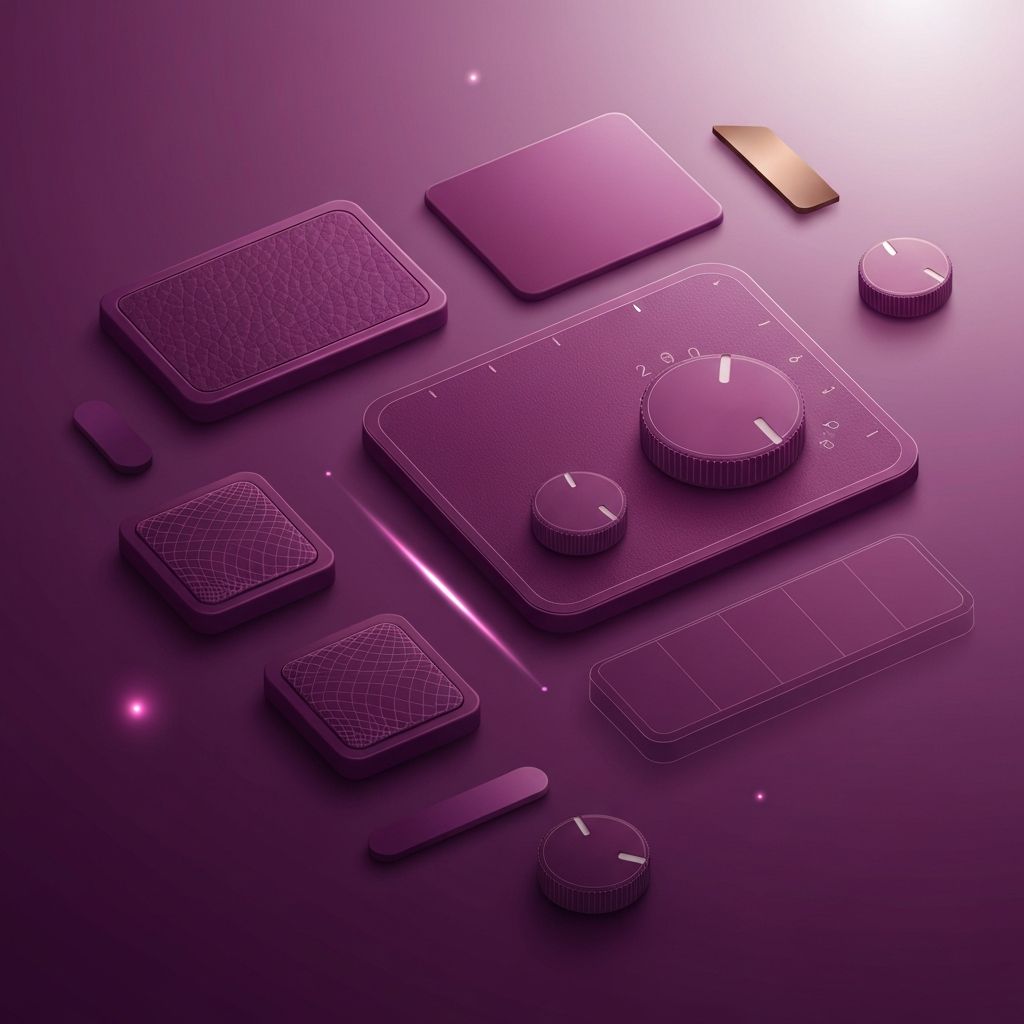
What Is Skeuomorphism in Web Design?
Skeuomorphism is the design practice of making digital elements resemble their real-world counterparts. A calendar app that looks like a leather-bound planner, a notes app with yellow legal-pad texture, a music app with a wooden turntable interface — these are all classic skeuomorphic designs. The goal is to leverage familiarity: by mimicking real objects, digital interfaces feel intuitive to users who already understand how the physical versions work.
Skeuomorphism dominated early digital design, particularly in the era of Apple's iOS before iOS 7. Then flat design and material design swept it away, promising cleaner, faster, and more scalable interfaces. But designers never fully abandoned the principles behind skeuomorphism, and today a refined, hybrid version is coming back in a big way.
Modernize Your Design With AAMAX.CO
Bringing skeuomorphic elements into a modern web design requires balance, restraint, and craftsmanship. AAMAX.CO is a full-service digital marketing company that helps brands blend tactile realism with modern usability and performance. Their team understands when a subtle shadow, texture, or 3D effect adds delight, and when it becomes visual noise. They can design interfaces that feel rich and immersive without sacrificing speed, accessibility, or responsive behavior.
The Rise and Fall of Classic Skeuomorphism
In the late 2000s and early 2010s, skeuomorphism was everywhere. Apps had realistic shelves, leather stitching, torn paper, glossy buttons with highlights and gradients, and drop shadows that suggested depth. Designers like Louis Mingrone and studios like Apple pushed the style to its most polished form.
The pushback came when users grew accustomed to digital interfaces and no longer needed real-world metaphors to understand them. Flat design offered cleaner typography, faster loading, and better scaling across screen sizes. When Apple launched iOS 7 in 2013 with its flat aesthetic, skeuomorphism was effectively declared dead — at least in its traditional form.
Why Skeuomorphism Is Making a Comeback
Design trends are cyclical, and skeuomorphism is returning for several reasons. First, flat design became so minimalist that interfaces began to feel cold, anonymous, and hard to differentiate. Users missed the warmth, personality, and tactile cues of older designs. Second, devices are now powerful enough to render complex visuals without compromising performance. Third, designers have learned how to use skeuomorphic touches selectively rather than overwhelming the entire interface.
This modern revival is often called neomorphism or neumorphism, but the broader trend includes any design that uses realistic textures, shadows, depth, and physicality to create more engaging interfaces. Glassmorphism, with its frosted glass effects, is another example of this renewed interest in depth and realism.
Benefits of Skeuomorphic Web Design
Used thoughtfully, skeuomorphism delivers real value. It communicates affordance — users can tell at a glance which elements are clickable, draggable, or pressable, because the visual cues mirror physical buttons and switches. It creates delight through small details, textures, and animations that make an interface feel polished and premium. It differentiates a brand in a sea of flat, nearly identical websites. And it can evoke emotion, nostalgia, and craftsmanship in ways that purely minimal designs cannot.
For industries where craftsmanship is part of the value proposition — luxury watches, artisanal food, premium audio equipment, independent publications — skeuomorphism can communicate quality in a single glance.
Principles of Modern Skeuomorphism
Modern skeuomorphism is not a return to leather-stitched calendars and torn-paper notebooks. It is a more restrained, sophisticated approach. Key principles include subtle depth through layered shadows, gentle gradients that suggest material without imitating it literally, selective use of realistic textures, and purposeful microinteractions that mirror physical behaviors.
Buttons might have soft, realistic shadows that push inward when pressed. Cards might feature layered textures that subtly hint at paper or metal. Toggles might animate with physics that mimic real switches. The goal is to enhance usability, not to show off. Professional website design services know how to walk this line well.
Performance and Accessibility Considerations
Heavy textures, high-resolution images, and complex shadows can slow down a website if not implemented carefully. Designers should use CSS for most effects — gradients, box shadows, and filters are far lighter than background images. When textures are essential, they should be optimized, compressed, and loaded efficiently.
Accessibility is another important concern. Low-contrast neumorphic buttons can be difficult for users with visual impairments. Always test color contrast, ensure that interactive elements have clear focus states, and provide alternative cues beyond shadows and textures for users relying on assistive technology.
When to Use Skeuomorphic Design
Skeuomorphism works best when it supports the content, not competes with it. Use it to signal interactivity, to reinforce brand personality, or to create memorable hero moments. It is ideal for lifestyle brands, portfolios, premium products, and creative tools.
Avoid it for dense information interfaces like dashboards, spreadsheets, or admin panels, where visual noise can impair readability. Productivity tools usually benefit from flatter, cleaner designs. For custom applications that require performance-first interfaces, explore web application development to find the right balance between usability and delight.
Combining Skeuomorphism With Other Styles
The best modern designs do not commit exclusively to one style. They blend flat design's clarity with skeuomorphism's warmth, sprinkle in motion design's life, and borrow glassmorphism's depth when it serves the narrative. A hero section might feature a beautifully rendered 3D product, while the rest of the site remains clean and fast.
This hybrid approach lets designers use skeuomorphic touches as accents — on calls to action, feature modules, or interactive widgets — without overwhelming the entire experience. The result is a design that feels rich but never heavy.
Final Thoughts
Skeuomorphism is no longer the dominant style it once was, but the principles behind it — realism, tactility, and affordance — are more relevant than ever. Modern skeuomorphic web design uses these ideas selectively, blending them with flat design to create interfaces that feel warm, intuitive, and memorable. When applied with skill, it elevates your brand, delights your users, and sets your website apart from the sea of lookalike designs on the web today.