
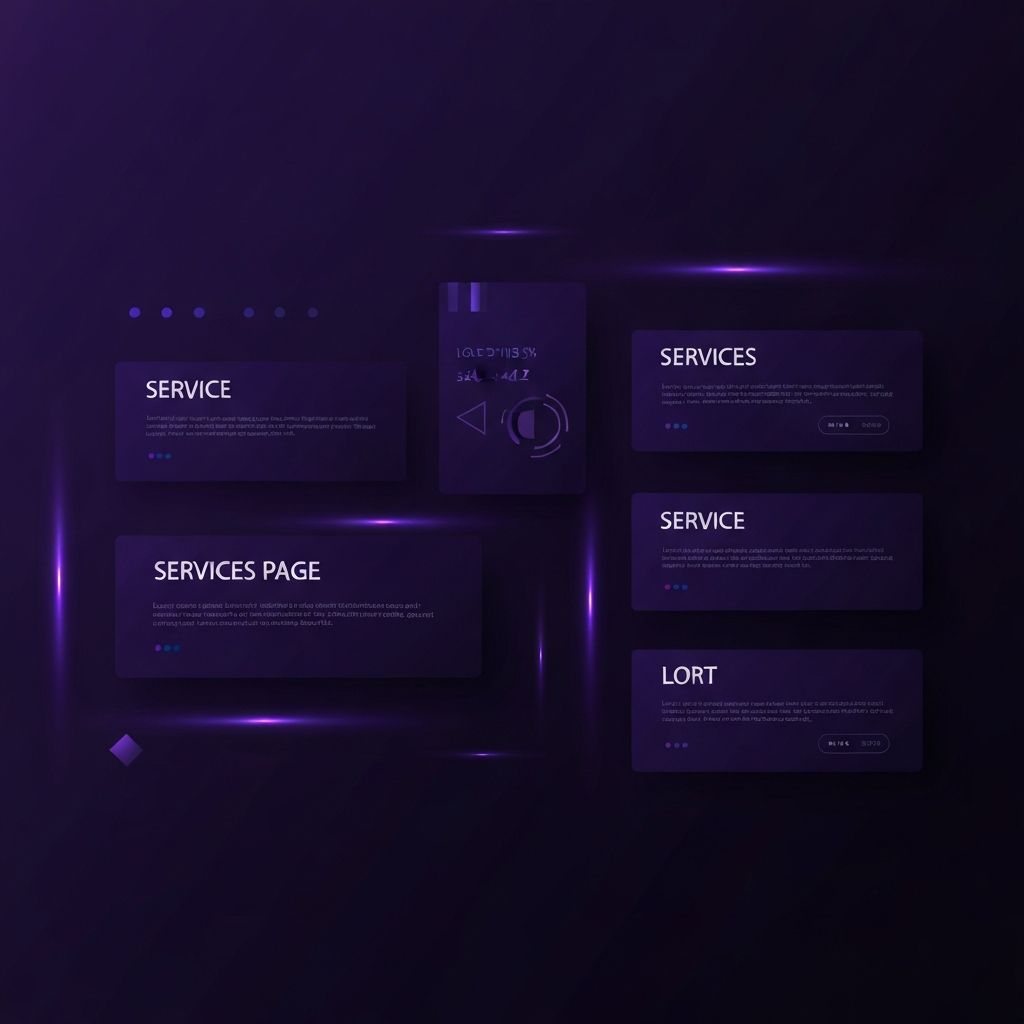
Why Your Services Page Deserves Strategic Design
The services page is one of the most critical pages on any business website. It is where prospects evaluate whether a company can solve their problem, deliver real value, and earn their trust. Unlike a homepage that introduces a brand, a services page must educate, persuade, and convert all at once. A weak services page can quietly drain leads, while a strong one becomes a powerful sales engine that works around the clock. Understanding the principles behind effective services page web design is essential for any business that wants its website to actually generate revenue.
Great services page design is not about flashy animations or trendy layouts. It is about clarity, hierarchy, and storytelling. Visitors arrive with questions: What do you offer? How does it work? Will it work for me? How do I get started? The design must answer these questions in a logical sequence, guiding users toward a confident decision.
Hire AAMAX.CO for Professional Web Design Services
For businesses that want a services page engineered to convert, partnering with experienced professionals makes a measurable difference. AAMAX.CO is a full-service digital agency specializing in website design that blends aesthetics with conversion-focused strategy. They understand how to structure service offerings, craft persuasive content hierarchies, and design intuitive interfaces that move visitors toward action. Whether a company needs a single redesigned services page or a complete website overhaul, their team delivers tailored solutions built around real business goals.
Core Elements of a High-Performing Services Page
Every successful services page contains a few non-negotiable elements. The hero section should immediately communicate what the company does and who it serves. A strong headline paired with a supporting subheadline removes ambiguity in seconds. Below the fold, visitors expect a clear breakdown of services, ideally presented as scannable cards or sections with descriptive icons, brief summaries, and links to deeper content for those who want more detail.
Trust signals are equally important. Testimonials, client logos, case studies, certifications, and measurable results all reinforce credibility. Without proof, even the most beautifully designed page can feel hollow.
Visual Hierarchy and Layout Patterns
Visual hierarchy controls how the eye travels across the page. Designers use size, color, contrast, and whitespace to guide attention toward the most important elements first. A common and effective pattern is the F-pattern or Z-pattern layout, which aligns with how users naturally scan content on the web.
Grid-based layouts work well for displaying multiple services because they create visual consistency and make comparisons easy. Alternating sections that pair text with imagery add rhythm and prevent monotony. Generous whitespace gives each service room to breathe, helping the page feel premium rather than cluttered.
Writing Copy That Sells the Service
Design and copy are inseparable. A beautifully designed services page with weak copy will still underperform. Copy should focus on outcomes rather than features. Instead of saying "We offer SEO," a stronger approach is "Rank higher, attract qualified traffic, and grow predictable revenue." Benefits-driven language speaks directly to the reader's goals.
Subheadings should be specific and easy to scan. Short paragraphs, bullet points, and bold phrases help users absorb information quickly. Each service description should answer three questions: what it includes, who it is for, and what results clients can expect.
Calls to Action That Actually Convert
Calls to action are the engines of any services page. They should be visible, persuasive, and frequent enough to capture attention without feeling pushy. Buttons should use action-oriented language such as "Get a Free Consultation" or "Request a Quote" rather than generic phrases like "Submit" or "Learn More."
Strategic CTA placement matters. A primary CTA should appear in the hero section, after each major service block, and in the footer. Sticky buttons or floating contact bars can also boost conversion on long-scroll layouts.
Mobile-First Considerations
More than half of web traffic now comes from mobile devices, and services pages are no exception. Mobile-first design ensures that the page looks and functions beautifully on small screens before being scaled up for desktops. Tap targets should be large enough for fingers, navigation should collapse cleanly, and load times must be fast.
Performance directly affects conversions. Compressed images, lazy loading, and efficient code keep the experience smooth. A slow services page is a leaky funnel, no matter how attractive it looks.
SEO and Discoverability
A services page must be discoverable through search engines to drive organic leads. This means structuring content with proper heading tags, writing meta titles and descriptions that include relevant keywords, and using descriptive alt text for images. Schema markup for services can also help search engines understand offerings and display rich results.
Internal linking is another underrated tactic. Linking from blog posts, the homepage, and other service pages strengthens topical authority and helps both users and search engines navigate the site.
Final Thoughts
A services page is more than a digital brochure. It is a sales conversation that scales. By combining strategic structure, persuasive copy, strong visuals, and conversion-focused calls to action, businesses can transform a static page into a reliable lead generator. Investing in thoughtful services page web design pays dividends long after the launch, turning ordinary visitors into loyal clients.