
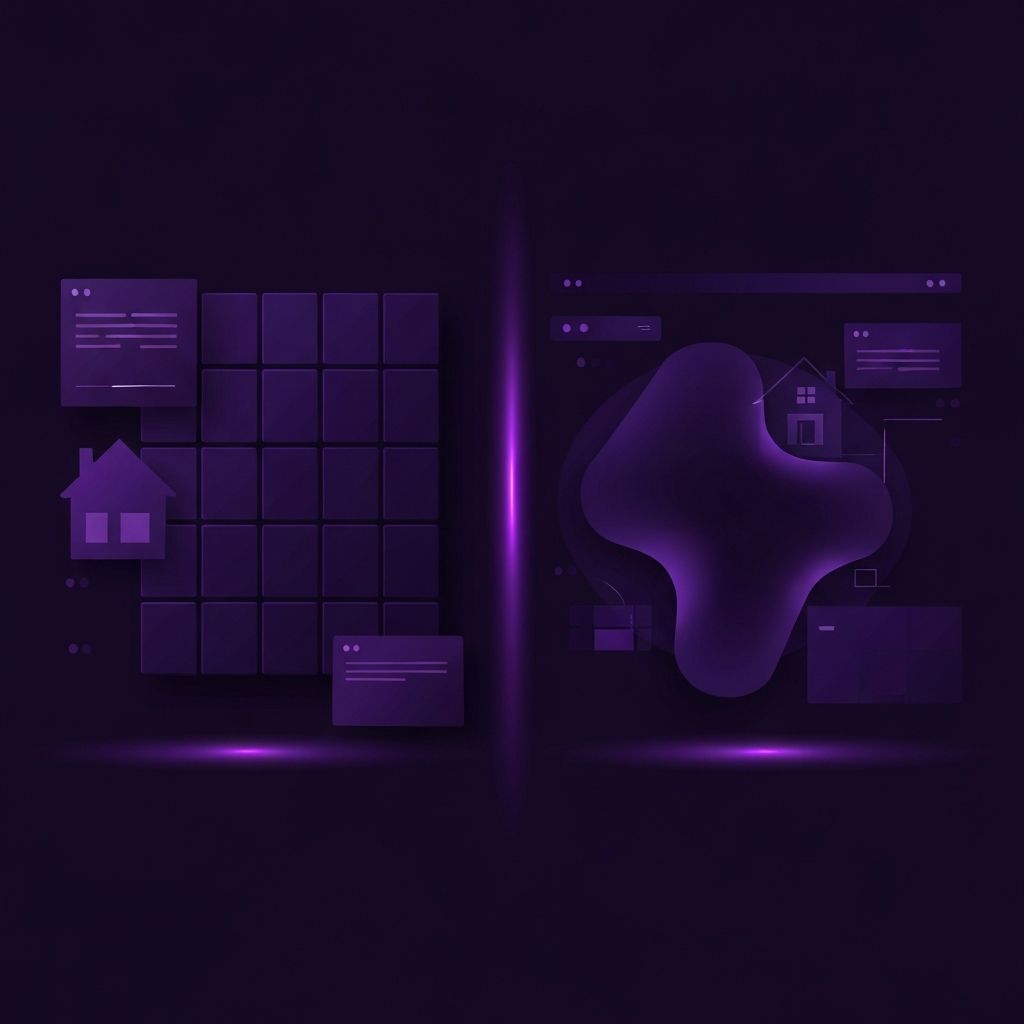
The Realtor's Dilemma: Speed vs Differentiation
Real estate is one of the most visual and trust-driven industries online, and a realtor's website is often the first impression a buyer or seller has of their brand. The choice between a semi-custom and a fully custom website is one of the most consequential decisions a real estate professional makes. Semi-custom design offers speed and affordability by starting from a polished base, while fully custom design promises a one-of-a-kind experience built from scratch around the agent's exact market and audience. Understanding the trade-offs helps realtors invest their marketing dollars where they matter most.
Hire AAMAX.CO for Realtor Web Design and Development
For real estate professionals who want a website that captures listings beautifully, integrates with MLS feeds, and converts visitors into qualified leads, AAMAX.CO offers both semi-custom and fully custom packages. They are a full-service digital agency with deep experience in web design, development, SEO, and digital marketing for service-based businesses. Their team can recommend the right level of customization based on your market position, budget, and growth goals, and they can also handle the ongoing optimization that turns a beautiful website into a lead-generating machine.
What Semi-Custom Web Design Actually Means
Semi-custom design starts from a proven framework, theme, or template that has already been engineered for performance and conversion. The agency or designer then customizes the colors, typography, imagery, copy, and key sections to match the realtor's brand. The underlying structure remains stable, which is why semi-custom projects can typically launch in two to four weeks at a fraction of the cost of fully bespoke builds. Realtors get a polished, professional online presence quickly, which is critical when listings are time-sensitive and lead generation cannot wait.
What Fully Custom Web Design Delivers
Fully custom design starts with a blank canvas, deep discovery sessions, audience research, and original visual direction. Every page, animation, and interaction is designed and developed specifically for the realtor's brand and market. The result is a website that looks and feels unmistakably unique, often with bespoke neighborhood guides, signature property showcases, interactive maps, and storytelling elements competitors cannot replicate. Custom projects typically run eight to sixteen weeks and require a higher investment, but they pay back over years through stronger brand equity and better conversion rates.
Cost Comparison and Realistic Budgets
Semi-custom realtor websites generally range from a few thousand dollars to about ten thousand dollars depending on the level of customization and the integrations required. Fully custom sites typically start in the mid five figures and can climb significantly higher when bespoke search experiences, original photography, video production, and complex CRM integrations are included. New agents and small teams almost always benefit from starting semi-custom and reinvesting in a custom rebuild once their lead flow and brand identity are well established. Top-producing teams and luxury specialists, on the other hand, often justify a custom build from day one because their clientele expects a distinctive experience.
Branding and Market Positioning
If your competitive edge is local expertise, exclusive listings, or a luxury niche, your website needs to communicate that within the first three seconds. Fully custom design supports differentiation because every element can be tailored to your story. Semi-custom can still feel premium when executed thoughtfully, but it carries more risk that another realtor in a nearby market is using the same starting point. A skilled designer mitigates this risk by deeply customizing typography, imagery, micro-interactions, and content structure so the final result feels far from a stock template.
SEO, Performance, and Lead Generation
Both approaches can rank well in search and convert visitors into leads when they are built correctly. What matters more than the customization tier is the quality of the underlying website development, the clarity of the user journey, and the strength of the content strategy. Realtors should insist on fast load times, mobile-first layouts, structured data for listings, clear calls to action on every page, and seamless integration with their CRM. A semi-custom site executed by an experienced team often outperforms a flashy custom site that ignores fundamentals.
Timeline, Maintenance, and Future Flexibility
Semi-custom sites are easier and cheaper to maintain because they sit on familiar frameworks with well-documented update paths. New agents on the team, additional service areas, and seasonal campaigns can typically be added without involving a developer. Custom sites offer unlimited flexibility but require an ongoing relationship with the original developer or a capable in-house team. Before signing any contract, realtors should ask exactly who owns the code, how updates are handled, and what happens if they ever want to switch providers.
How to Choose the Right Path for Your Practice
The right choice comes down to three honest questions. First, how distinctive does your brand need to be in your specific market to win the clients you want? Second, what is your realistic budget over the next twelve to twenty-four months when you account for both the build and ongoing marketing? Third, how quickly do you need to be live and generating leads? Newer agents focused on lead volume usually win with semi-custom. Established teams competing for high-end listings typically need custom. Most realtors land in a hybrid path, starting semi-custom and graduating to custom once their business and brand have matured. Whichever route you choose, the website is only as effective as the strategy behind it, which is why partnering with an agency that handles both design and ongoing growth is so valuable.