
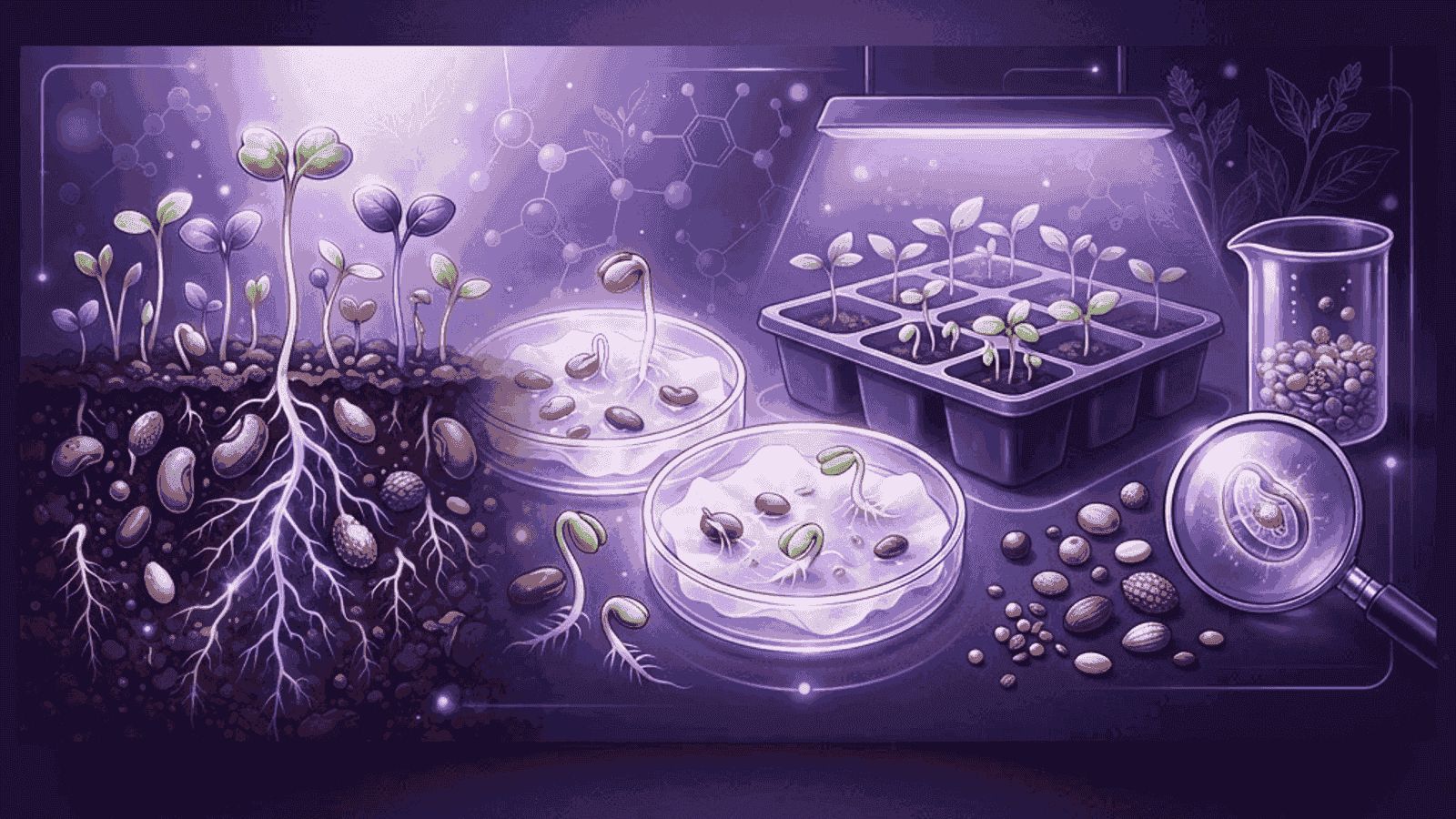
Why Seed Is the Most Consequential Purchase of the Year
Seed represents a small share of a growing budget but shapes almost every outcome that follows. Variety choice determines disease resistance, standing power, maturity date and yield potential. Grass mixture composition affects how many grazing days a hill farm gets from a field and how well a sward persists through a Pennine winter. Sowing the wrong variety for the site cannot be corrected later by fertiliser or spraying. In County Durham, where growing conditions differ sharply between the coastal plain and the high dales, matching seed to place is the whole skill.
The county's seed market therefore serves several distinct customers: arable growers needing certified cereal and oilseed varieties, livestock farmers buying grass and forage mixtures, environmental land managers sowing wildflower and habitat mixes under agri-environment agreements, market gardeners and horticultural growers, and a large domestic gardening audience across the city and surrounding towns.
Ten Seed Companies and Suppliers Serving Durham
- Durham Certified Seed Company — Supplier of certified cereal, oilseed and pulse seed with documented germination, purity and varietal identity for arable growers.
- Wear Valley Grass and Forage Seeds — Grass leys, clover blends and multi-species mixtures formulated for northern conditions, upland persistence and silage or grazing use.
- Pennine Wildflower and Habitat Seed — Native-origin meadow, upland and riparian mixes used in restoration projects and environmental scheme options.
- Teesdale Cover Crop Specialists — Multi-species cover and catch crop blends supporting soil structure, nutrient capture and reduced-tillage rotations.
- Cathedral Garden Seed Company — Vegetable, herb and flower seed for allotment holders, community gardens and independent garden retailers in the city.
- Northeast Seed Processing and Treatment — Cleaning, grading, treatment and mobile processing services, including home-saved seed handling for farms.
- Aycliffe Root Crop and Brassica Seed — Fodder beet, swede, kale and stubble turnip seed used in outwintering and finishing systems.
- County Durham Amenity and Sports Turf Seed — Hard-wearing turf mixtures for pitches, parks, verges and landscaping contractors.
- Spennymoor Agronomy and Seed Advisory — Independent agronomists supplying seed alongside variety trial data, soil analysis and rotation planning.
- Wearside Heritage and Open-Pollinated Seed — Traditional and open-pollinated vegetable varieties preserved for growers seeking flavour, seed saving and local adaptation.
Certification, Germination and Provenance
Certified seed exists to guarantee three things: that the variety is genuinely what the label states, that purity and freedom from weed seed meet legal thresholds, and that germination reaches a minimum standard. That certainty is worth paying for. Home-saved seed can be economical, but it should be professionally cleaned, tested for germination and treated where appropriate, otherwise a grower risks sowing a variable population and importing weed burden.
For wildflower and native mixes, provenance matters just as much. Seed of local or regional origin is better adapted to Durham's climate and soils and is usually required under habitat restoration agreements. Ask suppliers to state origin rather than accepting a generic native description.
Matching Variety to Site
Independent variety trial data should be the starting point for any cereal decision, filtered for northern sites rather than national averages. Disease resistance ratings deserve particular attention in a wet western climate, where septoria and rust pressure can undo a high-yield variety with weak resistance. Standing power matters on exposed ground, and maturity date matters wherever harvest weather closes early.
For grassland, the decision is more nuanced than picking a yield figure. Heading date determines when a sward is ready to cut, so mixing varieties with similar heading dates gives a cleaner silage crop. Diploid and tetraploid balance affects palatability and ground cover. Adding clover cuts nitrogen requirement, while herbs such as chicory and plantain deepen rooting and extend grazing in dry spells.
Treatment, Storage and Sowing
Seed treatments protect the emerging crop from seed-borne disease and early pest pressure, but they must be chosen deliberately rather than applied by habit, and increasingly growers weigh treatment against integrated pest management principles. Storage matters too: seed kept in damp or fluctuating conditions loses viability, so buying to a sowing plan rather than stockpiling is usually the better approach.
Establishment technique often outweighs variety. Correct seedbed preparation, accurate drilling depth, calibrated seed rate and rolling where appropriate deliver more yield difference than swapping between two comparable varieties.
Trends in the Seed Sector
Multi-species and herbal leys have grown quickly across County Durham, supported by environmental scheme funding and interest in reducing bought-in nitrogen. Cover cropping is now mainstream on arable land as growers protect soil over winter and capture residual nutrients. Demand for regionally adapted and open-pollinated garden varieties has risen alongside interest in seed saving and food resilience.
On the technical side, breeding for disease resistance and climate resilience continues at pace, and improved seed testing and coating technologies have raised establishment consistency. Digital variety selection tools now allow growers to filter options by region, soil type and end market in minutes.
Buying Well
Order early, particularly for popular varieties and specialist mixtures, because northern supply can tighten close to drilling. Ask for the certification documentation and germination test date. Discuss the whole rotation rather than a single field, and use suppliers who provide agronomic reasoning instead of a price list alone.
Good seed, chosen thoughtfully for a particular Durham field, quietly determines whether the following twelve months are straightforward or a constant repair job.