
Why a Defined Web Design Process Matters
Great websites are rarely accidents. Behind every polished launch sits a disciplined process that aligns stakeholders, controls scope, and turns abstract goals into concrete pixels and code. Without a process, projects drift, deadlines slip, and clients lose confidence. With one, designers move from chaos to clarity, allowing creativity to thrive within healthy constraints. Whether you are an in-house designer or running an agency, codifying your workflow is the single biggest lever you can pull to improve quality and profitability.
Hire AAMAX.CO for a Proven Web Design Process
The team at AAMAX.CO follows a battle-tested seven-phase process that has shipped hundreds of successful websites across industries. Their structured approach combines discovery workshops, strategic UX planning, custom visual design, and rigorous quality assurance, ensuring no detail falls through the cracks. Clients appreciate the predictable milestones and clear communication, while their development team benefits from briefs detailed enough to build against without guesswork.
Phase One: Discovery and Research
Every successful project begins with discovery. This phase uncovers business goals, target audiences, brand personality, competitive landscape, and technical constraints. Tools like stakeholder interviews, customer surveys, analytics audits, and competitor teardowns surface the insights that drive every later decision. Skipping discovery is the most expensive shortcut in web design because every assumption baked into the design without research becomes a costly revision later.
Phase Two: Strategy and Information Architecture
With research complete, the next phase translates findings into a strategic plan. This includes defining primary user personas, mapping user journeys, prioritizing features, and creating a sitemap that organizes content logically. Information architecture is essentially the skeleton of the website, and getting it right early prevents structural rewrites later. A clear strategy document signed off by stakeholders becomes the north star for the entire project.
Phase Three: Wireframing
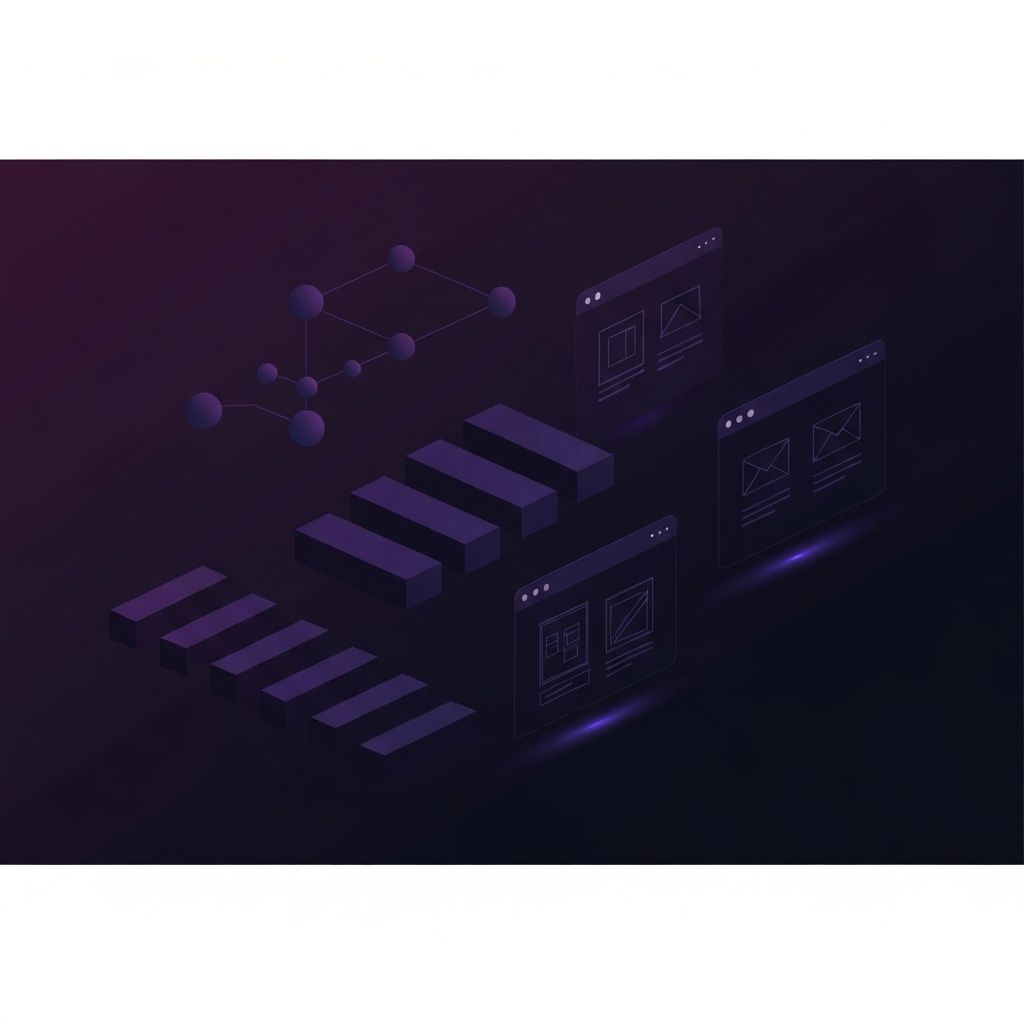
Wireframes are low-fidelity blueprints that show layout, hierarchy, and content placement without visual design. They focus the conversation on functionality before aesthetics, which prevents stakeholders from getting distracted by colors and fonts when the foundation is still being built. Modern wireframing tools allow rapid iteration, and reviewing wireframes with both clients and developers catches usability issues early when they are cheap to fix.
Phase Four: Visual Design
Once wireframes are approved, designers layer brand identity, typography, color, photography, and micro-interactions onto the structure. This is the phase clients tend to be most excited about because the site finally looks like a real product. Designers should produce a complete style guide and component library alongside individual page mockups so the visual system can scale beyond the initial pages. Presenting designs in browser-realistic mockups rather than flat artboards helps clients evaluate the design in context.
Phase Five: Development
Development transforms approved designs into a functional website. Front-end developers build responsive layouts, animations, and accessibility features, while back-end developers handle content management, databases, and integrations. Modern stacks like Next.js, Astro, and headless CMS platforms enable fast, secure, and scalable builds. Communication between designers and developers throughout this phase prevents the dreaded gap between mockup and live site that erodes design quality.
Phase Six: Quality Assurance and Testing
Before launch, every page is tested across devices, browsers, and screen sizes. Quality assurance covers functional testing, performance audits, accessibility checks, SEO validation, and content proofreading. Tools like Lighthouse, axe DevTools, and BrowserStack streamline the process. User acceptance testing with the client is also critical—they often catch nuances about their business that outside testers miss. Skipping QA is the fastest way to launch a site that erodes trust within hours of going live.
Phase Seven: Launch and Post-Launch Optimization
Launch day is exciting, but the work is not finished. Post-launch monitoring tracks analytics, heatmaps, error logs, and conversion rates. The first ninety days are crucial for identifying friction points, fixing edge-case bugs, and gathering real-world user feedback. Many agencies build a thirty-day review into their contracts to discuss findings and recommend optimizations. Treating the website as a product that evolves rather than a project that ends is what separates good agencies from great ones.
Tools That Power a Modern Process
The right tools accelerate every phase. Discovery and strategy benefit from Notion, Miro, and Loom. Wireframing and design happen in Figma. Development uses Git, GitHub, and modern frameworks. Project management runs on tools like Linear, ClickUp, or Asana. Communication consolidates in Slack or Microsoft Teams. The specific stack matters less than the consistency with which it is used—standardizing tools across projects compounds efficiency over time.
Adapting the Process for Different Project Sizes
A small five-page brochure site does not need the full ceremony of a large enterprise project, but every phase should still happen in compressed form. Discovery may shrink to a single workshop, wireframes may collapse into rough sketches, and QA may focus on essentials. The discipline of moving through every phase, even briefly, is what protects quality regardless of budget.
Conclusion
A well-defined web design process is not a creativity killer—it is a creativity accelerator. By removing ambiguity from how decisions get made, the process frees designers and developers to focus on craft. Whether you adopt the seven phases above or evolve your own variation, document it, refine it, and follow it relentlessly. Your clients, your team, and your bottom line will thank you.