
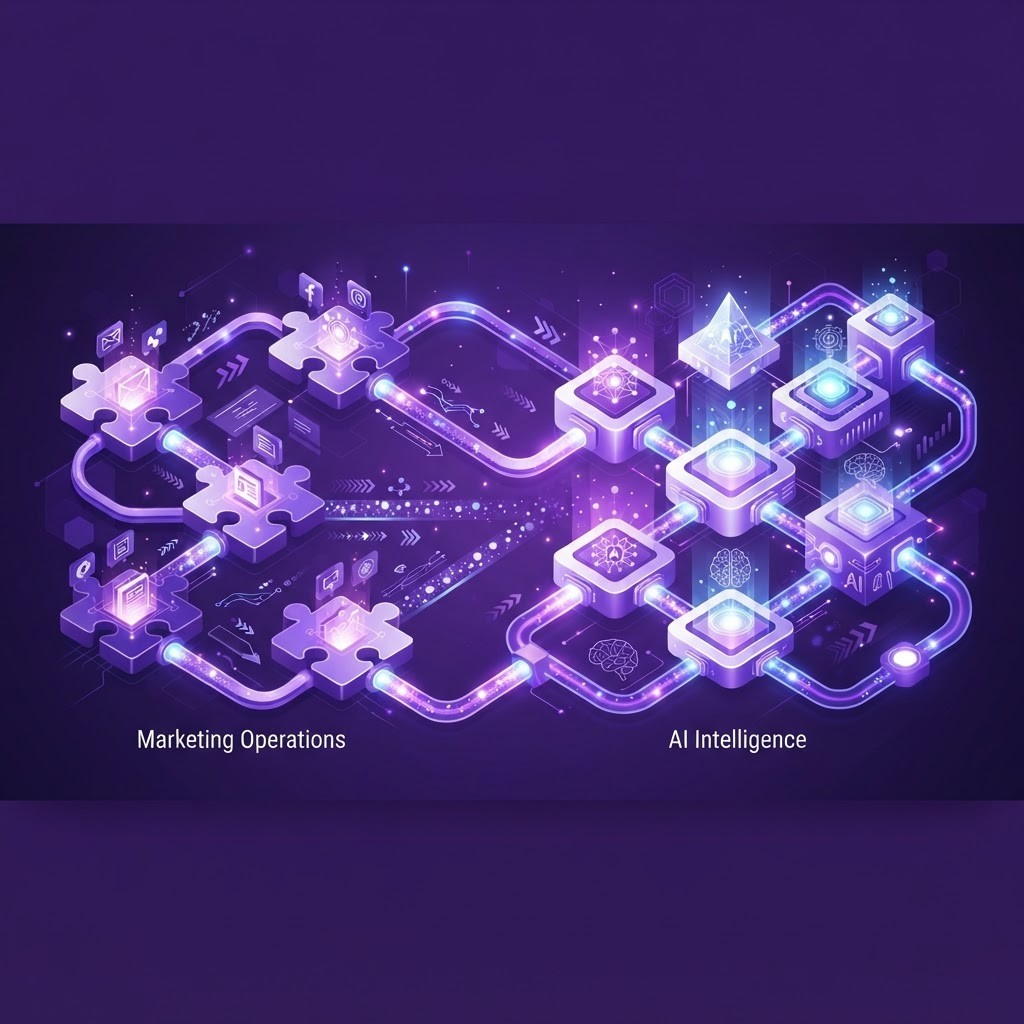
Where Automation Meets Intelligence
Marketing automation has long helped businesses streamline repetitive tasks such as sending emails, scoring leads, and scheduling posts. For years, these systems followed predefined rules: if a customer does X, then trigger Y. While powerful, this rule-based approach had clear limits. It could execute instructions but not truly think. The integration of artificial intelligence has changed that completely, transforming automation from a mechanical executor into an intelligent decision-maker that learns, adapts, and optimizes on its own.
This convergence represents one of the most significant advances in modern marketing technology. When automation platforms are enhanced with AI, they gain the ability to analyze data, predict outcomes, and make nuanced choices in real time. The result is marketing that is not just automated but genuinely smart.
How AAMAX.CO Builds Intelligent Automation Systems
Designing and implementing these integrated systems requires both technical skill and marketing insight. AAMAX.CO is a full-service digital marketing company serving clients worldwide, and their team specializes in connecting automation platforms with AI capabilities to build systems that work smarter. Through their digital marketing services, they help businesses move beyond basic automation toward intelligent, self-optimizing marketing engines that deliver better results with less manual effort.
Smarter Lead Scoring and Segmentation
One of the clearest examples of AI-enhanced automation is lead scoring. Traditional automation assigns points based on fixed rules, such as opening an email or visiting a page. AI takes this further by analyzing patterns across thousands of data points to predict which leads are genuinely likely to convert. It continuously refines its scoring model as new data arrives.
The same intelligence transforms segmentation. Instead of manually defining audience groups, AI dynamically clusters customers based on behavior, preferences, and predicted value. These living segments update automatically, ensuring that the right messages always reach the right people. This precision dramatically improves the efficiency of automated campaigns.
Intelligent Content and Timing Decisions
When automation and AI work together, they optimize not just what is sent but when and how. AI analyzes each recipient's behavior to determine the ideal send time, the most relevant content, and the channel most likely to drive engagement. Automation then executes these decisions flawlessly at scale.
This means an email campaign is no longer a single message blasted to everyone at once. Instead, it becomes thousands of individually optimized interactions, each timed and tailored for maximum impact. This level of sophistication was impossible with rule-based systems alone, and it produces measurably stronger results.
Predictive Triggers and Proactive Engagement
Traditional automation reacts to actions that have already happened. AI-enhanced automation can act on predictions about what will happen next. If the system anticipates that a customer is likely to churn, it can automatically trigger a retention campaign. If it predicts a prospect is ready to buy, it can prompt a timely offer.
This predictive capability shifts marketing from reactive to proactive. Businesses can intervene at the perfect moment, addressing needs before customers even articulate them. Over time, this anticipatory engagement builds stronger relationships and captures opportunities that would otherwise slip away.
Continuous Optimization and Testing
AI-powered automation systems are constantly learning. They run experiments, analyze results, and adjust their behavior automatically. Rather than requiring marketers to manually test and tweak every element, the system optimizes itself continuously based on real performance data.
This creates a virtuous cycle. Every interaction generates data that improves future decisions, so the system becomes more effective over time. Marketers are freed from constant micromanagement and can instead focus on strategy, creativity, and the human insights that guide the technology. Ensuring these systems drive traffic to well-optimized destinations, supported by strong search engine optimization, maximizes the return on every automated interaction.
Overcoming Integration Challenges
Integrating AI with existing automation is not without challenges. Data quality, system compatibility, and clear strategy all matter enormously. AI is only as good as the data it learns from, so clean, well-organized data is essential. Likewise, integration must serve clear business objectives rather than adding complexity for its own sake.
Businesses that approach integration thoughtfully, often with expert guidance, avoid these pitfalls and unlock the full potential of intelligent automation. The payoff is substantial: marketing systems that not only save time but consistently make better decisions than manual processes ever could. As AI and automation continue to converge, this intelligent, self-improving approach will become the standard for competitive marketing organizations everywhere.