
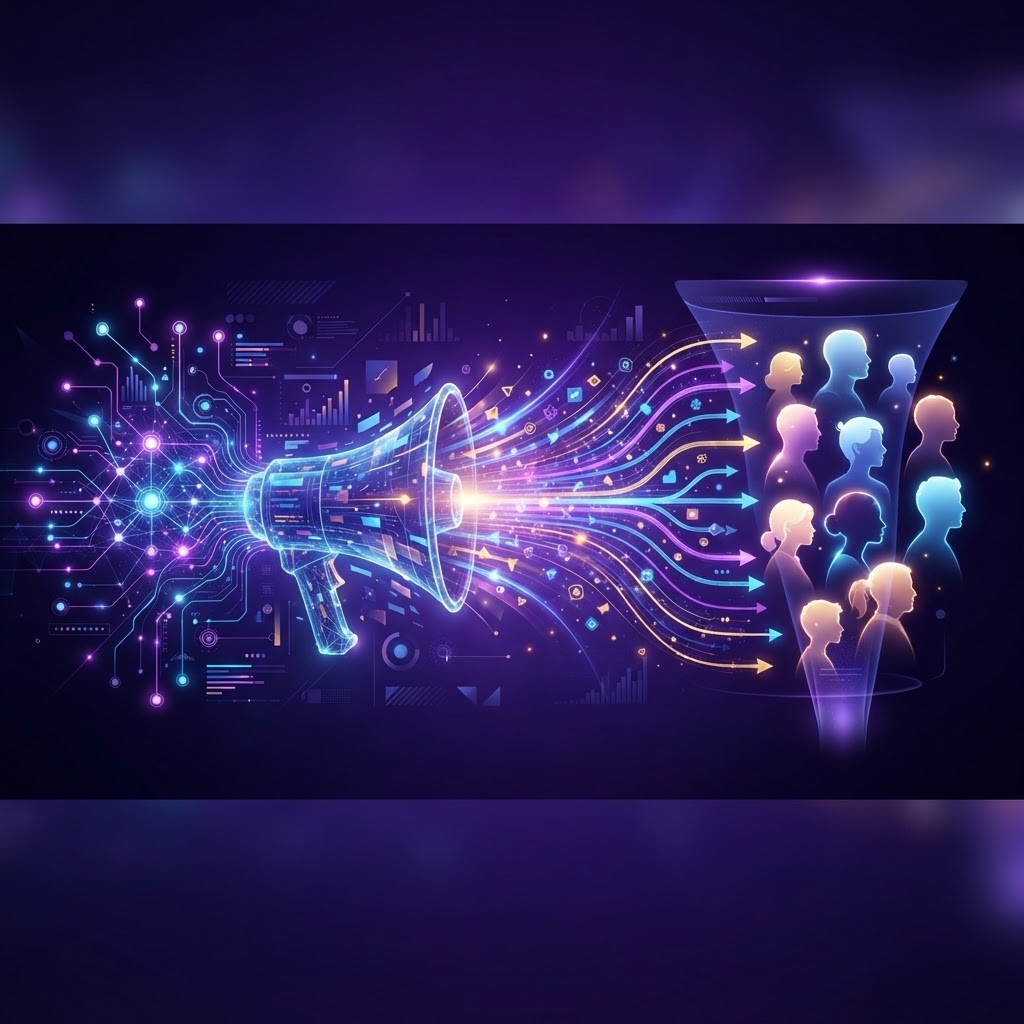
Marketing has always been about connecting the right message with the right person at the right moment, but for most of its history that connection relied on intuition and broad assumptions. Artificial intelligence has rewritten that reality. Today, AI analyzes enormous streams of behavioral data, predicts what customers want before they ask, and automates decisions that once required entire teams. From programmatic advertising to hyper-personalized email sequences, AI has moved marketing from a creative guessing game into a precise, measurable, and continuously optimizing engine. Understanding how this shift happened is essential for any brand that wants to stay competitive in an increasingly automated landscape.
Partner With AAMAX.CO for AI-Driven Marketing
Navigating this new AI-powered environment is far easier with an experienced partner, and AAMAX.CO helps businesses do exactly that. As a full-service digital marketing company serving clients worldwide, they combine artificial intelligence with proven strategy to build campaigns that adapt in real time. Whether a brand needs smarter audience targeting, AI-assisted content, or end-to-end campaign management, they help teams harness these tools without losing the human insight that makes marketing resonate. Businesses looking to modernize their approach can rely on AAMAX.CO to bridge the gap between advanced technology and measurable growth.
From Mass Messaging to True Personalization
The most visible change AI has brought to marketing is personalization at scale. In the past, segmentation meant grouping customers into a handful of broad buckets. AI now processes signals such as browsing history, purchase patterns, device usage, and even the time of day someone tends to engage, then tailors messaging to the individual. Recommendation engines used by streaming services and e-commerce giants are the clearest example: they quietly study behavior and surface products or content each person is most likely to want. This level of one-to-one relevance was simply impossible with manual methods, and it has raised customer expectations across every industry.
Content Creation and Creative Assistance
Generative AI has transformed how marketing content is produced. Tools can now draft ad copy, generate social captions, produce first-draft blog outlines, and create image variations in seconds. This does not replace human creativity; instead, it removes the friction of starting from a blank page and lets marketers test more ideas faster. Teams can generate dozens of headline variations, run them through predictive performance models, and launch the strongest options. The result is a creative process that is both more experimental and more efficient, allowing smaller teams to produce output that once required large agencies.
Smarter Advertising and Budget Allocation
Advertising has arguably been changed most dramatically by AI. Programmatic platforms use machine learning to bid on ad placements in milliseconds, optimizing for conversions rather than clicks. AI continuously reallocates budget toward the channels, audiences, and creative assets that perform best, reducing wasted spend. Predictive analytics can forecast which customers are likely to churn or convert, allowing marketers to intervene proactively. This means marketing dollars work harder, and campaigns improve automatically as the system learns from every interaction.
Automation Across the Customer Journey
AI-powered automation now touches every stage of the funnel. Chatbots and virtual assistants handle customer questions around the clock, qualifying leads and routing complex issues to humans. Automated email and messaging workflows respond to individual behaviors, sending a reminder when a cart is abandoned or a tailored offer after a purchase. Customer relationship platforms use AI to score leads and predict the next best action for each contact. This automation frees marketers from repetitive tasks so they can focus on strategy, storytelling, and relationship building.
Data Analysis and Predictive Insight
Perhaps the quietest but most powerful change is in analytics. Marketers once drowned in dashboards, struggling to connect data points into meaningful action. AI now identifies patterns, attributes conversions across multiple touchpoints, and surfaces insights that humans might miss. Predictive models estimate customer lifetime value, forecast demand, and reveal which messages will resonate with specific segments. This shifts marketing from reporting on what already happened to anticipating what will happen next, enabling faster and more confident decisions.
The Human Element Still Matters
Despite all this automation, AI has not made marketers obsolete. Machines excel at pattern recognition and optimization, but they lack genuine empathy, cultural nuance, and brand judgment. The most successful teams treat AI as a collaborator that handles scale and speed while humans provide direction, ethics, and emotional intelligence. Understanding customer values, crafting authentic brand narratives, and making judgment calls about tone and timing remain distinctly human strengths.
Preparing for an AI-First Future
The pace of change shows no sign of slowing. Voice search, AI-generated video, and increasingly autonomous campaign management are becoming mainstream. Brands that invest now in clean data, ethical AI practices, and team training will be positioned to lead. Those that resist risk falling behind competitors who deliver faster, more relevant, and more personal experiences. AI has changed marketing permanently, and the organizations that embrace it thoughtfully will be the ones that thrive in the years ahead.