
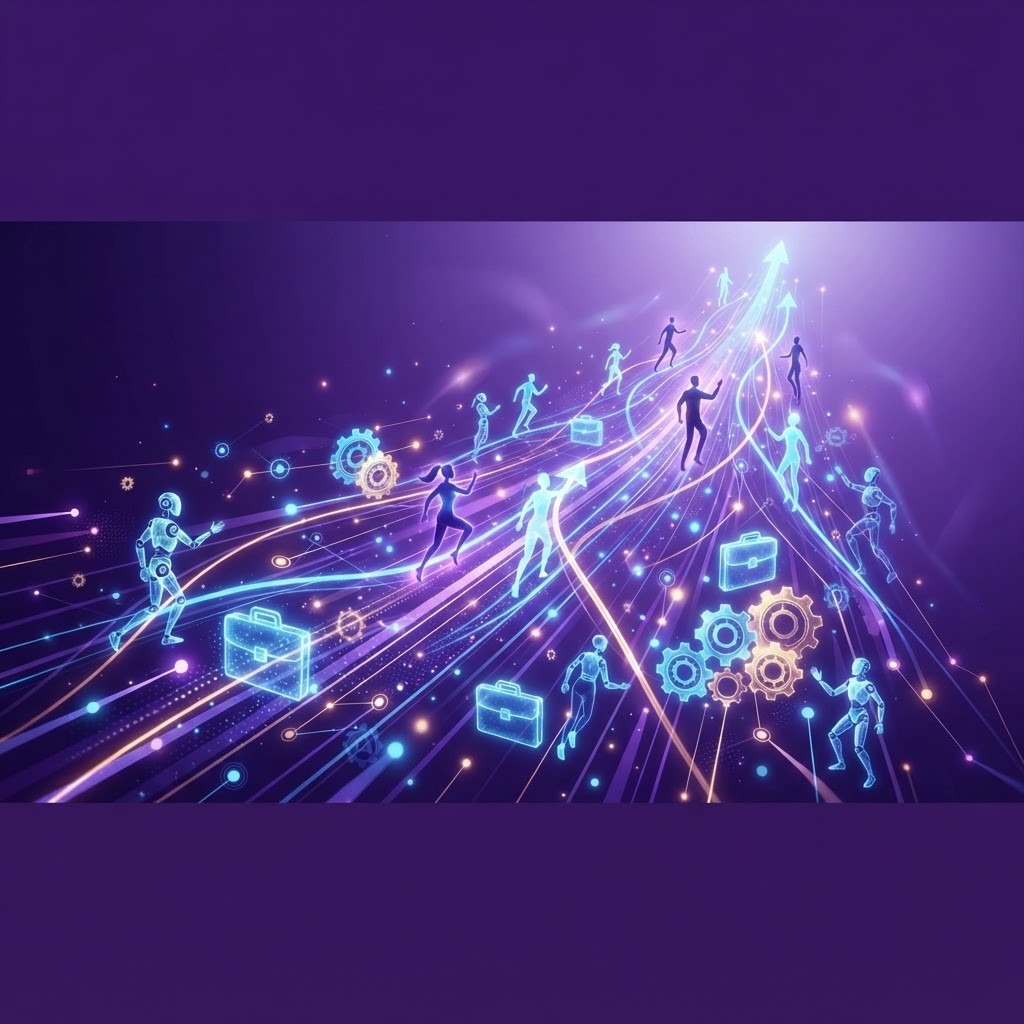
Few topics generate as much debate as artificial intelligence and its effect on jobs. Headlines swing between predictions of mass unemployment and promises of a productivity revolution. The reality is more nuanced. AI is genuinely transforming the job market, but its impact is uneven, reshaping some roles, eliminating certain tasks, and creating entirely new categories of work. Understanding these dynamics helps workers and businesses prepare intelligently rather than react to fear or hype.
How AAMAX.CO Supports Businesses Through Change
Adapting a business to an AI-influenced economy requires both technical capability and strategic vision, and AAMAX.CO helps organizations navigate that transition. As a full-service digital marketing company serving clients worldwide, they help businesses adopt AI-driven tools and build the digital presence needed to compete in a changing landscape. Through services like website development and broader digital strategy, their team equips companies to embrace new technology while creating value and opportunity rather than simply cutting costs.
Automation of Routine Tasks
The clearest impact of AI is the automation of repetitive, rule-based tasks. Work that involves processing data, generating standard documents, answering common questions, or performing predictable operations is increasingly handled by AI. This does not always eliminate whole jobs, but it changes them, removing the routine components and shifting human effort toward tasks that require judgment, creativity, and interpersonal skill. Roles heavy in routine work face the most pressure to evolve.
Creation of New Roles
History shows that transformative technologies destroy some jobs while creating others, and AI is following that pattern. Entirely new roles have emerged around building, managing, and applying AI systems. Positions focused on AI oversight, data quality, prompt design, and integrating AI into business processes did not exist a few years ago. Beyond technical roles, demand grows for people who can combine AI fluency with domain expertise, bridging the gap between technology and real-world application.
Augmentation Over Replacement
For many workers, the near-term reality is augmentation rather than replacement. AI acts as an assistant that handles the tedious parts of a job, letting people accomplish more and focus on higher-value work. A marketer uses AI to draft content faster, a developer uses it to write code more efficiently, an analyst uses it to process data quickly. In these cases, AI raises productivity and expands what individuals can achieve, making them more valuable rather than obsolete.
Shifting Skill Demands
As AI reshapes work, the skills employers value are shifting. Purely routine skills decline in demand, while others rise. The most future-proof capabilities tend to include:
- Adaptability and willingness to learn continuously.
- Critical thinking and complex problem-solving.
- Creativity and original thinking.
- Emotional intelligence and collaboration.
- AI literacy and the ability to work alongside intelligent tools.
Uneven Impact Across Industries
AI's effect on jobs varies widely by sector. Fields with large volumes of routine, digital work feel the impact sooner, while roles requiring physical dexterity, deep human connection, or complex judgment change more slowly. Even within industries, the impact differs by task. This unevenness means workers should assess their own roles honestly, identifying which parts of their work AI can handle and which parts rely on distinctly human strengths that remain in demand.
The Importance of Reskilling
Because the skills landscape is shifting, continuous learning has become essential. Workers who invest in developing new capabilities, especially those that complement AI, position themselves to thrive. Businesses that support reskilling retain valuable employees and adapt more smoothly. Rather than viewing AI as a threat to be resisted, the more productive stance is to treat it as a change to be navigated through deliberate skill development and openness to new ways of working.
Opportunities Alongside Disruption
While disruption is real, so is opportunity. AI can raise productivity, create new industries, and free people from drudgery to focus on more meaningful work. Economies that harness AI effectively may see new forms of value and employment emerge. The transition will not be painless, and thoughtful attention to those displaced is important, but the long arc of technological change has historically expanded opportunity for those who adapt.
The Human Skills That Remain Valuable
As AI takes over more analytical and routine work, the human qualities it cannot easily replicate become more prized. Genuine creativity, the ability to build trust and lead teams, ethical reasoning, and the nuanced judgment required in ambiguous situations all remain firmly in the human domain. Jobs centered on caregiving, negotiation, complex strategy, and original creative work are likely to stay resilient. Workers who deliberately strengthen these capabilities, rather than competing with machines on speed and volume, position themselves for durable relevance in an AI-influenced economy.
Preparing for an AI-Influenced Future
The job market will continue to evolve as AI advances, and the best preparation is a combination of adaptability, continuous learning, and focus on uniquely human skills. Workers who understand AI, use it as a tool, and cultivate creativity and judgment will remain competitive. Businesses that adopt AI thoughtfully, invest in their people, and build strong digital foundations will lead their markets. AI is reshaping how we work, but with the right approach, that transformation can create as many opportunities as it disrupts.