
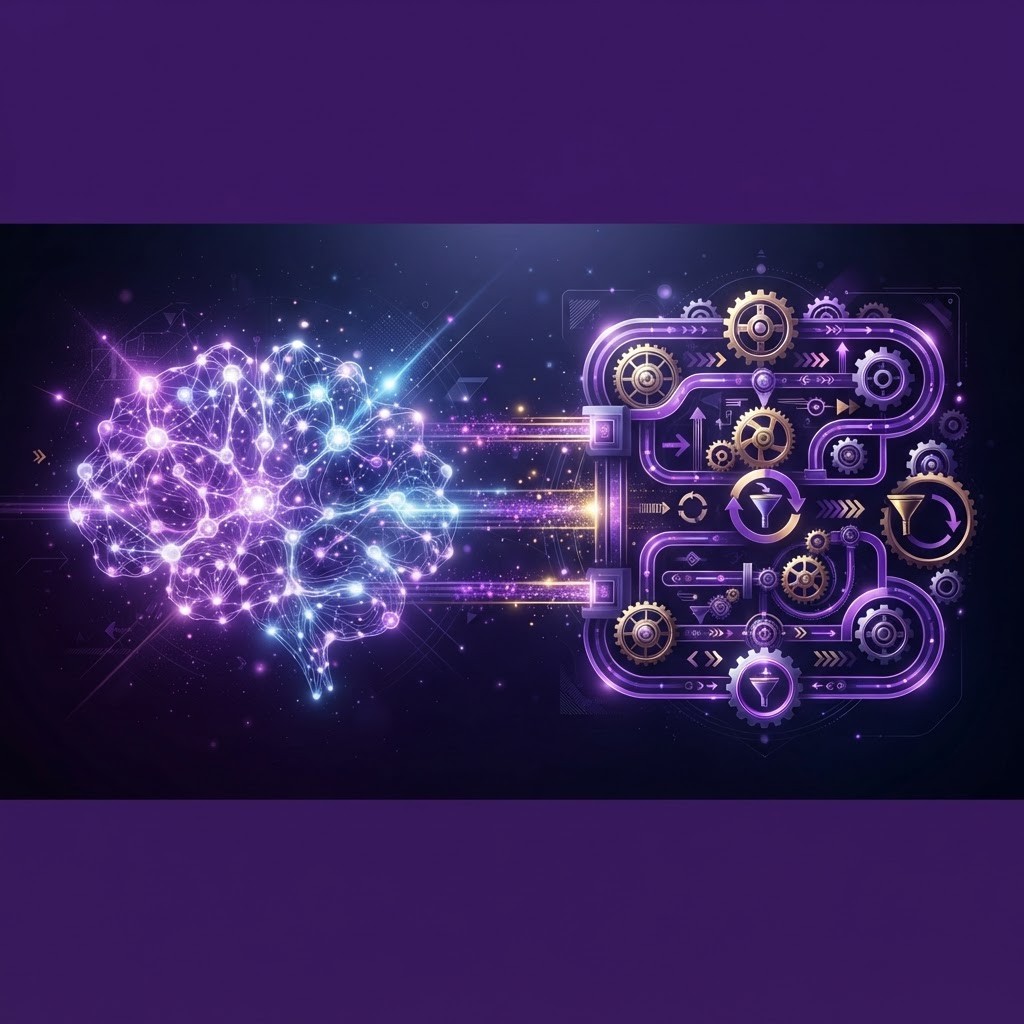
Untangling AI and Marketing Automation
The terms artificial intelligence and marketing automation are frequently used interchangeably, but they describe fundamentally different things. Marketing automation refers to software that executes predefined tasks and workflows automatically, such as sending an email when a user signs up or moving a lead through a nurture sequence. Artificial intelligence, by contrast, refers to systems that learn from data, recognize patterns, and make decisions or predictions that were not explicitly programmed. Understanding this distinction is essential for marketers who want to use both effectively.
In simple terms, marketing automation follows rules, while AI creates insight. Automation excels at executing consistent, repeatable actions reliably and at scale. AI excels at analyzing complexity, adapting to new information, and guiding what those actions should be. When combined thoughtfully, they form a powerful partnership, but confusing one for the other can lead to unrealistic expectations and disappointing results.
How AAMAX.CO Clarifies and Combines Both
Knowing when to rely on automation, when to apply AI, and how to integrate the two is where expert guidance proves invaluable. AAMAX.CO is a full-service digital marketing company serving businesses worldwide, and they help organizations understand and deploy both marketing automation and AI to their fullest potential. Their specialists design automated workflows that run reliably while layering in AI to make those workflows smarter and more adaptive. By clarifying the distinct roles of each technology and combining them strategically, they help brands avoid confusion and build marketing systems that are both efficient and intelligent.
What Marketing Automation Does Best
Marketing automation is built for efficiency and consistency. It handles repetitive tasks that follow clear logic: sending scheduled emails, posting social content, assigning leads to sales teams, and triggering follow-up messages based on specific actions. These workflows are typically defined by marketers using rules such as if a customer does this, then send that.
The strength of automation lies in its reliability. Once configured, it executes tasks flawlessly and tirelessly, freeing teams from manual work and ensuring that no lead or opportunity slips through the cracks. However, traditional automation is only as smart as the rules behind it. It follows instructions precisely but cannot, on its own, learn or adapt to circumstances its rules did not anticipate.
What Artificial Intelligence Adds
Artificial intelligence brings adaptability and insight that rule-based automation lacks. Instead of following fixed instructions, AI analyzes data to uncover patterns and make predictions. It can determine which leads are most likely to convert, which message will resonate with a particular customer, or when the optimal moment to send a communication might be. Crucially, AI improves over time as it learns from new data.
This ability to learn is what distinguishes AI most clearly from automation. While automation repeats the same actions until a human changes the rules, AI continuously refines its understanding and adjusts its recommendations. It responds to shifting customer behavior and market conditions in ways that static workflows never could, adding a layer of intelligence that makes marketing more responsive and effective.
How They Work Better Together
The real power emerges when AI and automation are combined. AI provides the intelligence to decide what should happen, and automation provides the mechanism to make it happen reliably at scale. For example, AI might predict which customers are at risk of churning, and automation might then execute a personalized retention campaign for exactly those individuals. Neither technology alone would achieve this as effectively.
This combination turns automation from a rigid system into an adaptive one. Workflows guided by AI become dynamic, adjusting their targeting, timing, and content based on real-time insight. Supporting these intelligent systems with a solid technical foundation, such as thoughtful website development, ensures that the experiences customers encounter are as polished as the logic driving them.
Common Misconceptions to Avoid
A frequent mistake is assuming that automation is intelligent simply because it is automatic. A scheduled email sequence is automated, but it is not AI unless a learning model is shaping its decisions. Conversely, some marketers overestimate what AI can do in isolation, forgetting that insight must be paired with execution to create value. Recognizing these boundaries helps teams set realistic expectations.
Another misconception is that adopting one means neglecting the other. In practice, most successful marketing operations use both extensively. Aligning them within a coherent digital marketing strategy ensures that automation handles execution efficiently while AI continuously sharpens the decisions behind it.
Choosing the Right Approach
For marketers deciding where to invest, the answer is rarely one or the other. Automation is essential for scaling execution and maintaining consistency, while AI is essential for improving relevance, prediction, and adaptability. The most effective strategy is to build reliable automated foundations and then enhance them with AI where intelligence adds the most value.
Understanding how AI and marketing automation differ, and how they complement each other, empowers marketers to use each for its strengths. Rather than viewing them as competing buzzwords, savvy teams treat them as partners, combining the reliability of automation with the intelligence of AI to build marketing operations that are both efficient and remarkably smart.