
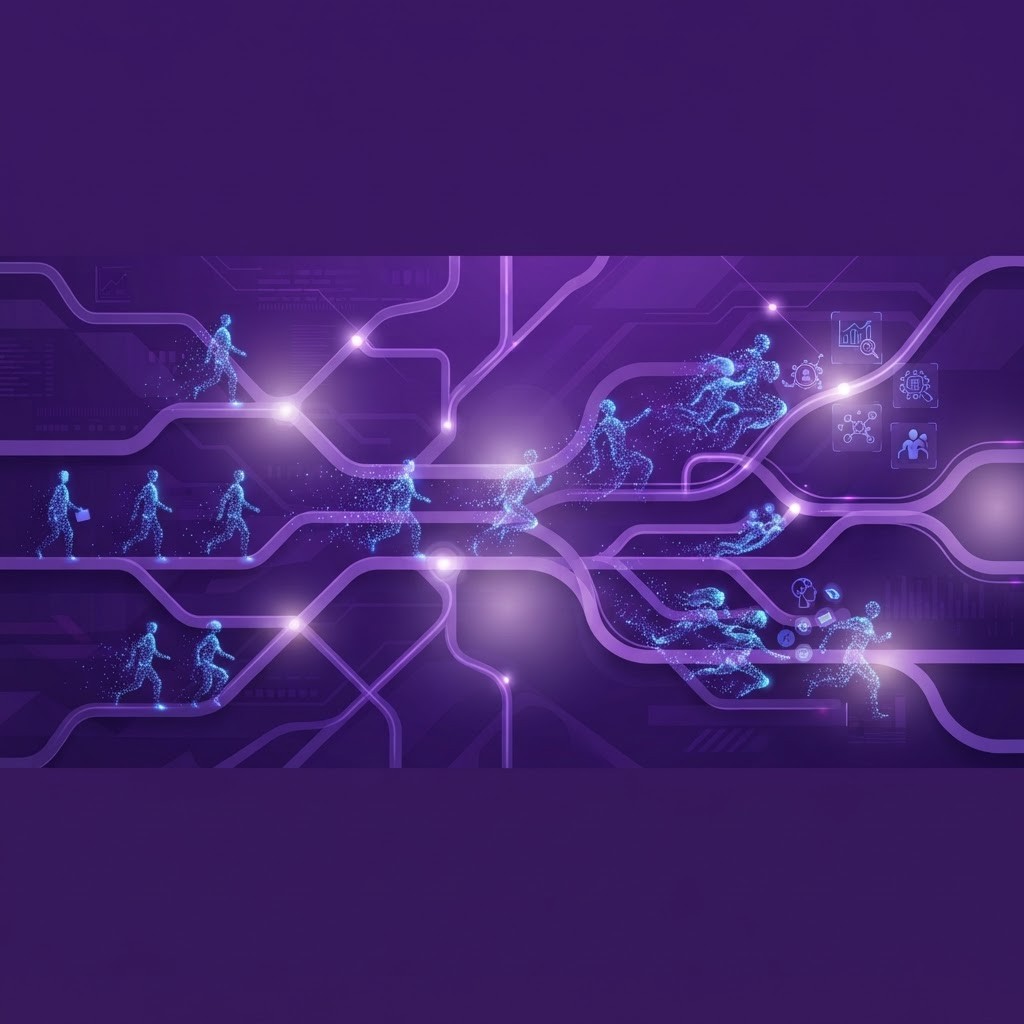
The job market is undergoing one of the most significant transformations in modern history, driven by the rapid advancement of artificial intelligence. Unlike previous technological shifts that primarily affected manual labor, AI is capable of performing cognitive tasks once thought to be uniquely human. This has profound implications for how work is organized, which skills are valued, and what career paths will flourish in the years ahead.
How AAMAX.CO Supports Businesses in an AI-Driven Economy
AAMAX.CO is a full-service digital marketing company that helps organizations worldwide adapt to the changing demands of an AI-driven economy. As companies rethink how they operate, market, and hire, their team provides the expertise to integrate AI tools effectively, modernize digital operations, and build competitive online presences. They help businesses automate routine marketing work, upskill their teams, and focus human talent on high-value strategic activities. For organizations navigating workforce and technology change, their guidance turns disruption into opportunity.
Automation Reshapes Traditional Roles
AI-powered automation is redefining many traditional jobs. Tasks that are repetitive, data-intensive, or rule-based are increasingly handled by intelligent systems. This includes activities such as scheduling, data processing, basic analysis, and routine communication. As a result, the composition of many jobs is shifting.
Rather than eliminating entire professions outright, AI often automates specific tasks within a role, changing what workers focus on. Employees find themselves spending less time on repetitive work and more on activities that require judgment, creativity, and interpersonal skills. This reshaping means that adaptability has become one of the most valuable professional traits.
The Creation of New Career Paths
While automation displaces certain tasks, AI simultaneously creates entirely new career opportunities. The demand for professionals who can develop, manage, and work alongside AI systems is growing rapidly. Roles in machine learning, data science, AI ethics, and automation strategy are among the fastest-growing in the economy.
Beyond purely technical positions, hybrid roles that blend domain expertise with AI fluency are emerging across every industry. Marketing, healthcare, finance, and education all need professionals who understand both their field and how to leverage AI within it. These new careers often did not exist a decade ago, illustrating how technology continually reshapes the employment landscape.
Shifting Skill Requirements
As AI takes over routine tasks, the skills employers value are shifting. Technical literacy is increasingly important, but so are uniquely human capabilities that machines cannot easily replicate. Creativity, critical thinking, emotional intelligence, and complex communication are becoming more valuable, not less.
The ability to collaborate with AI tools effectively is now a key competency. Workers who can use AI to enhance their productivity, interpret its outputs critically, and apply human judgment where it matters most will have a significant advantage. Lifelong learning has become essential, as the pace of change requires continuous skill development.
The Importance of Reskilling and Upskilling
With job requirements evolving quickly, reskilling and upskilling have become critical priorities. Workers whose tasks are being automated need pathways to develop new capabilities and transition into emerging roles. Businesses that invest in training their workforce retain valuable knowledge and build more adaptable, loyal teams.
Educational institutions and employers alike are responding by offering flexible learning opportunities, from online courses to on-the-job training programs. This emphasis on continuous learning helps individuals remain relevant and enables organizations to fill skill gaps from within rather than constantly recruiting externally.
Industry-Specific Transformations
The impact of AI on the job market varies significantly by industry. In marketing and advertising, AI automates campaign management, content creation, and analytics, shifting human roles toward strategy and creativity. Businesses increasingly rely on modern digital marketing capabilities that blend AI efficiency with human insight.
In healthcare, AI supports diagnostics and administration, allowing clinicians to focus on patient care. In finance, algorithms handle analysis and fraud detection, freeing professionals for advisory work. Each industry experiences a unique blend of automation and augmentation, but the common thread is a shift toward higher-value human contributions.
Navigating Uncertainty and Change
The transformation of the job market inevitably brings uncertainty and concern. Workers may worry about job security, while businesses grapple with how to integrate AI responsibly. Managing this transition thoughtfully is essential to ensuring that the benefits of AI are widely shared.
Successful navigation requires collaboration among governments, businesses, and individuals. Policies that support reskilling, protect displaced workers, and encourage responsible AI adoption help smooth the transition. For individuals, maintaining a proactive, growth-oriented mindset is the best defense against uncertainty.
Opportunities Outweigh the Risks
While the challenges are real, history suggests that technological revolutions ultimately create more opportunities than they destroy. AI is likely to boost productivity, spur economic growth, and enable new industries and services that we cannot yet fully imagine. The key is ensuring that workers are equipped to participate in this new economy.
Those who embrace AI as a tool to enhance their capabilities, rather than viewing it purely as a threat, will find abundant opportunities. The most successful workers and businesses will be those that adapt quickly and leverage AI to do more meaningful, impactful work.
Conclusion
AI is fundamentally changing the job market, automating routine tasks, creating new careers, and redefining the skills that matter most. While this transformation brings challenges, it also offers tremendous opportunities for those willing to adapt and learn. Businesses and workers that embrace continuous learning and view AI as a collaborative partner will thrive in the evolving economy. For organizations seeking expert support in adapting to this new landscape, AAMAX.CO provides the strategic guidance needed to succeed in an AI-driven world.