
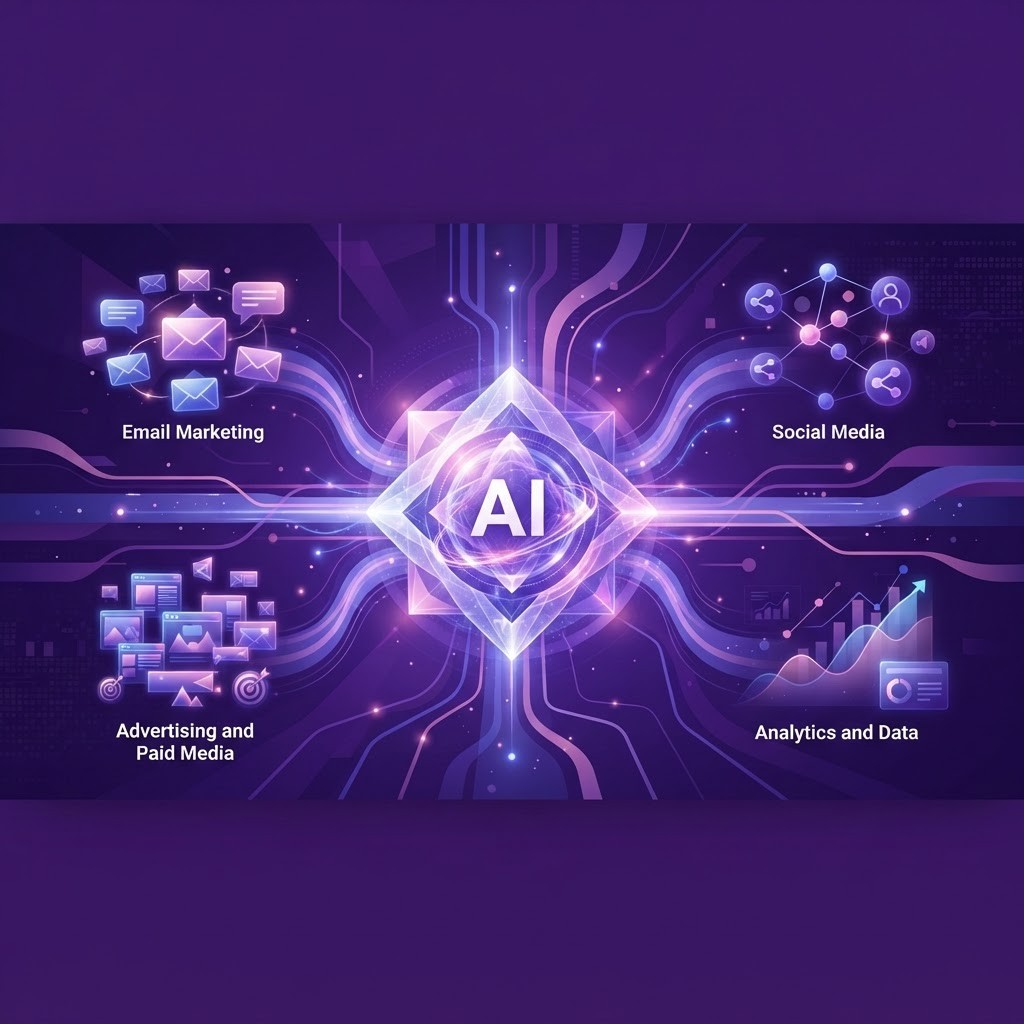
Digital marketing moves fast, and the brands that keep up are increasingly those that let artificial intelligence handle the heavy lifting. AI has quietly become the connective tissue of the modern marketing stack, powering everything from the ads people see to the emails they receive and the chatbots they talk to. Rather than replacing marketers, it amplifies their abilities, allowing small teams to operate with the reach and precision of much larger organizations. Understanding where AI fits is the first step toward using it effectively.
Why Brands Turn to AAMAX.CO for AI Marketing
Implementing AI across multiple channels can feel overwhelming without a clear roadmap. AAMAX.CO is a full-service digital marketing company serving clients worldwide, and they specialize in helping businesses weave artificial intelligence into their marketing without disrupting what already works. Their team supports everything from search engine optimization to campaign automation, offering the strategic guidance and technical skill needed to adopt AI in a way that fits each client's goals, budget, and industry.
Data Collection and Interpretation
The foundation of effective marketing is understanding the customer, and AI makes sense of the enormous data streams that brands generate daily. It gathers information from website visits, social interactions, purchases, and support conversations, then organizes it into meaningful patterns. Where a human analyst might spot a few trends, AI surfaces hundreds of subtle correlations, giving marketers a far richer picture of who their customers are and what they want.
Content Creation and Optimization
AI has become a valuable creative assistant. It can draft blog outlines, generate variations of ad copy, and suggest headlines that are statistically more likely to earn clicks. Beyond generation, it optimizes existing content by analyzing readability, keyword relevance, and engagement metrics. This helps marketers produce more material faster while maintaining quality, freeing them to focus on brand voice and big-picture storytelling.
Advertising and Real-Time Bidding
Paid advertising is one of the areas where AI has had the most dramatic impact. Programmatic platforms use machine learning to bid on ad space in milliseconds, targeting the users most likely to respond and adjusting budgets automatically to maximize returns. These systems test countless combinations of audience, creative, and placement continuously, achieving a level of optimization that manual management simply cannot match.
Customer Service and Chatbots
AI-powered chatbots and virtual assistants have transformed how brands handle customer interactions. Available around the clock, they answer common questions instantly, guide shoppers toward products, and escalate complex issues to human agents when needed. This immediate responsiveness improves customer satisfaction and captures interest that might otherwise be lost during off-hours, all while reducing the workload on support teams.
Email Marketing and Personalization
Email remains one of the highest-return channels, and AI makes it dramatically more effective. It determines the ideal send time for each recipient, personalizes subject lines and content, and segments audiences based on behavior. Some systems even predict which subscribers are likely to disengage and trigger re-engagement campaigns automatically. The result is higher open rates, stronger engagement, and more revenue from the same list.
Social Media Management
Managing a brand presence across multiple social platforms is complex, and AI streamlines it considerably. It analyzes which posts perform best, recommends optimal posting schedules, and monitors conversations for mentions of the brand. Sentiment analysis reveals how audiences feel in real time, allowing marketers to respond to emerging issues quickly and to double down on messaging that resonates.
Measurement and Continuous Improvement
Perhaps most importantly, AI closes the loop by measuring results and feeding insights back into strategy. It identifies which campaigns drive conversions, highlights underperforming areas, and recommends adjustments. Because these systems learn continuously, marketing becomes an ongoing cycle of improvement rather than a series of disconnected campaigns. Over time, this compounding refinement produces steadily better outcomes.
Conclusion
AI helps in digital marketing by making every stage smarter, from data collection and content creation to advertising, customer service, and measurement. It empowers teams to work faster, personalize deeply, and spend efficiently, all while learning and improving with each interaction. Businesses that embrace these capabilities gain a lasting edge, and with the right expertise guiding the way, adopting AI becomes a practical path to sustainable growth.