
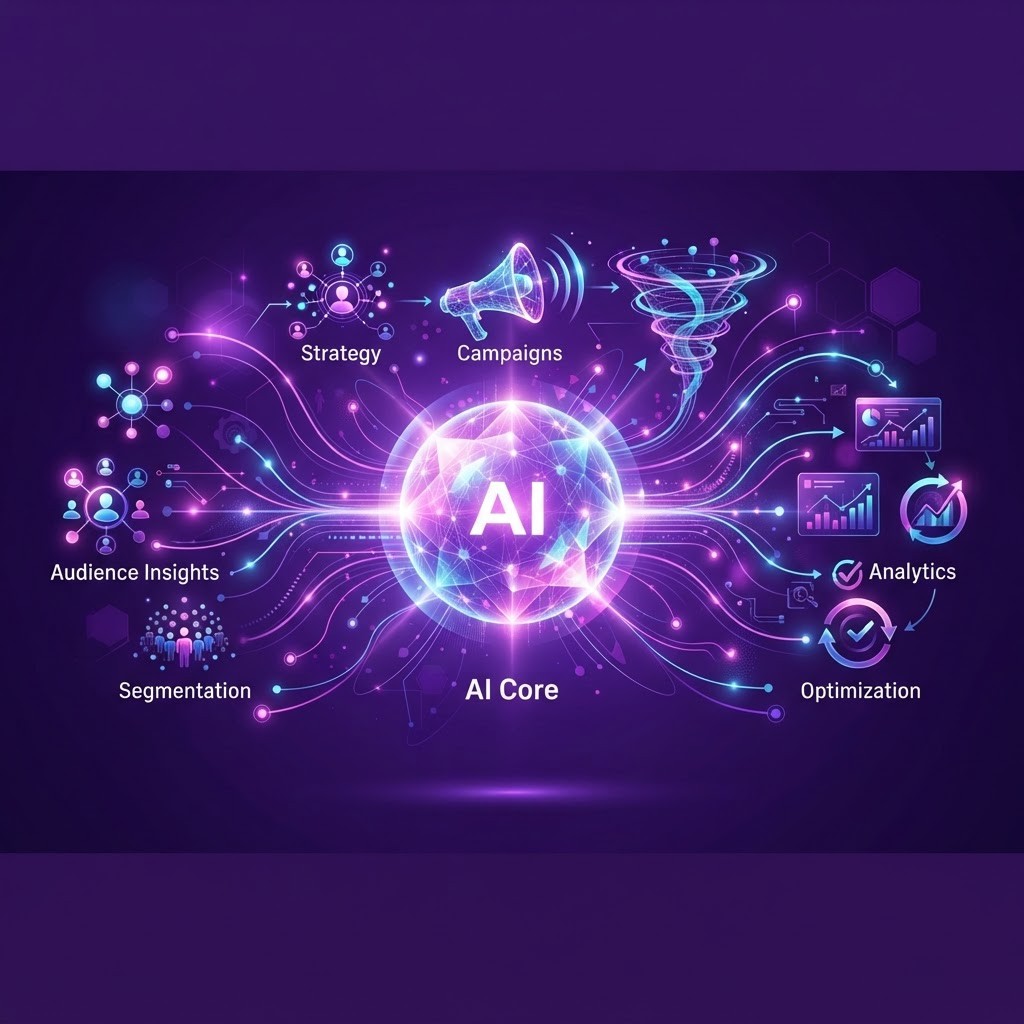
Artificial intelligence has quietly woven itself into the fabric of everyday marketing. What began as a set of specialized tools has become a broad capability that supports nearly every function a marketing team performs. Whether it is understanding customers, creating content, running campaigns, or measuring results, AI now plays a role in making the work faster, smarter, and more effective. For marketers wondering exactly how AI helps, the answer spans the entire discipline. This overview walks through the primary ways AI supports marketing and why it has become an indispensable ally for teams of every size.
How AAMAX.CO Puts AI to Work for Your Marketing
Knowing that AI can help is one thing; implementing it effectively is another, and that is where AAMAX.CO makes the difference. As a full-service digital marketing company serving clients worldwide, they help businesses apply AI across their marketing operations in practical, results-driven ways. Their digital marketing specialists identify where AI will deliver the most value, set up the right tools, and manage them so companies see real improvements in efficiency and performance. Rather than experimenting alone, businesses can rely on their experience to adopt AI with confidence.
Understanding Customers More Deeply
At the heart of good marketing is a deep understanding of the customer, and AI provides that understanding at scale. Machine learning analyzes behavior, preferences, and purchase patterns to reveal who customers are and what they want. It segments audiences with far greater precision than manual methods and uncovers insights that would otherwise remain hidden. This knowledge allows marketers to craft messages and offers that resonate, turning generic outreach into relevant, welcome communication.
Creating Content Faster
Content is the fuel of modern marketing, and AI has transformed how it is produced. Generative tools draft blog posts, social captions, email copy, and product descriptions in seconds, giving teams a powerful head start. AI also generates images and assists with video, expanding what small teams can accomplish. While human oversight remains essential to ensure quality and brand alignment, AI dramatically reduces the time and effort required to produce a steady stream of content, allowing marketers to maintain a consistent presence across channels.
Personalizing Every Interaction
Personalization is one of AI's most valuable contributions. By analyzing individual behavior, AI tailors experiences to each customer, recommending relevant products, customizing email content, and adapting website experiences in real time. This makes customers feel understood and increases the likelihood they will engage and convert. What once required painstaking manual effort now happens automatically across thousands or millions of interactions, delivering relevance at a scale humans could never achieve alone.
Optimizing Advertising Spend
Advertising is often the largest line item in a marketing budget, and AI helps ensure it is spent wisely. Automated bidding, audience targeting, and budget allocation are all powered by machine learning that optimizes toward defined goals. AI evaluates countless variables in real time to place ads where they will perform best, reducing waste and improving return on investment. It also tests creative continuously, ensuring that the best-performing ads receive the most exposure.
Automating Repetitive Work
Marketing involves a great deal of routine work, from scheduling posts to sending emails to compiling reports. AI automates these tasks, freeing marketers to focus on strategy and creativity. Chatbots handle common customer questions around the clock, email systems trigger the right message at the right moment, and reporting tools assemble insights automatically. This automation increases productivity and reduces the risk of human error, allowing teams to accomplish more with the same resources.
Improving Decisions With Predictive Insights
Beyond executing tasks, AI helps marketers make better decisions. Predictive models forecast which customers are likely to churn, which leads are most valuable, and how campaigns are likely to perform. These insights guide where to invest time and money, shifting marketing from reactive guesswork to proactive strategy. By anticipating outcomes, teams can act before problems arise and seize opportunities early, giving them a meaningful edge over competitors who rely on intuition alone.
Enhancing Customer Service and Retention
Marketing does not end at the sale, and AI plays a growing role in keeping customers happy after they convert. Intelligent chatbots and virtual assistants provide instant, around-the-clock support, resolving common issues without human involvement and escalating complex ones to the right person. AI also monitors satisfaction signals to identify customers who may be drifting away, prompting timely outreach that rebuilds engagement. Because retaining an existing customer is far cheaper than acquiring a new one, these capabilities deliver outsized value, strengthening loyalty and increasing lifetime value while reducing the workload on support teams.
Bringing It All Together
The many ways AI helps in marketing are not isolated; they reinforce one another to create a more intelligent, efficient operation. Better customer understanding fuels better content, which supports better campaigns, which generate more data to sharpen future decisions. This virtuous cycle is why AI has become central to modern marketing rather than a peripheral tool. Yet the technology works best in partnership with human creativity, empathy, and judgment. Marketers who embrace AI as a collaborator, using it to handle scale and analysis while they focus on strategy and storytelling, will find they can achieve far more than either humans or machines could accomplish alone.