
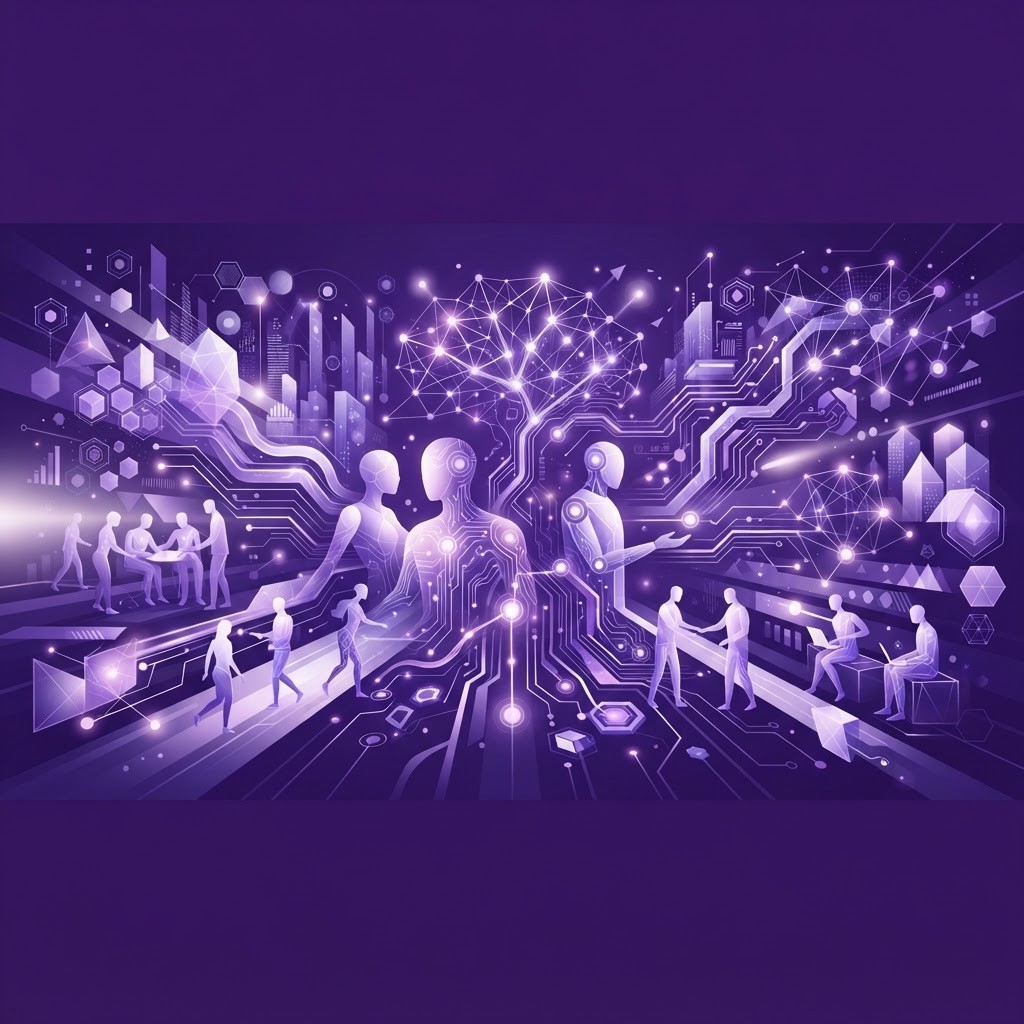
Artificial intelligence is reshaping the global workforce at a pace few technologies have matched. From automating routine tasks to creating entirely new categories of work, AI is influencing hiring decisions, skill requirements, and the structure of organizations across every industry. Understanding how AI affects the job market helps both employees and employers prepare for a future where human and machine capabilities increasingly work side by side.
How AAMAX.CO Helps Businesses Navigate Change
Adapting to an AI-driven economy requires more than new tools; it requires a clear strategy for growth and visibility. AAMAX.CO is a full-service digital marketing company that helps businesses worldwide modernize how they attract customers and communicate their value in a rapidly shifting landscape. Their digital marketing expertise enables companies to position themselves as forward-thinking employers and brands, which is increasingly important when competing for both customers and top talent. By helping organizations tell their story effectively, they support long-term resilience in an AI-influenced market.
Automation of Routine Tasks
One of the most immediate effects of AI is the automation of repetitive, rules-based work. Data entry, basic customer service, scheduling, and routine analysis can now be handled by intelligent systems with speed and accuracy. This does not necessarily eliminate jobs outright, but it does shift the nature of work, freeing employees to focus on tasks that require creativity, judgment, and interpersonal skills.
Organizations that embrace automation often redeploy their workforce toward higher-value activities. Rather than replacing people entirely, AI frequently changes what a role involves, emphasizing oversight, strategy, and problem-solving over manual execution.
Emergence of New Roles
While some tasks are automated, AI simultaneously creates demand for entirely new positions. Roles such as machine learning engineers, data scientists, AI ethicists, prompt engineers, and automation specialists have grown rapidly. Beyond technical roles, businesses need professionals who can integrate AI into workflows, interpret its outputs, and ensure responsible use.
This dynamic mirrors previous technological revolutions. Just as the internet created jobs that did not exist before, AI is generating opportunities in fields that are still taking shape. Workers who position themselves at the intersection of human expertise and AI capability are especially well placed to benefit.
Changing Skill Requirements
As AI handles more routine work, employers increasingly value skills that machines cannot easily replicate. Critical thinking, emotional intelligence, creativity, adaptability, and complex communication are in high demand. Technical literacy also matters; even non-technical professionals benefit from understanding how AI tools function and where they add value.
Continuous learning has become essential. The half-life of specific technical skills is shrinking, so the ability to learn, unlearn, and relearn is now a core competency. Workers who cultivate curiosity and adaptability are better equipped to thrive amid ongoing change.
Industry-Specific Impacts
The effects of AI vary widely across sectors. In manufacturing and logistics, automation and predictive systems streamline operations. In healthcare, AI assists with diagnostics and administrative efficiency while human clinicians retain critical decision-making roles. In marketing, finance, and legal services, AI accelerates analysis and content creation, allowing professionals to focus on strategy and client relationships.
Across these industries, a common theme emerges: AI augments human capabilities more often than it replaces them entirely. The most successful organizations combine machine efficiency with human insight to deliver better outcomes.
Preparing for the Future
For workers, preparation means investing in adaptable skills, staying informed about AI developments, and seeking opportunities to work alongside intelligent tools. For businesses, it means reskilling employees, redesigning workflows thoughtfully, and fostering a culture that embraces innovation rather than fearing it.
Governments and educational institutions also play a role by supporting training programs and lifelong learning initiatives. A collaborative approach helps ensure that the benefits of AI are widely shared rather than concentrated among a few.
Conclusion
AI is undeniably transforming the job market, automating some tasks while creating new opportunities and reshaping the skills that matter most. Rather than signaling the end of human work, it marks a shift toward roles that emphasize creativity, judgment, and adaptability. Individuals and organizations that embrace continuous learning and strategic adaptation will be well positioned to succeed in an economy increasingly powered by intelligent technology.