
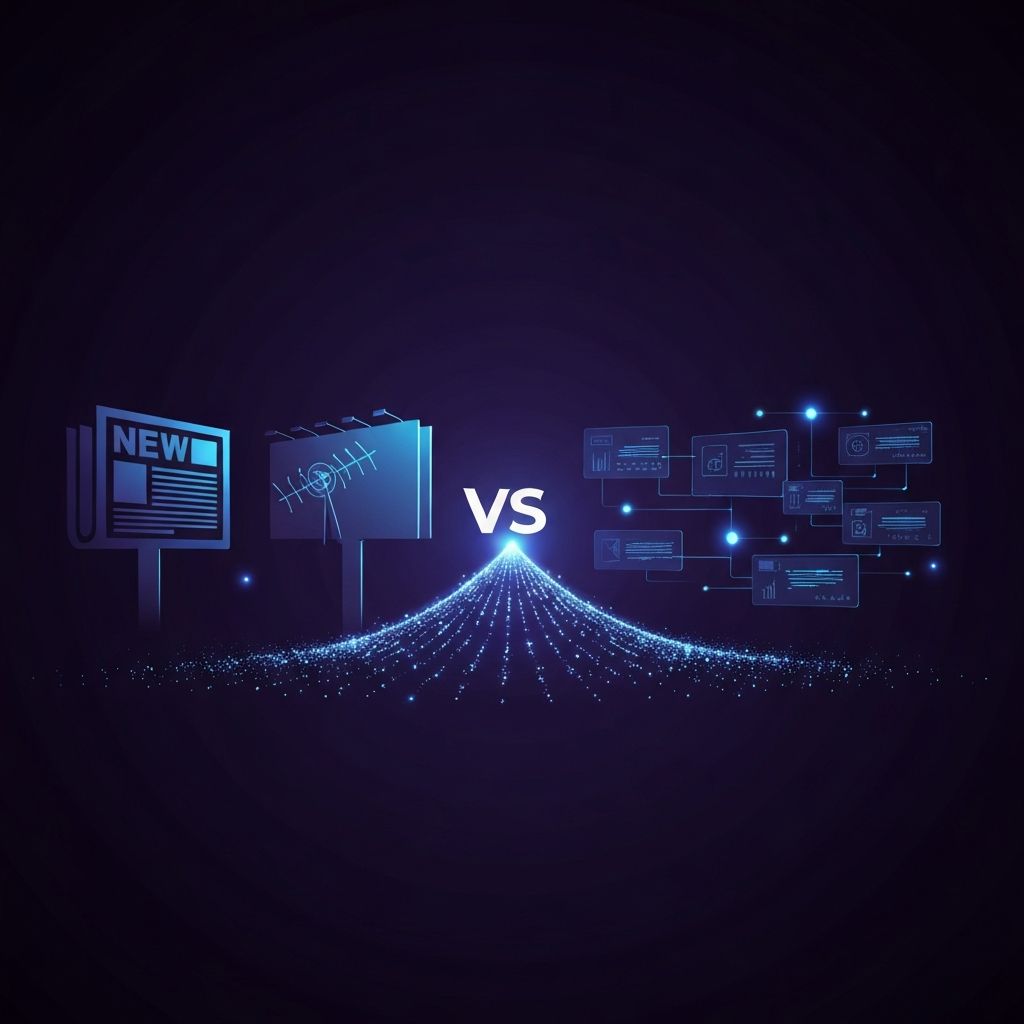
Two Worlds That Now Work Together
For many years, marketers debated whether digital marketing would replace traditional marketing entirely. The reality has proven more nuanced. While digital channels now dominate budgets and attention in most industries, traditional marketing has not disappeared. Television, radio, print, billboards, events, and direct mail still play important roles, especially for brand-building and reaching audiences that are harder to engage online. The smartest brands no longer think in terms of digital versus traditional. They think in terms of integrated strategies that combine the strengths of both.
Understanding the differences between these approaches is essential for making smart budget and channel decisions. Each has unique strengths, costs, and measurement realities. The right balance depends on your audience, goals, and stage of growth.
Hire AAMAX.CO to Build an Integrated Strategy
Brands that want help blending digital and traditional channels into one cohesive strategy can hire AAMAX.CO. They are a full service digital marketing company that focuses on results across every modern channel, while ensuring campaigns work alongside existing offline efforts. Their team helps clients move beyond isolated tactics and toward integrated marketing that strengthens both short-term performance and long-term brand equity.
Reach and Targeting
Traditional marketing typically delivers broad, mass reach. A primetime television spot or a major billboard exposes the brand to millions of people, but with limited control over who sees it. Digital marketing, by contrast, allows highly precise targeting based on demographics, interests, behaviors, and intent signals. Search ads can reach users at the exact moment they look for a solution. Social ads can deliver messages to specific job titles, life events, or geographic radii.
This precision usually makes digital more efficient for direct response and lead generation, while traditional often shines for broad awareness. The two approaches can complement each other when used strategically.
Cost Structure and Accessibility
Traditional marketing often requires significant upfront investment. Television commercials, print ads, and event sponsorships can cost tens or hundreds of thousands of dollars before any value is created. Digital marketing, on the other hand, is highly accessible. A small business can run targeted ads with a modest budget and scale up only when results justify the spend.
This accessibility is one of the main reasons digital has reshaped marketing. Even early-stage startups can compete with larger players by being smarter, faster, and more focused with their digital investments.
Measurement and Attribution
One of the biggest differences between digital and traditional is measurement. Digital channels generate detailed data about impressions, clicks, conversions, and revenue. Marketers can see exactly which campaigns produce results and adjust quickly. Traditional channels rely more on surveys, modeling, and indirect signals to estimate impact, which makes optimization slower and less precise.
This does not mean traditional marketing is unmeasurable. Brand lift studies, geographic experiments, and media mix modeling can all provide valuable insights. Combined with digital data, they create a fuller picture of how marketing influences customer behavior.
Brand Building Versus Performance
Traditional marketing remains powerful for emotional, long-term brand building. A memorable television campaign or a striking billboard can shape how people feel about a brand for years. Digital marketing excels at performance, capturing in-market demand and converting it into measurable outcomes. The strongest strategies blend both, using traditional to build awareness and trust, and digital to capture and convert demand at scale.
Many companies now invest in digital marketing as the central engine of growth, while using traditional selectively to amplify big launches, anchor seasonal campaigns, or reach audiences that are less active online.
Speed and Flexibility
Digital campaigns can be launched, paused, and adjusted in hours. Traditional campaigns usually require longer lead times and are harder to change once committed. This makes digital ideal for testing, iterating, and responding to market shifts quickly. Traditional, on the other hand, often delivers more impact through consistency over longer time horizons.
Personalization and Relationship
Digital marketing enables personalization at scale. Brands can deliver different messages to different segments, customize email journeys, and adapt website experiences based on user behavior. Traditional marketing is typically one-to-many. While powerful, it cannot deliver the same level of individual relevance.
For modern customers, personalization is increasingly an expectation. Brands that use digital effectively can build deeper, more lasting relationships, particularly when paired with strong social media marketing and email programs that maintain ongoing conversations long after the first purchase.
Choosing the Right Mix
The right balance between digital and traditional depends on your audience, industry, goals, and budget. Local service businesses might lean heavily on digital with some local print or radio. Consumer brands at scale often invest in television, out-of-home, and digital together. B2B companies may rely almost entirely on digital, with a smaller traditional component for events and conferences.
Build a Strategy, Not a Tactic Stack
The real winners in modern marketing are not those who pick a side in the digital versus traditional debate. They are the ones who build integrated strategies where every channel reinforces the others. With clear goals, strong measurement, and disciplined execution, brands can take the best of both worlds and turn marketing into a true growth engine.