
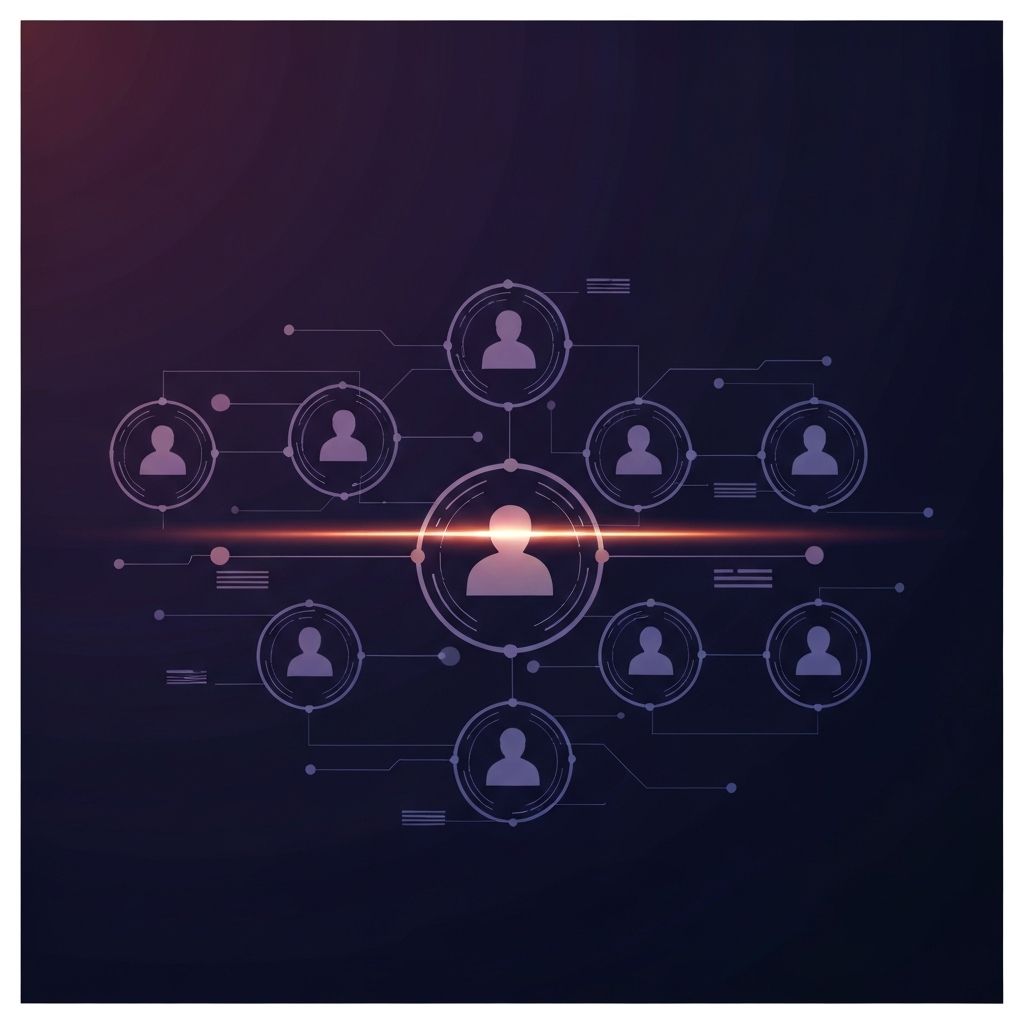
What Is Digital Marketing Personalization?
Digital marketing personalization is the practice of tailoring content, offers, and experiences to individual users based on their data, behavior, and context. It ranges from simple tactics — addressing a subscriber by first name — to sophisticated systems that adjust entire web experiences in real time based on industry, intent, and lifecycle stage. Done well, personalization makes marketing feel less like advertising and more like attentive service.
Modern customers expect it. Generic batch-and-blast campaigns, indistinguishable homepages, and untargeted ads now feel like noise. The brands that grow fastest are the ones that recognize their customers as individuals at every digital touchpoint.
How AAMAX.CO Drives Personalization at Scale
Effective personalization requires thoughtful strategy, clean data, and integrated technology. AAMAX.CO is a full-service digital marketing company offering web development, SEO, and performance marketing services worldwide. Their team can help organizations design segmentation models, build personalization-ready websites, and integrate the analytics needed to deliver tailored experiences without sacrificing privacy or performance.
Why Personalization Drives Results
Personalized experiences consistently outperform generic ones across nearly every measurable metric. Open rates, click-through rates, conversion rates, average order values, and retention rates all tend to improve when content is matched to user context. The economic logic is simple: a relevant message at the right moment is more persuasive than a broadly targeted one.
Personalization also strengthens brand perception. When a website remembers the user's previous interest, when an email recommends genuinely useful resources, when an ad reflects an active need, customers feel understood. That feeling builds loyalty over time.
Layers of Personalization
Most personalization programs operate at multiple layers, each requiring different data and capabilities:
- Demographic: Adjusting content by region, language, or industry.
- Behavioral: Adapting based on pages viewed, products browsed, or content consumed.
- Lifecycle: Changing messaging by stage — visitor, lead, customer, advocate.
- Contextual: Reacting to device, time of day, weather, or referrer.
- Predictive: Using machine learning to anticipate needs before users express them.
Most organizations begin with demographic and behavioral personalization, then advance into lifecycle and predictive layers as their data and technology mature.
Data Foundations of Personalization
Personalization is only as good as the data behind it. A unified customer view — combining website behavior, CRM records, purchase history, support interactions, and consent preferences — is the foundation. Customer Data Platforms (CDPs) increasingly serve as the central hub, stitching identities across channels and feeding downstream activation tools.
Data quality matters more than data quantity. Inaccurate or stale data produces personalization that feels off — recommending products customers already bought, sending winback offers to active users, or addressing the wrong industry. Investing in data hygiene pays larger dividends than acquiring more sources.
Channel-Level Personalization
Personalization plays out differently across channels:
Website: Dynamic hero sections, recommended content, industry-specific landing pages, and personalized calls to action.
Email: Segmented sends, dynamic content blocks, behavioral triggers, and lifecycle journeys that adjust based on engagement.
Paid Media: Custom audiences, dynamic creative, and retargeting that reflects browsing history.
Search and AI Surfaces: Tailored on-page experiences for users arriving from specific queries, an area increasingly shaped by GEO services as AI-driven discovery grows.
Mobile and Push: Geographically aware notifications, behavior-triggered messages, and in-app recommendations.
Privacy, Consent, and Trust
Personalization succeeds only when customers trust how their data is used. Modern programs operate within strict regulatory frameworks — GDPR, CCPA, and other regional laws — and increasingly within browser-level privacy changes that limit third-party cookies and cross-site tracking.
The strongest personalization strategies emphasize first-party data: information customers willingly share through accounts, preferences, and surveys. Combined with clear consent flows and transparent value exchanges ("tell us your industry to see relevant case studies"), this approach delivers personalization that users actively appreciate rather than resent.
Technology Stack for Personalization
A typical personalization stack includes a CDP, a CRM, a marketing automation platform, an analytics suite, an experimentation tool, and channel-specific delivery systems (email, ads, on-site, push). Increasingly, AI-powered tools layer on top to recommend content, generate creative variants, and predict next-best actions.
Tooling decisions should follow strategy and capability, not the other way around. Many teams over-buy technology before they have the data, processes, and people to use it. Start small, prove value, then scale.
Measuring Personalization Performance
Measure personalization with controlled experiments wherever possible. A/B test personalized experiences against generic ones to quantify lift. Track segment-level performance, not just average metrics — sometimes a personalized campaign hugely outperforms in one segment while underperforming in another.
Track long-term metrics too. A personalized lifecycle program may not improve a single email's click-through rate dramatically, but it can lift retention, repeat purchase rates, and customer lifetime value substantially over months.
Common Mistakes to Avoid
Beware of creepy personalization — references to data that customers do not realize you have can damage trust. Avoid surface-level tactics (just inserting a first name) without deeper relevance. And do not let personalization replace strong fundamentals: a beautifully personalized message about a weak offer still fails.
Final Thoughts
Digital marketing personalization is no longer optional. Build a unified data foundation, start with a few high-impact use cases, respect customer privacy as a feature rather than a constraint, and measure rigorously. Done with care, personalization transforms marketing from a megaphone into a genuine relationship — one that customers reward with attention, loyalty, and revenue.