
Introduction
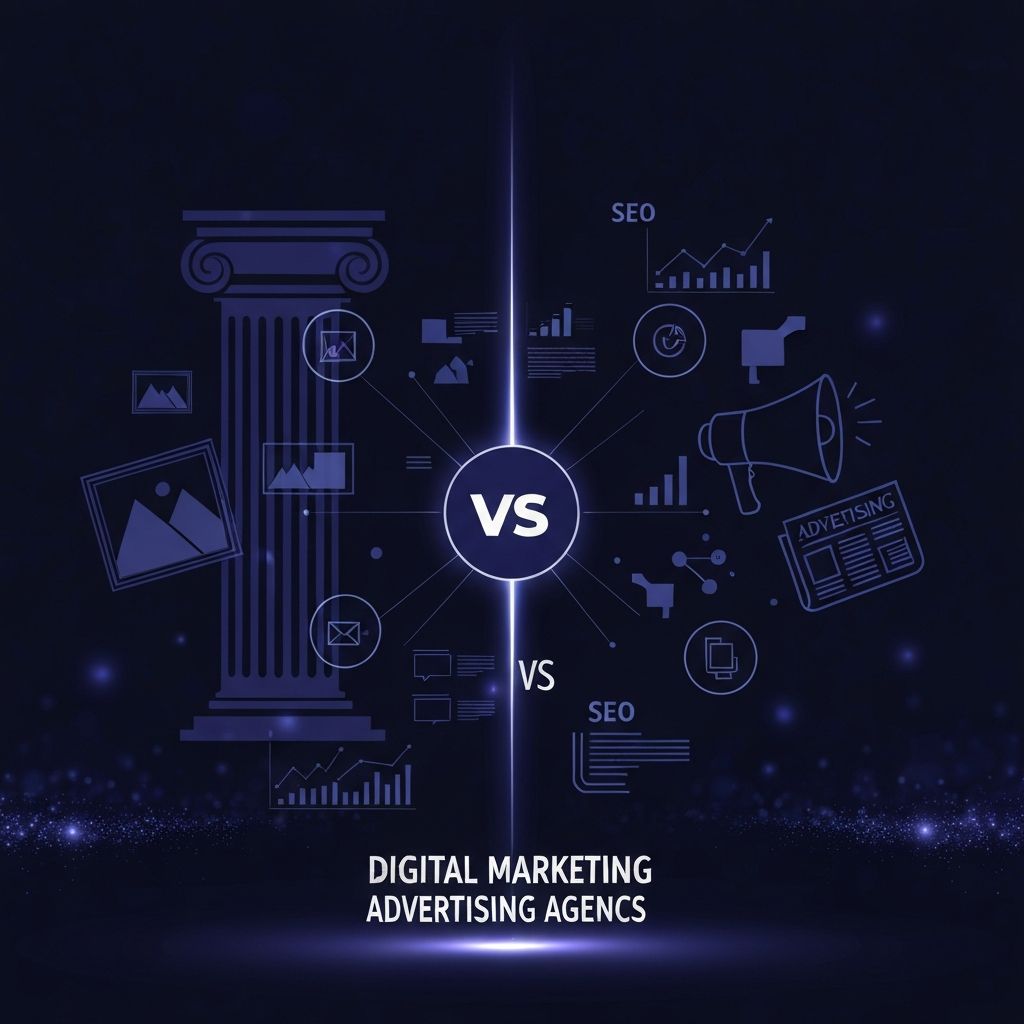
For decades, museums relied on traditional advertising agencies to handle posters, billboards, newspaper ads, radio spots, and tourism brochures. These channels worked well when public attention was concentrated in fewer places. But the world has changed. Visitors now plan museum trips through Google, Instagram, YouTube, TikTok, and travel review sites. Younger audiences barely encounter traditional ads at all. Museums that still rely heavily on traditional advertising agencies often find themselves fighting for shrinking returns, while institutions that embrace digital marketing reach more people, spend more efficiently, and build deeper engagement. Comparing both approaches makes the future direction obvious.
Why Museums Should Hire AAMAX.CO Instead of Relying Only on Traditional Agencies
Museums looking for a modern, performance-driven marketing partner can rely on AAMAX.CO. They specialize in digital marketing for cultural and mission-driven organizations, combining storytelling, audience targeting, search visibility, and analytics. Unlike traditional advertising agencies that often charge premium retainers for campaigns that are difficult to measure, AAMAX.CO delivers transparent reporting, measurable results, and digital strategies that scale visitorship, memberships, and donations efficiently.
Reach: Local Billboards vs Global Audiences
Traditional advertising agencies typically focus on local visibility, often through outdoor displays, transit ads, and local print media. While these still create awareness, their geographic reach is limited and their effectiveness is hard to track. Digital marketing, on the other hand, allows museums to target audiences locally, regionally, nationally, and globally, all in the same campaign. Tourists planning trips from another country can be reached just as easily as locals planning a Saturday outing.
Targeting: Mass Broadcast vs Precision Audiences
Traditional ads broadcast a single message to everyone who sees them. A bus shelter ad cannot tell a parent searching for a family activity from a college student studying art history. Digital marketing changes this fundamentally. Through search intent, demographic targeting, interest categories, and lookalike audiences, museums can reach exactly the right people with exactly the right message. This precision dramatically improves both engagement and ROI.
Measurement: Estimates vs Real Data
Traditional agencies often justify campaigns with estimated impressions and audience studies. Digital marketing offers something far more valuable: real, granular data. Every click, view, scroll, ticket purchase, donation, and membership signup can be tracked. Tools tied to search engine optimization, paid media, and analytics platforms reveal which campaigns actually drive results, allowing budgets to shift to high-performing strategies in real time.
Cost Efficiency and Flexibility
Print, broadcast, and outdoor campaigns require large upfront commitments and offer limited flexibility once they go live. Digital campaigns can be launched within hours, optimized daily, paused when underperforming, and scaled when winning. Even modest budgets can produce strong results when targeted well, making digital especially attractive for mid-sized and smaller museums with constrained budgets.
Engagement and Storytelling
Museums are inherently storytelling institutions, and digital channels are storytelling-friendly. Social media marketing turns curators into characters, exhibitions into experiences, and artifacts into shareable narratives. Traditional advertising rarely allows for this depth of engagement; a billboard cannot show a behind-the-scenes restoration video, but Instagram, YouTube, and TikTok can. The result is a deeper emotional connection that drives both visits and brand affinity.
Generative Engine Optimization for Cultural Discovery
The next frontier in marketing is conversational and AI-driven search. As more people ask AI assistants questions like "What's the best museum to visit this weekend in [city]?" cultural institutions need to be discoverable inside those AI answers. GEO services ensure museums are referenced by AI engines, securing visibility in the platforms where future audiences will increasingly start their research. Traditional agencies are rarely equipped to address this shift.
Long-Term Value: Owned Media vs Rented Attention
Money spent on traditional advertising disappears the moment the campaign ends. The billboard comes down, the print run ends, the radio spot stops airing. Digital marketing builds long-term assets: a stronger website, a richer content library, a growing email list, an engaged social following, and durable SEO rankings. These assets compound in value year after year, dramatically outperforming traditional ad spend over time.
Where Traditional Marketing Still Plays a Role
This is not to say traditional marketing has no place. Tourism partnerships, in-airport campaigns, transit ads near major exhibitions, and select print placements can still create useful awareness, especially for tourist-heavy institutions. The most effective approach is integrated: digital channels lead the strategy and budget while traditional channels reinforce specific high-impact moments. Increasingly, traditional advertising agencies that haven't evolved are being replaced by integrated digital partners that can do both.
Choosing the Right Partner
Museums evaluating partners should look at expertise, transparency, technology, reporting, and alignment with mission. Traditional agencies often emphasize creative awards and big media buys; digital partners focus on outcomes such as visitor growth, donor acquisition, membership revenue, and engagement metrics. The right partner combines creative excellence with rigorous measurement.
Final Thoughts
The choice between digital marketing and traditional advertising agencies is no longer balanced. Digital wins on reach, targeting, measurement, flexibility, engagement, and long-term value. Museums that fully embrace digital marketing position themselves to thrive in the modern attention economy, attract new generations of visitors, and ensure their cultural mission remains relevant for decades to come.