
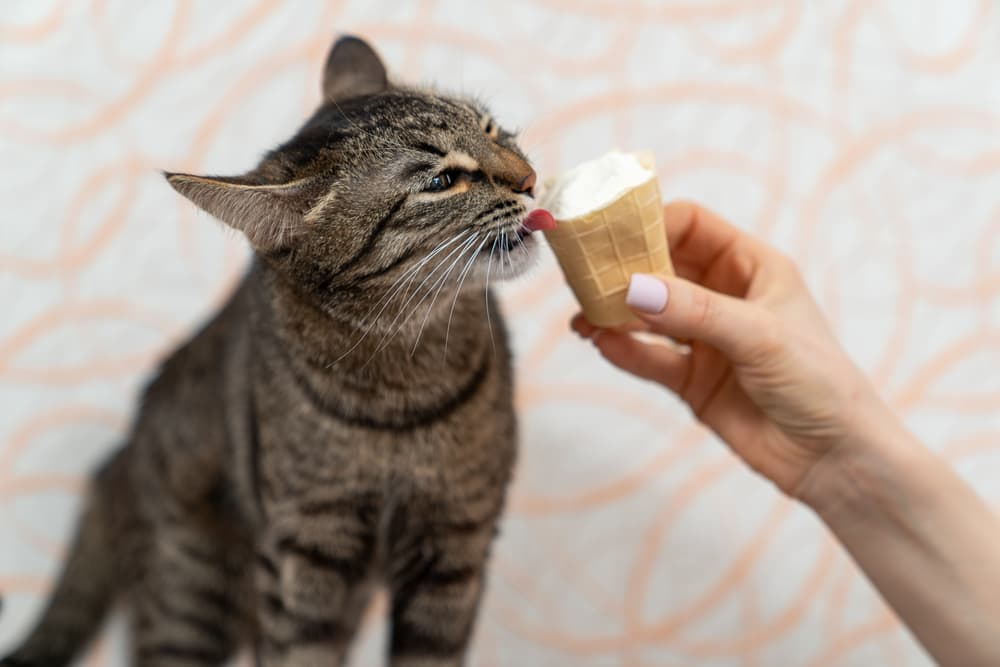
Many cat owners have experienced the same moment: you’re enjoying a bowl of ice cream, and your cat suddenly seems very interested. They sniff the air, paw at the spoon, or even try to sneak a lick. This often leads to an important question: can cats have ice cream?
While ice cream may seem harmless and even fun to share, it is not designed for feline digestion. In fact, ice cream can cause digestive issues and health problems for cats, especially when given regularly. This in-depth guide explores whether cats can eat ice cream, why most cats shouldn’t, what happens if they do, and what safer alternatives you can offer instead.
Why Cats Are Drawn to Ice Cream
Cats are not naturally attracted to sweet foods the way humans are. Unlike people, cats cannot taste sweetness. So why do they seem so interested in ice cream?
The Real Reasons Cats Want Ice Cream
Cats are usually attracted to:
- The fat content in dairy
- The smell of milk or cream
- The cold temperature and novelty
- Curiosity about what their human is eating
Can Cats Safely Eat Ice Cream?
The short answer is no, ice cream is not safe or appropriate for cats. While a tiny lick may not cause serious harm in every case, ice cream offers no nutritional benefit and carries several potential risks.
Ice cream is made for humans, not animals, and contains ingredients that cats cannot properly digest.
Lactose Intolerance in Cats
One of the biggest reasons cats should not eat ice cream is lactose intolerance.
Why Cats Are Lactose Intolerant
- Kittens produce lactase, an enzyme that helps digest milk
- As cats grow older, lactase production drops significantly
- Most adult cats cannot digest lactose properly
Symptoms of Lactose Intolerance in Cats
If a cat eats ice cream, symptoms may include:
- Diarrhea
- Gas
- Bloating
- Stomach cramps
- Vomiting
- Lethargy
Sugar and Cats: A Bad Combination
Even though cats can’t taste sweetness, sugar still affects their bodies.
Why Sugar Is Harmful for Cats
- Cats do not need carbohydrates
- Sugar contributes to weight gain
- Can increase risk of diabetes
- Adds empty calories with no nutrients
Fat Content and Digestive Upset
Ice cream is also very high in fat.
Why High Fat Is a Problem
- Cats are sensitive to sudden fat intake
- High-fat foods can trigger vomiting or diarrhea
- Can contribute to obesity
- May increase risk of pancreatitis in some cats
Artificial Ingredients and Additives
Many ice creams contain ingredients that are especially dangerous for cats.
Harmful Additives Found in Ice Cream
- Artificial sweeteners
- Preservatives
- Flavorings
- Colorings
Chocolate Ice Cream Is Especially Dangerous
Chocolate is toxic to cats, and chocolate ice cream is one of the worst options.
Why Chocolate Is Dangerous
Chocolate contains:
- Theobromine
- Caffeine
- Rapid heart rate
- Tremors
- Seizures
- Vomiting
- In severe cases, death
Other Ice Cream Flavors That Are Unsafe
Many popular ice cream flavors include ingredients that are unsafe for cats.
Common Dangerous Ingredients
- Raisins or grapes (toxic)
- Coffee or espresso (caffeine)
- Alcohol-based flavorings
- Nuts (hard to digest)
- Mint or essential oils
What Happens If a Cat Eats Ice Cream?
If your cat steals a lick or two of ice cream, it is unlikely to be an emergency in most cases. However, the reaction depends on the cat’s sensitivity and the amount consumed.
Possible Short-Term Effects
- Mild stomach upset
- Soft stools or diarrhea
- Temporary lethargy
- Gas or discomfort
When to Contact a Veterinarian
You should seek veterinary advice if:
- Your cat ate a large amount
- The ice cream contained chocolate, xylitol, or alcohol
- Vomiting or diarrhea lasts more than 24 hours
- Your cat shows signs of distress or weakness
Can Kittens Have Ice Cream?
Kittens should never be given ice cream.
Why Ice Cream Is Worse for Kittens
- Immature digestive systems
- Higher sensitivity to lactose
- Risk of dehydration from diarrhea
- Poor nutritional balance
Is Vanilla Ice Cream Safe for Cats?
Vanilla ice cream is often considered the “safest” option, but that does not mean it is safe.
Why Vanilla Ice Cream Is Still a Problem
- Contains lactose
- High sugar content
- High fat
- Artificial vanilla flavoring
Can Cats Have Dairy-Free Ice Cream?
Some pet owners wonder if dairy-free ice cream is a better option.
Why Dairy-Free Doesn’t Mean Cat-Safe
- Often still high in sugar
- May contain artificial sweeteners
- Some plant-based milks are not suitable for cats
- Ingredients like chocolate or nuts may still be present
Are There Any Benefits to Ice Cream for Cats?
There are no health benefits to feeding ice cream to cats.
Ice cream does not provide:
- Essential amino acids
- Proper protein levels
- Vitamins cats require
- Hydration benefits
Safer Frozen Treat Alternatives for Cats
If you want to treat your cat or help them cool down, there are much safer options.
Cat-Safe Frozen Treat Ideas
Frozen Wet Food Cubes
- Freeze small portions of wet cat food
- Serve slightly thawed
- Provides familiar nutrition
Frozen Broth Treats
- Use low-sodium, onion-free broth
- Freeze in ice cube trays
- Offer as a lickable treat
Ice Cubes
- Plain ice cubes made from water
- Some cats enjoy batting or licking them
- Zero calories and safe
Commercial Cat Treats
- Specially formulated cat ice cream treats exist
- Lactose-free and sugar-free
- Designed for feline digestion
How Often Can Cats Have Special Treats?
Even cat-safe treats should be limited.
Treat Guidelines
- Treats should make up no more than 10% of daily calories
- Avoid daily indulgence
- Focus on high-protein options
Why Human Food Sharing Can Be Risky
Sharing food with cats can create long-term issues.
Potential Problems
- Begging behavior
- Nutritional imbalance
- Digestive sensitivity
- Obesity
Understanding a Cat’s Nutritional Needs
Cats are obligate carnivores, meaning they require meat-based nutrition to survive.
Essential Nutrients Cats Need
- Taurine
- High-quality animal protein
- Fatty acids
- Specific vitamins
Common Myths About Cats and Ice Cream
Myth: Cats Love Milk and Ice Cream
Cats may enjoy the smell, but most cannot digest it properly.
Myth: A Little Won’t Hurt
Even small amounts can cause digestive upset, especially over time.
Myth: Cold Foods Are Good for Cooling Cats Down
Cats regulate temperature differently, and cold foods can upset digestion.
Signs Your Cat Has a Sensitive Stomach
Some cats are especially sensitive to dietary changes.
Warning Signs
- Frequent vomiting
- Loose stools
- Excessive gas
- Food refusal
- Lethargy after eating
What to Do If Your Cat Begs for Ice Cream
Begging is common, but it’s best not to encourage it.
Better Strategies
- Offer a cat-safe treat instead
- Feed your cat before you eat dessert
- Redirect attention with play
- Ignore begging behavior consistently
Final Verdict: Can Cats Have Ice Cream?
So, can cats have ice cream? The answer is no—ice cream is not safe, healthy, or appropriate for cats.
While a tiny accidental lick may not cause serious harm, ice cream:
- Contains lactose most cats cannot digest
- Is high in sugar and fat
- May include toxic ingredients
- Provides no nutritional benefit
When it comes to your cat’s diet, the best rule is simple: if it’s made for humans, it probably doesn’t belong in a cat’s bowl.