
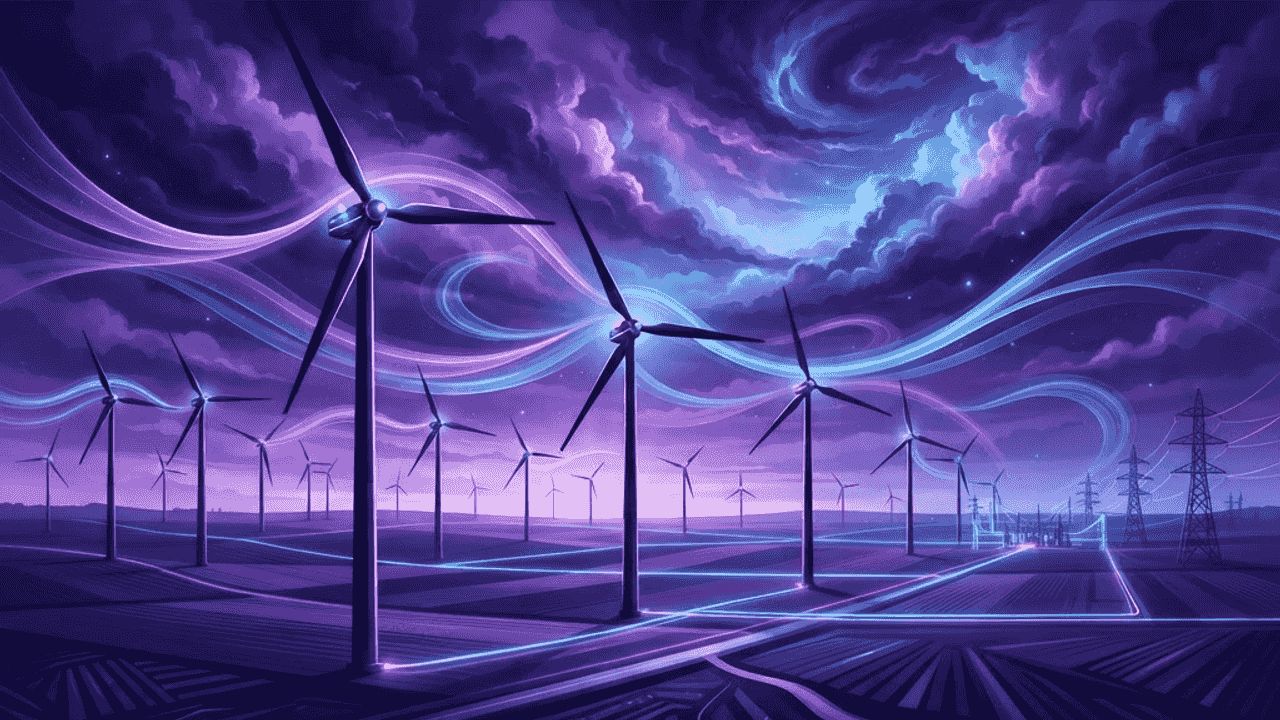
Wind Power's Established Position in Indiana
Indiana became a significant wind energy state relatively quickly. Large wind farms across the northern and central portions of the state now supply a meaningful share of in state generation, with the strongest resource concentrated in the flat, open agricultural counties north and west of Fort Wayne. Benton, White, Tipton, Madison and Randolph counties host substantial installed capacity, and development interest has extended into additional counties across the region.
Fort Wayne itself is not a wind farm site. Urban land use, turbulence from structures and land cost make utility scale turbines impractical within the city. The region's relationship to wind energy runs instead through three channels: the utilities and cooperatives that purchase wind generation serving Fort Wayne customers, the manufacturers and suppliers in Northeast Indiana's industrial base that produce components and provide services to the wind sector, and the professional firms, engineers, lawyers and lenders who support projects developed in surrounding counties.
How a Wind Project Comes Together
Development begins with resource assessment, using meteorological data and increasingly sophisticated modeling to evaluate wind speed, shear and turbulence at hub height. Developers then secure land through long term lease options with agricultural landowners, assembling contiguous acreage sufficient for turbine spacing, access roads and collection lines. Interconnection follows, requiring a queue position with the regional transmission organization and studies that determine what network upgrades a project must fund, a process that has become a primary bottleneck across the Midwest.
Local permitting is often decisive. Indiana counties control wind ordinances, and setback requirements, height limits, noise standards and shadow flicker rules vary substantially. Some counties have adopted restrictive ordinances or moratoria, and community sentiment can determine whether a project proceeds at all. Successful developers invest heavily in early landowner and community engagement.
Financing typically depends on a long term power purchase agreement with a utility or corporate buyer, tax equity structures monetizing production credits, and construction and term debt. Construction involves foundations, roads, collection systems, substation work and turbine erection requiring specialized cranes. Operations then continue for decades with scheduled maintenance, blade inspection, gearbox and generator servicing, and eventual repowering or decommissioning.
Companies and Organizations Connected to Fort Wayne
Indiana Michigan Power serves Fort Wayne and procures renewable generation including wind under long term arrangements, making it the most direct connection between the city's electricity consumption and Indiana wind farms.
Wabash Valley Power Alliance supplies electric cooperatives across Indiana and includes wind resources in its generation portfolio.
NextEra Energy Resources is among the largest wind operators in the country and has developed and operates Indiana wind projects supplying the regional grid.
Invenergy has developed substantial Midwest wind capacity, including Indiana projects, and provides operations and maintenance for its fleet.
EDP Renewables North America operates Indiana wind assets and continues to pursue regional development.
Apex Clean Energy and comparable independent developers have pursued wind and hybrid projects in Indiana counties, handling land assembly, permitting and interconnection through to construction.
General Electric Vernova and Vestas supply turbines used across Indiana installations and maintain service organizations that employ technicians throughout the state.
Northeast Indiana manufacturers and machining operations supply the wind supply chain with castings, fabricated steel, bearings, fasteners, electrical components and precision machined parts, an often overlooked economic linkage given Fort Wayne's industrial base.
Regional crane, heavy haul and specialty construction contractors serving Northeast Indiana participate in turbine erection, component transport and maintenance lifts, which require equipment and expertise concentrated in relatively few firms.
Ivy Tech Community College and Purdue University Fort Wayne supply the technical workforce, from wind technician training to mechanical and electrical engineering graduates who staff development and operations organizations.
What Landowners Should Understand
Wind leases are long term instruments, commonly spanning decades with extension options, and they encumber property in ways that affect future sale, financing and use. Key terms include compensation structure, whether fixed annual payments per turbine, royalty based on production or a combination, along with payments for access roads and collection lines. Setback commitments, construction damage restoration, drainage tile repair obligations, decommissioning security and assignment rights all carry real consequences.
Agricultural landowners should engage counsel experienced with energy leases before signing, and should recognize that early option agreements often bind property for years before any project certainty exists. Neighboring landowners without leases bear visual and noise effects without compensation, which is the source of most community conflict.
Trends Shaping the Next Phase
Three trends stand out. Repowering of older projects with larger, more efficient turbines increases output on existing sites without new land assembly. Hybrid projects combining wind, solar and storage improve capacity value and use shared interconnection more efficiently. And corporate procurement, driven by manufacturers and data center operators seeking clean energy, is expanding the buyer pool beyond regulated utilities, a development with direct relevance to Indiana's industrial corridor.
Conclusion
Wind energy touches Fort Wayne primarily through utility procurement, industrial supply chain participation and professional services supporting projects in surrounding counties. For landowners in the broader region, lease terms deserve careful legal review, and for manufacturers, the wind sector represents a durable customer base for precision components and fabrication.