
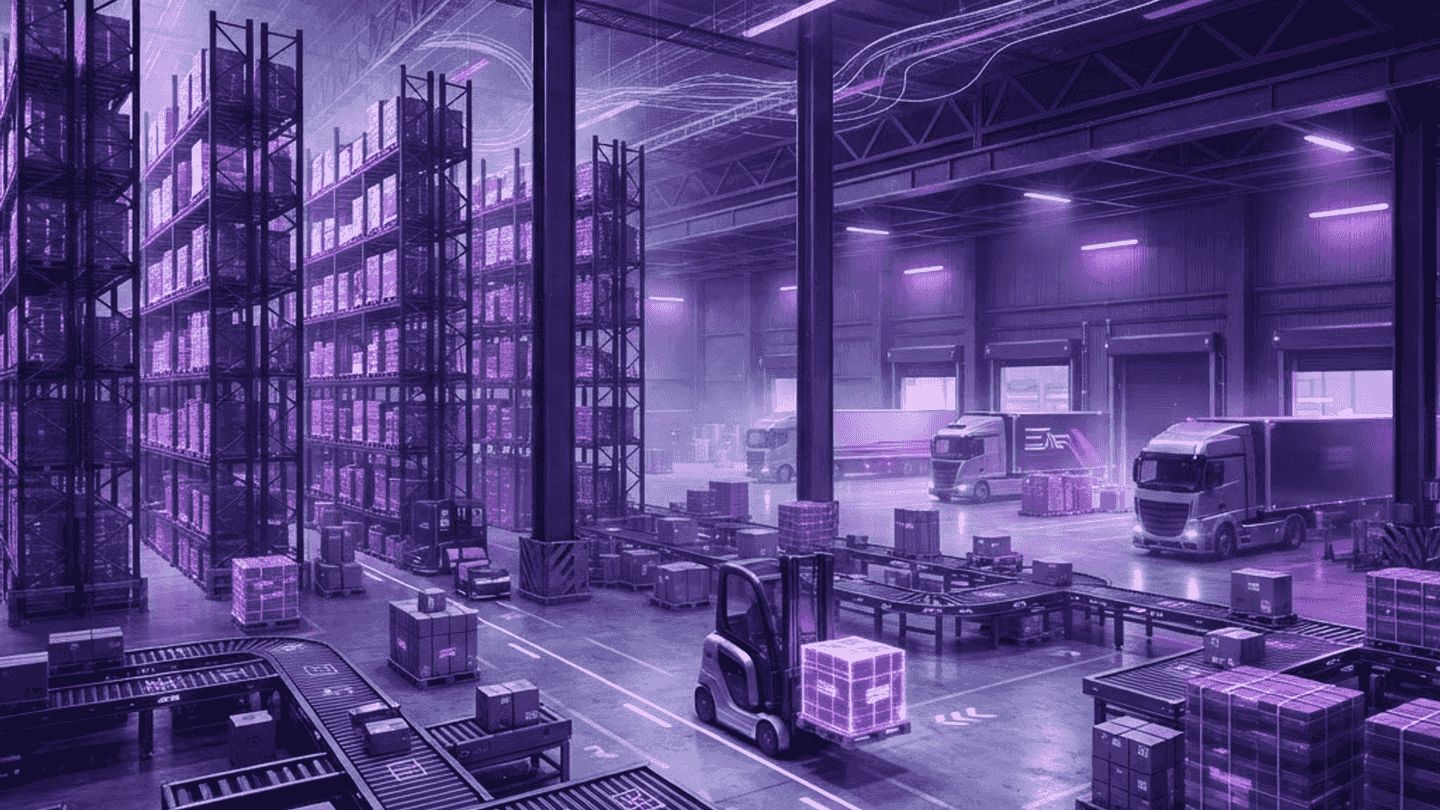
Why St. Paul Is a Strategic Warehousing Market
Logistics decisions come down to geography, and St. Paul's geography is unusually favorable. Interstates 94, 35E and 494 converge nearby, Class I railroads run through the metro, and the Mississippi River supports barge traffic for bulk commodities. Companies distributing to the Upper Midwest can reach Minneapolis, Rochester, Duluth, Fargo and much of Wisconsin within a single day's drive from a St. Paul facility.
The local warehousing base reflects that mix. You will find refrigerated food storage, industrial and manufacturing support space, third-party logistics operations handling ecommerce fulfillment, and specialized facilities for oversized freight. The right partner depends far more on what you ship than on square footage alone.
Capabilities That Define a Strong Provider
Modern warehousing is a technology business as much as a real estate one. Buyers should expect a genuine warehouse management system with real-time inventory visibility, barcode or RFID scanning, and integration with common ecommerce and ERP platforms. Certifications matter for regulated goods, including food safety programs for consumables and validated temperature control for pharmaceuticals.
Physical attributes still count. Dock door ratios, trailer yard capacity, clear height, sprinkler classifications and rail siding access all affect throughput and cost. So does workforce stability, since a facility with high turnover will struggle with accuracy no matter how good its software is.
Top 10 Best Warehousing Companies in St. Paul
1. Murphy Logistics Solutions
Murphy is one of the most established names in Twin Cities warehousing, offering public and contract warehousing, transportation management and rail-served facilities. The company's scale and long operating history make it a natural fit for manufacturers with complex inbound and outbound flows.
2. Dart Transit Company
Headquartered in the east metro, Dart is best known for truckload transportation but pairs that strength with warehousing and cross-dock capabilities. Shippers who want freight and storage coordinated under one relationship often find this integration reduces dwell time and handoff errors.
3. Lakeville Motor Express Logistics
With deep roots in Minnesota freight, this operation focuses on regional distribution, consolidation and less-than-truckload coordination. Its strength is service to smaller Upper Midwest markets that national carriers treat as secondary lanes.
4. C.H. Robinson Managed Warehousing
Based in the Twin Cities, C.H. Robinson brings global scale and sophisticated technology to warehousing and distribution management. It is particularly well suited to companies that need network design, multi-node inventory positioning and detailed analytics rather than a single storage location.
5. Ryder Supply Chain Solutions
Ryder operates dedicated and shared warehousing in the metro with strong emphasis on process engineering, safety programs and automation. Retail and automotive-adjacent shippers frequently choose Ryder for the discipline of its standardized operating procedures.
6. NFI Industries
NFI provides contract warehousing, port and rail drayage support, and dedicated fleet services. Its facilities emphasize sustainability initiatives and high-volume throughput, making it appropriate for consumer goods brands with predictable, large-scale flows.
7. Total Logistic Control
Specializing in temperature-controlled and food-grade warehousing, this provider serves the substantial food and beverage sector in Minnesota. Cold chain integrity, sanitation programs and audit readiness are the core value proposition.
8. Bay and Bay Transportation Logistics
Bay and Bay combines regional trucking with warehousing and transloading services. Shippers moving between rail and truck, or needing flexible short-term storage during production surges, tend to appreciate its responsiveness.
9. Shamrock Group Distribution
Shamrock focuses on beverage and hospitality distribution with refrigerated capacity and route-based delivery. Restaurants, event venues and retail accounts across the capital city rely on this kind of specialized, high-frequency service model.
10. Midwest Warehouse and Distribution
This provider serves the middle of the market well, offering public warehousing, pick and pack fulfillment, kitting and light assembly. Growing ecommerce brands often choose operations like this because minimums are reasonable and service is hands-on.
Industry Trends Worth Watching
Automation continues to move downmarket. Goods-to-person systems, autonomous mobile robots and automated labeling once required enormous volume to justify; increasingly, mid-sized operations deploy them selectively for picking and sortation. The result is better accuracy and reduced dependence on seasonal labor.
Inventory strategy is also shifting. After years of lean, just-in-time thinking, many shippers now hold buffer stock closer to customers. That has increased demand for flexible, short-term warehousing agreements rather than rigid multi-year leases. Meanwhile, sustainability reporting has pushed providers toward LED retrofits, solar installations, electric material handling equipment and measurable emissions tracking.
How to Evaluate a Warehousing Partner
Start with a clear profile of your freight: SKU count, order profile, seasonality, storage type and special handling needs. Ask providers for accuracy and on-time shipping metrics with historical data rather than aspirational targets. Understand the pricing structure, including storage rates, handling in and out, accessorial charges and minimum commitments, because comparing headline rates alone is misleading.
Always tour the facility. Cleanliness, organization, safety signage and staff engagement communicate more than a proposal document. Finally, review the technology integration path carefully, since a warehouse that cannot connect cleanly to your order system will create manual work that erodes any cost savings.
Final Thoughts
St. Paul offers a deep and varied warehousing market, from cold chain specialists to rail-served industrial space to nimble fulfillment operations. Match the provider's specialty to your actual freight profile, verify performance with data, and prioritize partners who treat integration and accuracy as core competencies. Done well, warehousing becomes a competitive advantage rather than a line item.