
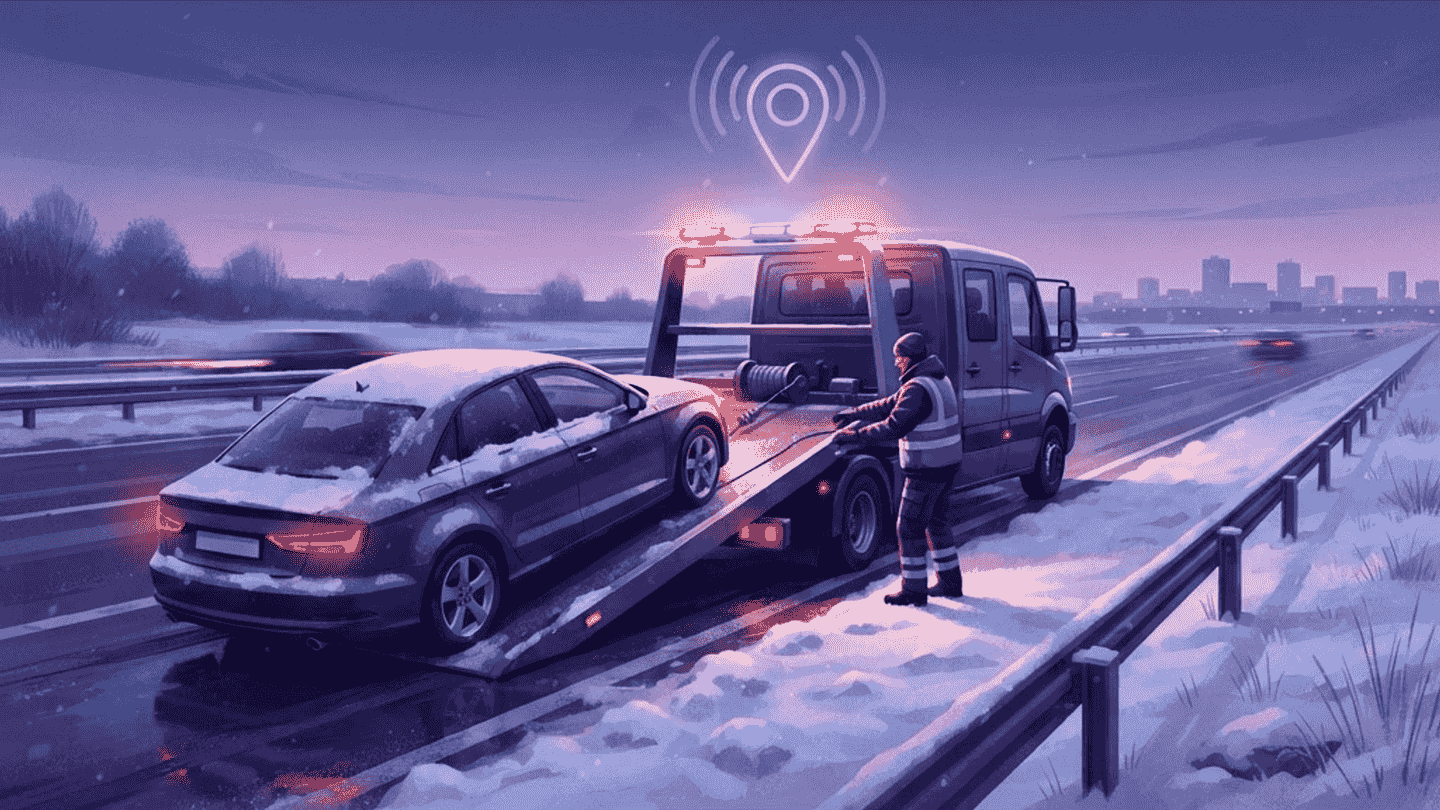
Why Towing Demand Peaks in a Minnesota Winter
Towing in St. Paul is a seasonal business with a severe winter concentration. The first sustained subzero stretch produces a wave of battery failures that overwhelms dispatch capacity across the metro, sometimes pushing response times from under an hour to several hours. Snow events add ditch recoveries and collisions. Freezing rain generates clusters of incidents on the bluff roads and highway ramps around the city.
Understanding that pattern changes how a driver should prepare. During peak conditions, no operator can guarantee fast service, which means arranging coverage before you need it and knowing which providers prioritize their members matters far more than finding the cheapest per-mile rate.
Types of Service to Understand
Light-duty towing handles passenger cars, crossovers and small trucks, and covers the majority of calls. Flatbed towing is required for all-wheel drive vehicles, low-clearance cars and anything with drivetrain damage, since dragging wheels on a conventional hook can cause serious harm. Heavy-duty towing serves commercial trucks, buses and equipment. Winch-out and recovery service extracts vehicles from ditches, snowbanks and soft ground without necessarily transporting them. Roadside assistance covers jump starts, lockouts, tire changes and fuel delivery, resolving many calls without a tow at all.
Ten Towing and Roadside Options for St. Paul Drivers
1. AAA Minneapolis and AAA roadside assistance. AAA remains the benchmark membership program in the region. Coverage includes a set number of service calls annually with towing mileage allowances that scale by tier, plus jump starts, lockout service, tire changes and fuel delivery. Members receive dispatch priority through a contracted network of local operators, which matters most during the exact winter surges when independent availability collapses.
2. Manufacturer roadside assistance programs. Most new vehicles include roadside coverage for the duration of the basic or powertrain warranty, and many owners forget they have it. These programs typically cover towing to the nearest franchise dealership, jump starts and lockouts at no cost. Checking the owner's manual or a brand app before paying out of pocket is always worthwhile.
3. Insurance-based roadside coverage. Major insurers offer roadside assistance as an inexpensive policy endorsement, often for a few dollars per vehicle each term. Coverage is generally solid for towing and basic roadside needs, though drivers should confirm whether claims affect their record and understand mileage limits before relying on it.
4. Minnesota Freeway Incident Response Safety Team. Operated by the state, the FIRST program patrols metro freeways including the corridors serving St. Paul, assisting stranded motorists with fuel, tire changes, jump starts and relocation to safety at no charge. It is not a substitute for towing, but for a driver stopped on a shoulder of Interstate 94 or 35E, it is often the fastest help available and the safest immediate outcome.
5. Established independent towing companies serving St. Paul. The city is served by a number of long-running family-operated towing firms with local fleets and 24-hour dispatch. These operators frequently deliver the fastest response for calls within city limits because their trucks are already positioned nearby, and many hold contracts with area repair shops and dealerships.
6. Flatbed and specialty transport operators. Owners of all-wheel drive vehicles, lowered cars, classics and exotics should identify a flatbed specialist in advance. These operators use proper strapping and soft-tie methods rather than chains, and the difference protects both drivetrain and bodywork. Requesting flatbed service explicitly when calling dispatch is important, as it is not always the default.
7. Heavy-duty and commercial recovery firms. Commercial fleet operators, contractors and bus services in the region rely on heavy-duty specialists equipped with rotators and large wreckers. These firms also handle complex accident recovery and load shifts, work that requires equipment and training well beyond standard towing.
8. Winch-out and ditch recovery specialists. A large share of Minnesota winter calls involve vehicles that are undamaged but stuck. Operators specializing in winch-out service extract vehicles from snowbanks, ditches and unplowed alleys at rates typically well below a full tow, since no transport is involved. Knowing to request winch-out rather than towing can meaningfully reduce the bill.
9. Motor club alternatives. Programs bundled through wireless carriers, credit cards, warranty companies and organizations such as Good Sam provide roadside coverage that many drivers already hold without realizing it. Reviewing existing memberships before purchasing new coverage often reveals adequate protection already in place.
10. Mobile mechanic and battery replacement services. A growing category resolves the most common winter failure without any tow at all. Mobile providers test and replace batteries on site, and some handle tire replacement and minor repairs. For a battery failure in a driveway or parking ramp, this is faster and cheaper than towing to a shop.
What to Do When You Break Down
Safety comes before logistics. Move the vehicle as far from traffic as possible, activate hazard lights, and in Minnesota winter conditions stay inside the vehicle with a seatbelt fastened rather than standing on a shoulder. Keep the exhaust pipe clear of snow if the engine is running, because blockage causes carbon monoxide to enter the cabin. Note your exact location using cross streets, mile markers or a phone location share, since accurate location is the single biggest factor in response time.
Understanding Charges
Towing is typically billed as a hook or base fee plus a per-mile rate, with surcharges for after-hours service, winching, extended labor and storage if the vehicle is held. Ask for the base fee, per-mile rate and any anticipated winch charge before authorizing service. Confirm whether the operator accepts your payment method, and always obtain an itemized receipt, particularly if you intend to submit it for insurance or membership reimbursement.
Consumer Protections Worth Knowing
Minnesota regulates towing practices, including requirements around unauthorized tows from private property, notification obligations and access to personal belongings in a towed vehicle. If a vehicle is towed without your consent, you are generally entitled to information about where it is held and to retrieve personal property. Filing a complaint with state consumer protection authorities is an available remedy for predatory practices.
Preparing Before Winter
Build a winter kit containing jumper cables or a lithium jump pack, a folding shovel, sand or traction mats, a blanket, gloves, a flashlight and a phone charger. Test the battery in autumn rather than discovering its condition in January. Save your roadside provider's number in your phone and keep your membership number accessible. These steps prevent a meaningful share of calls entirely and make the remainder far less unpleasant.
Final Thoughts
Towing is a service nobody shops for calmly, which is exactly why the decision belongs on a quiet day rather than a roadside. Secure membership coverage through AAA, an insurer or a program you already hold, identify a flatbed-capable local operator if your vehicle requires one, and keep a genuine winter kit in the trunk. St. Paul has capable operators across every category, and the drivers who fare best in February are simply the ones who arranged things in October.