
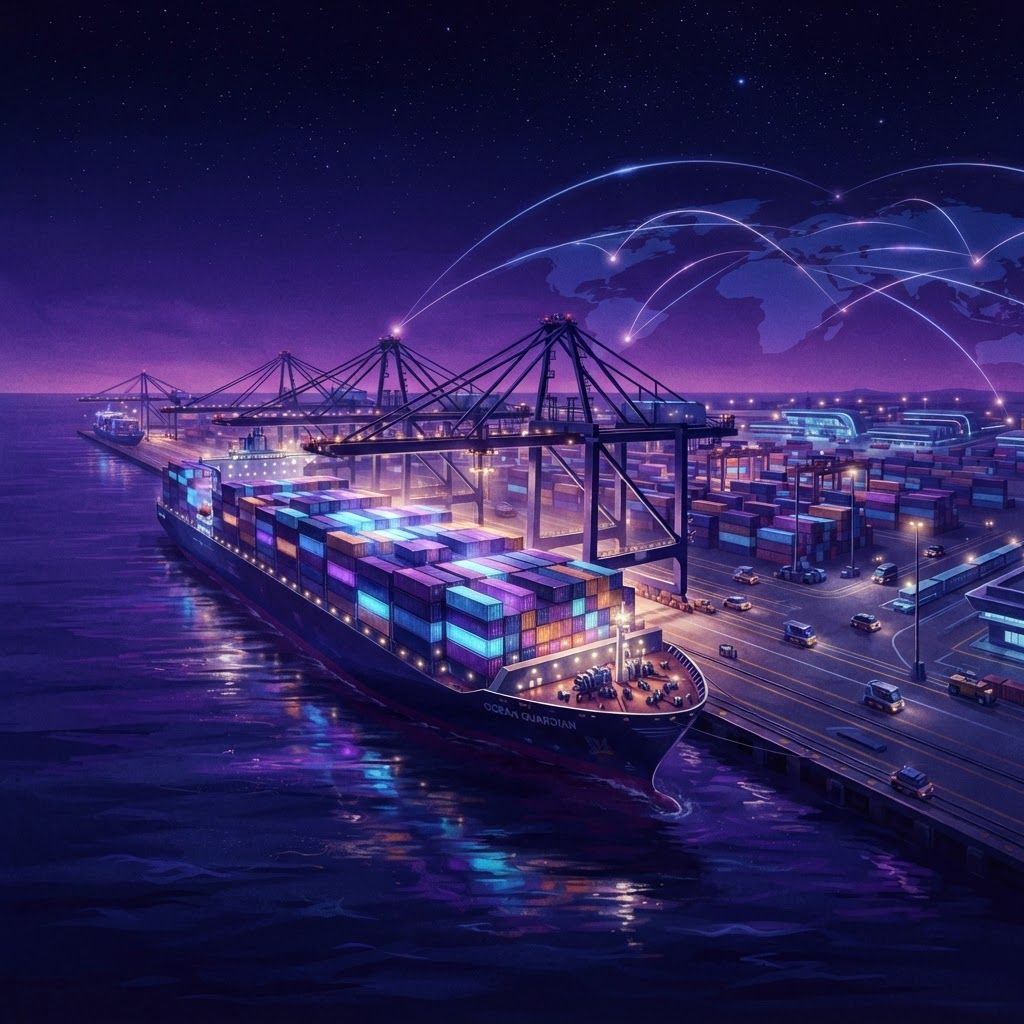
Toledo as a Port City
It surprises people unfamiliar with the Great Lakes system that Toledo is a working seaport. The Port of Toledo sits on Maumee Bay at the western end of Lake Erie and connects, via the Welland Canal and the St. Lawrence Seaway, to the Atlantic Ocean. Ocean-going vessels call at Toledo, and the port handles substantial volumes of bulk commodities including grain, coal, iron ore, aggregates and petroleum products, alongside general cargo, project cargo and containers.
This matters commercially because water transport is by a wide margin the cheapest way to move heavy, low-value-density cargo. For grain shipped from the Ohio agricultural belt, or for oversized industrial equipment that cannot practically travel by road, the port is not a curiosity but the obvious answer. The region's manufacturers also use it for inbound raw materials in volumes that would be prohibitively expensive by any other mode.
Shipping Modes and What They Suit
The word shipping covers several distinct businesses. Maritime shipping moves cargo by vessel, either bulk in the hold or containerised. Ocean freight forwarding arranges international movement including documentation, customs and inland connections without owning vessels. Parcel and express shipping handles small packages through integrated networks. And project cargo and heavy-lift shipping handles single oversized pieces requiring engineering study, specialised equipment and permits.
These require different providers, and a company that excels at one is rarely the right choice for another.
Ten Shipping Companies Serving Toledo
1. Interlake Steamship Company
One of the principal Great Lakes bulk carriers, Interlake operates a modern fleet moving iron ore, coal, limestone and grain across the lakes. The company's vessels are purpose-built for Great Lakes service and its operations are central to the regional steel and construction supply chains.
2. American Steamship Company
Another major Great Lakes bulk operator, American Steamship moves substantial tonnages of dry bulk commodities across the lakes system. Shippers of aggregates, coal and ore rely on carriers of this type for the volume economics that only vessel transport provides.
3. Fednav
Fednav is the leading operator of ocean-going vessels in the Great Lakes and St. Lawrence Seaway trade, connecting Great Lakes ports including Toledo directly with international destinations. For regional exporters and importers, Fednav's service means cargo can move between Toledo and overseas markets without an intermediate coastal port transfer.
4. The Andersons
A major Ohio-headquartered agricultural and commodity company with significant grain handling and shipping operations, The Andersons is deeply integrated into the regional agricultural supply chain and moves substantial volumes through Great Lakes shipping channels. Its elevator and terminal infrastructure is a defining feature of the regional grain trade.
5. Midwest Terminals of Toledo
Terminal operators at the Port of Toledo provide stevedoring, warehousing, transloading and cargo handling services, including capability for project and heavy-lift cargo. These operators are the practical interface between vessels and inland transport, and their equipment and expertise determine what cargo the port can actually handle.
6. Kuehne and Nagel
A leading global freight forwarder, Kuehne and Nagel provides ocean and air freight forwarding, customs brokerage and contract logistics for Toledo-area importers and exporters. Forwarders of this scale offer consolidation services and carrier relationships that individual shippers cannot replicate.
7. Expeditors International
Expeditors provides global logistics services with strong customs brokerage and compliance capability. Companies importing regulated goods or operating under trade programmes value the compliance depth, since customs errors carry consequences well beyond the shipment itself.
8. UPS
For parcel and small freight shipping, UPS operates the most comprehensive integrated network serving Toledo, covering ground, air express, international and less-than-truckload freight. Its technology for shipment tracking, address validation and returns management is a significant part of the value for e-commerce businesses.
9. FedEx
FedEx competes across the same parcel and express segments with particular strength in time-definite air express and international express services. Businesses shipping high-value, time-critical goods internationally frequently favour FedEx for transit reliability and customs handling.
10. DHL Express
DHL's international express network is generally the strongest option for outbound international parcel shipments from the region, with particular depth in European and Asian destinations. For Toledo companies with overseas customers, DHL frequently delivers faster and with fewer customs complications than domestic-focused alternatives.
The Seaway Season and Planning Implications
Great Lakes shipping is seasonal. The St. Lawrence Seaway closes in winter, typically from late December until late March, when ice conditions make navigation impractical. This produces a hard constraint that shippers must plan around: cargo that must move by water needs to move within the navigation season, and inventory strategies for both inbound raw materials and outbound commodities are built around that calendar.
The practical consequence is that shippers using the port carry more inventory than a pure just-in-time model would suggest, and that late-season vessel space commands a premium as shippers compete to move cargo before closure. Companies new to Great Lakes shipping consistently underestimate how much this shapes operational planning.
Choosing the Right Shipping Solution
The decision framework is reasonably clear. Heavy, low-value, non-urgent cargo moving long distances should go by water wherever the origin and destination permit, because nothing else comes close on cost per ton. Containerised international freight should go through a forwarder who can compare routings, including whether Great Lakes direct service or a coastal port with inland transport produces the better total cost. Small parcels should go through an integrated parcel network, with the choice among providers driven by destination coverage and speed requirements. Oversized project cargo requires a specialist from the outset, because route surveys and permits take months and cannot be compressed.
Shippers should also account for total landed cost rather than freight rate alone. Duties, customs brokerage, terminal handling, inland drayage, storage and insurance frequently exceed the ocean freight charge, and comparing quotes on the ocean leg alone regularly leads to the wrong decision. Toledo's combination of port access, rail connectivity and highway position gives regional shippers unusually good options, and evaluating them properly is where the advantage is realised.