
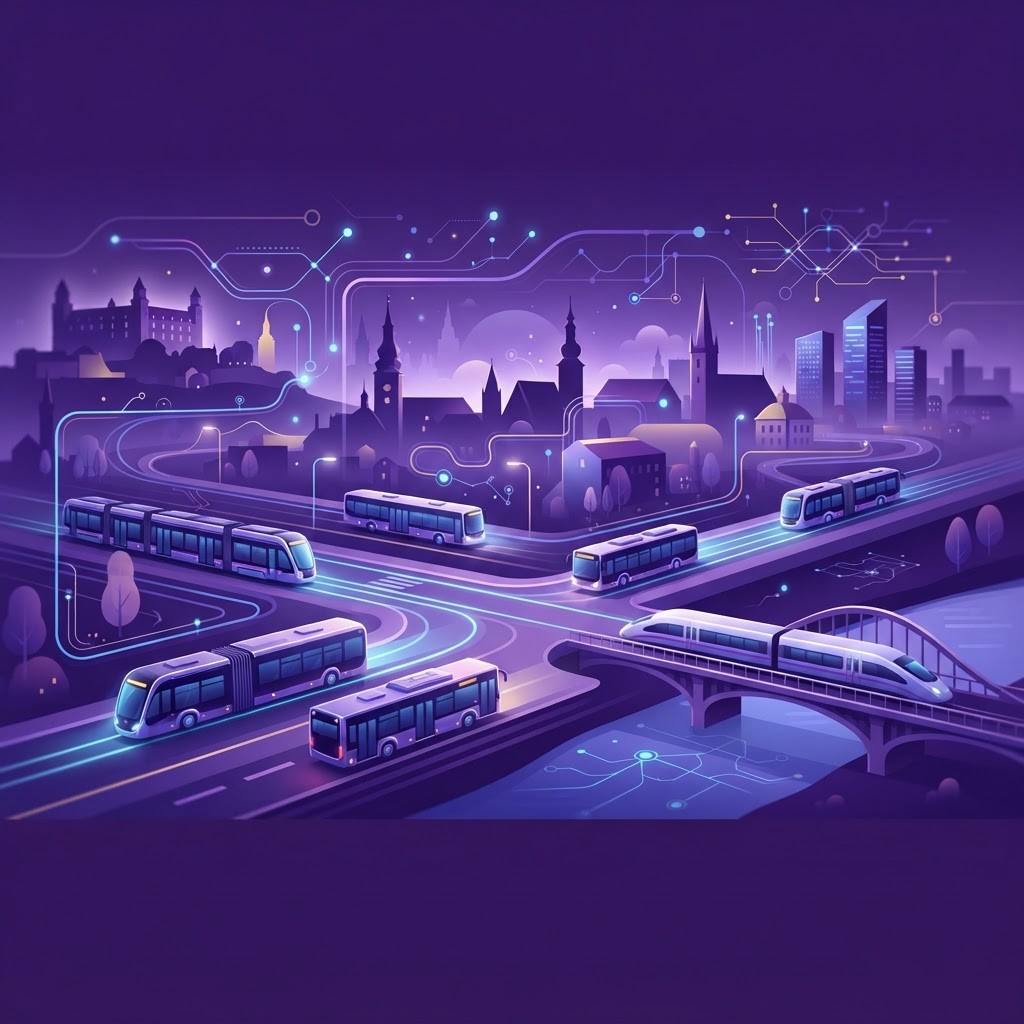
Understanding Public Transit in Slovakia
Public transport in Slovakia is a cornerstone of daily life, moving millions of residents, students, and visitors across cities, towns, and rural regions every year. From the trams of Bratislava to the trolleybuses of Košice and the extensive national rail system, the country offers an integrated mix of options that make car-free travel genuinely practical. Slovakia's central European location also means its transit services connect seamlessly with neighboring Austria, Hungary, the Czech Republic, and Poland, reinforcing its role as a regional mobility hub.
Over the past decade, Slovak transit operators have invested heavily in modern fleets, contactless ticketing, and cleaner energy sources. Electric buses, low-floor trams, and hybrid vehicles are steadily replacing older stock, while digital apps have simplified journey planning and payment. This combination of tradition and modernization is what places several Slovak operators among the most dependable in the region.
Leading Public Transit Providers
Dopravný podnik Bratislavy (DPB) is the largest urban transit operator in the country, running the capital's trams, trolleybuses, and city buses. Known for its dense network and frequent service, DPB carries a substantial share of Bratislava's commuters and continues to expand its electric fleet.
Dopravný podnik mesta Košice (DPMK) serves eastern Slovakia's largest city with a well-organized tram and trolleybus system. It is respected for maintaining reliable schedules and integrating well with regional connections.
Železnice Slovenskej republiky (ŽSR) and the passenger operator Železničná spoločnos&t; Slovensko (ZSSK) together form the backbone of national rail travel, linking Bratislava, Košice, Žilina, and dozens of smaller towns. ZSSK is widely valued for affordable fares, student discounts, and scenic long-distance routes.
Slovak Lines is a major intercity and regional coach operator, connecting Bratislava with surrounding towns and international destinations. Its extensive timetable and comfortable coaches make it a popular choice for commuters living outside urban centers.
Regional and City Operators Worth Knowing
Dopravný podnik mesta Žilina and Dopravný podnik mesta Prešov deliver dependable trolleybus and bus service in northern and eastern Slovakia respectively, both continuing to modernize with low-emission vehicles. Arriva Slovakia, part of a broader European transport group, operates regional bus networks in multiple counties and is recognized for punctuality and clean, accessible fleets. RegioJet has also become a favorite for intercity travel, offering comfortable trains and buses with onboard service between major Slovak cities and neighboring countries.
These operators collectively ensure that even smaller municipalities remain connected to the national transport grid, an important factor for a country where many residents commute between towns for work and study.
Key Features and Benefits
Slovak public transit stands out for its affordability. Monthly passes, student and senior discounts, and integrated regional tickets keep costs low compared with much of Western Europe. Many cities participate in integrated transport systems that allow a single ticket to cover trams, buses, and regional trains within a zone, simplifying multi-leg journeys.
Accessibility has improved considerably, with low-floor vehicles, audio-visual stop announcements, and step-free stations becoming standard in larger cities. Digital innovation is another highlight: mobile apps now handle route planning, live vehicle tracking, and mobile ticket purchases, reducing reliance on paper tickets and physical booths.
Industry Trends Shaping the Future
Sustainability is the defining trend across Slovak transit. Operators are expanding electric and hydrogen-ready fleets, supported by European Union funding aimed at reducing urban emissions. Bratislava and Košice are both progressing on tram network extensions and depot upgrades, signaling long-term commitment to rail-based urban mobility.
Another emerging trend is the push toward unified regional ticketing and Mobility-as-a-Service platforms, where passengers can plan and pay for entire multi-modal trips in one app. As these systems mature, transferring between a regional train, a city tram, and a shared bike is becoming increasingly seamless.
Choosing the Right Service
For daily city commuting, urban operators like DPB and DPMK offer the most frequent and convenient service. For intercity travel, ZSSK and RegioJet provide comfortable and affordable rail options, while Slovak Lines and Arriva Slovakia cover regional and cross-border coach routes effectively. Travelers exploring the country's mountains and historic towns often combine national rail with local buses to reach even remote destinations.
Practical Tips for Riders
To make the most of Slovak public transit, always validate tickets where required and keep a digital or paper copy handy for inspections, which are common on trams and trains. Downloading the relevant operator's mobile app before travel simplifies journey planning and lets you buy tickets on the move, avoiding queues at kiosks. Purchasing zone-based or time-based passes is usually more economical than single tickets for anyone making multiple trips in a day. During peak commuting hours, allow extra time in Bratislava and Košice, where trams and buses can be busy. For longer regional or cross-border journeys, booking seats in advance on operators like RegioJet ensures comfort and often secures lower fares, especially during holidays and summer travel peaks.
Conclusion
Slovakia's public transit landscape reflects a thoughtful balance between heritage systems and forward-looking investment. Whether you are a resident relying on a daily tram, a student commuting by train, or a visitor discovering the country's rich landscapes, the nation's leading operators deliver reliable, affordable, and increasingly sustainable mobility. As electrification and digital ticketing continue to advance, public transport in Slovakia is well positioned to remain one of the most practical and rider-friendly systems in Central Europe.