
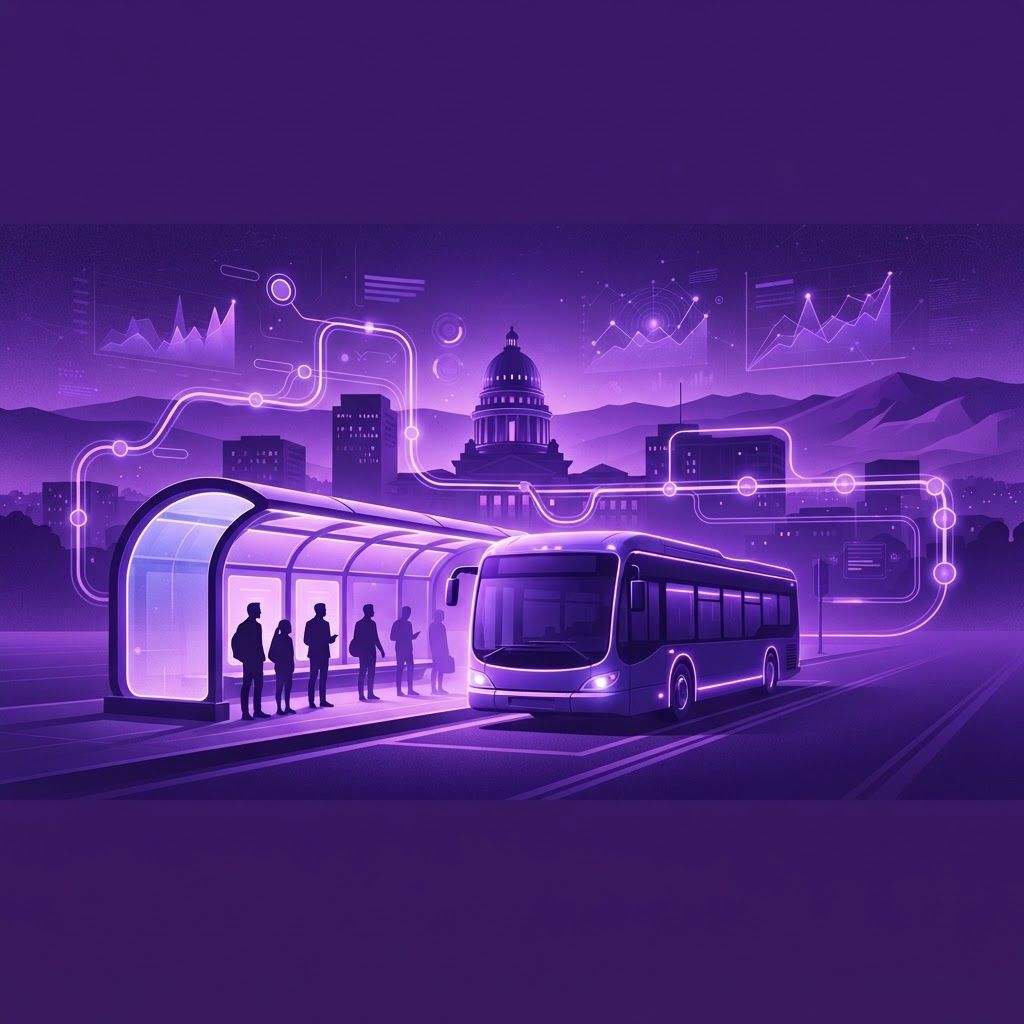
Transit in a Rapidly Growing Metro
Boise City's growth has reshaped how residents think about getting around. Traffic between Nampa, Meridian, and downtown Boise has increased noticeably, parking costs downtown have risen, and a younger population has shown greater willingness to use transit and active transportation. In response, the region has invested in expanded service frequency, better technology, and more flexible service models.
Transit here still operates in a car-dominant environment, which means the most successful riders tend to combine several services rather than relying on a single mode. Understanding the full menu of options is what makes car-light living realistic in the Treasure Valley.
The Top 10 Public Transit Services in Boise City
1. Valley Regional Transit is the backbone of the system, operating fixed-route bus service throughout Boise and connecting communities across Ada and Canyon counties. Its downtown-focused network serves the state capitol complex, Boise State University, hospitals, and major employment centers.
2. The State Street corridor routes deserve individual mention because they carry the highest ridership in the region. Increased frequency along this corridor has made it the closest thing Boise has to turn-up-and-go service, where riders can travel without consulting a schedule.
3. Intercounty commuter routes linking Nampa and Caldwell to downtown Boise provide a genuine alternative to a congested freeway commute. Riders consistently cite the ability to work or rest during the trip as the primary benefit.
4. Boise State University shuttle services move large volumes of students between campus, housing districts, and parking facilities. Coordination with regional bus routes makes the university one of the most transit-accessible destinations in the state.
5. VRT ACCESS paratransit provides origin-to-destination service for riders whose disabilities prevent them from using fixed-route buses. Its reservation-based model and accessible vehicle fleet make independent travel possible for thousands of residents.
6. Microtransit and on-demand zone services represent the newest addition to the regional toolkit. Riders request a trip through an application, and a small vehicle serves flexible pickup points within a defined zone, solving the first and last mile problem in lower-density suburbs.
7. Rideshare and vanpool programs coordinated at the regional level match commuters traveling similar routes. For workers at large employers with consistent schedules, vanpooling often beats both driving alone and fixed-route transit on cost and convenience.
8. The Boise Greenbike and shared micromobility network functions as an extension of transit rather than a competitor. Pairing a bus trip with a short bike or scooter ride dramatically expands the area reachable within a reasonable commute.
9. Intercity bus operators including national and regional carriers connect Boise to Salt Lake City, Portland, Spokane, and smaller Idaho communities, serving travelers who need affordable longer-distance mobility.
10. Airport ground transportation services, including scheduled shuttles and transit connections to Boise Airport, close an important gap for travelers and airport employees alike.
Fares, Passes, and Payment
Regional transit fares remain modest compared with major metropolitan systems, and several rider categories qualify for reduced pricing, including seniors, youth, students, and people with disabilities. Monthly and annual passes reduce per-trip cost substantially for regular commuters.
Employer-sponsored transit benefit programs are among the most underused opportunities in the valley. Many Boise employers subsidize passes or offer pre-tax payroll deductions for transit expenses, effectively lowering commuting costs while reducing demand for expensive parking.
Technology That Makes Transit Usable
Real-time arrival information has transformed the rider experience. Mobile applications and third-party trip planners show live vehicle positions, which eliminates the uncertainty that historically discouraged casual ridership. Mobile ticketing removes the need for exact change, and trip planning tools now integrate walking, cycling, and transit legs into a single itinerary.
Riders new to the system should start by planning a single trip they make regularly, testing it once on a low-pressure day. Most people find the process considerably simpler than expected once they have completed one journey.
Accessibility and Equity Considerations
All fixed-route buses in the region are wheelchair accessible and equipped with ramps or lifts, audible stop announcements, and priority seating. Beyond vehicle accessibility, the quality of sidewalks, crossings, and bus stop amenities determines whether service is genuinely usable. Continued investment in shelters, lighting, and connected sidewalk networks is what turns a route on a map into a service people rely on.
Transit also plays an important role in economic access. For households without a vehicle, or with only one shared among several workers, bus service is what connects people to employment, healthcare, and education. Service coverage decisions therefore carry significant social weight.
Trends to Watch
Three developments will shape Boise transit over the next several years. Increased frequency on core corridors is the most effective lever for growing ridership, and regional planning continues to prioritize it. Transit-oriented development around key stops is adding housing density that makes service more efficient. Finally, fleet electrification is progressing, bringing quieter vehicles and lower operating emissions to the valley.
Final Thoughts
Public transit in Boise City is no longer a service of last resort. For downtown commuters, students, and residents along high-frequency corridors, it is often the easier and cheaper choice. Combining fixed-route buses with micromobility, vanpools, and on-demand services creates a flexible mobility strategy that saves money, reduces stress, and eases pressure on a road network straining to keep pace with the region's remarkable growth.