
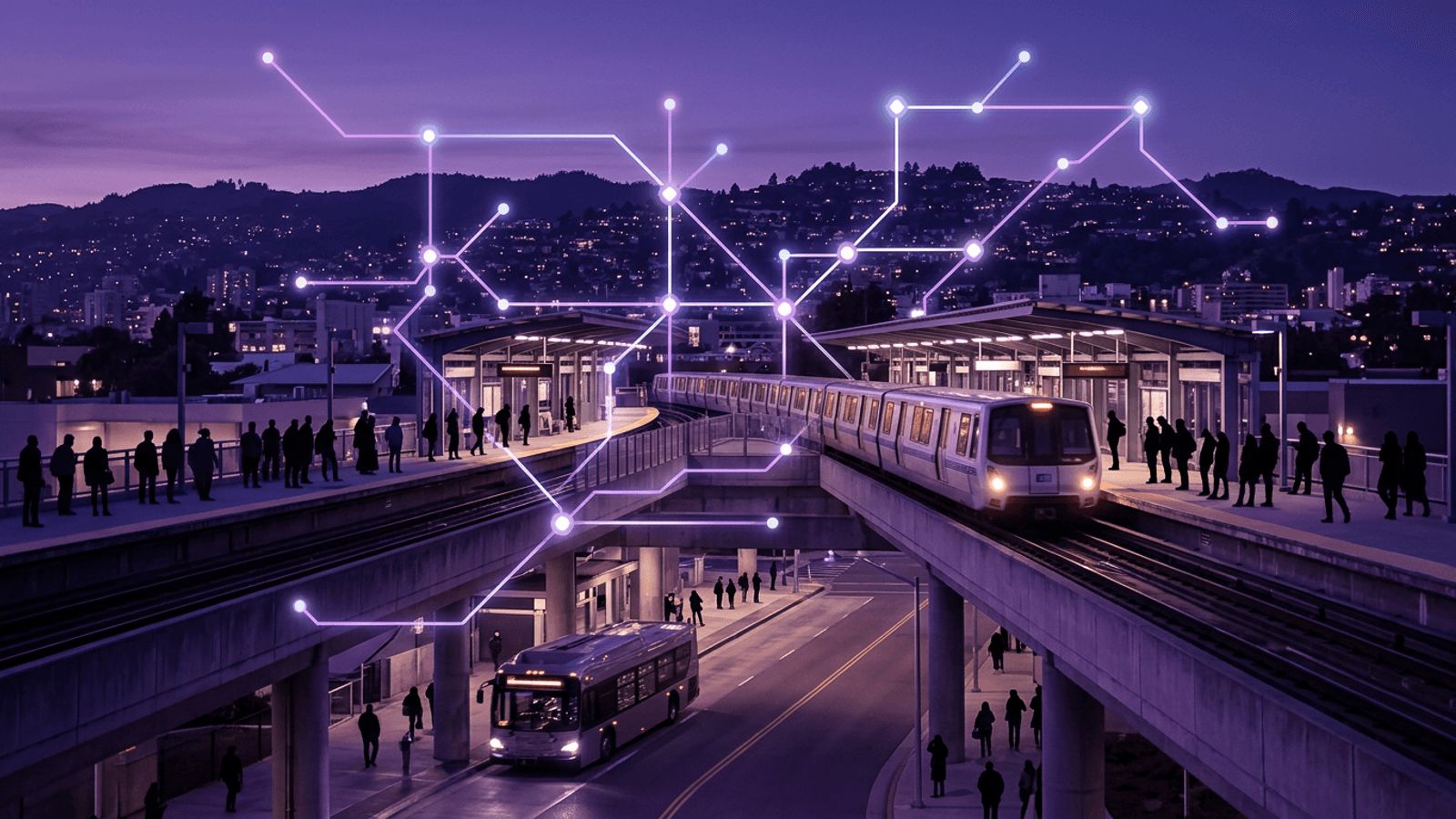
Public Transit in Berkeley
Berkeley is a model for sustainable urban transportation. A large share of residents commute by transit, bike, or on foot, and the city's dense neighborhoods and university community support a strong network of transit options. Living car-free in Berkeley is not only possible but often preferable, thanks to frequent service and convenient connections across the Bay Area.
Public transit reduces traffic congestion, lowers emissions, and saves residents money. From rapid rail to local buses, shuttles, ferries, and bike share, Berkeley's transit options work together to provide flexible ways to get around the city and region.
Making the Most of Berkeley Transit
Use a Clipper card or mobile wallet to pay fares across multiple systems seamlessly. Transit apps provide real-time arrival information and trip planning, helping riders combine services efficiently.
Students, seniors, and people with disabilities may qualify for discounted fares. UC Berkeley students typically receive transit passes as part of their fees, making transit an especially affordable option for the university community.
The Top 10 Public Transit Services in Berkeley
1. BART
Bay Area Rapid Transit is the cornerstone of regional transit. Berkeley's three BART stations, Downtown Berkeley, North Berkeley, and Ashby, provide fast connections to San Francisco, Oakland, and airports. BART is the preferred option for commuters crossing the bay.
2. AC Transit
AC Transit operates local and Transbay bus service throughout Berkeley and the East Bay. Its extensive network reaches neighborhoods, shopping districts, and campuses, while Transbay routes offer direct connections to downtown San Francisco.
3. Bear Transit
UC Berkeley's Bear Transit shuttles connect campus buildings, residence halls, and nearby areas. Night safety shuttles help students and staff travel safely after dark, making Bear Transit an essential service for the university community.
4. San Francisco Bay Ferry
San Francisco Bay Ferry offers scenic commuter and leisure service across the bay from nearby terminals in Oakland and Alameda. Plans for expanded ferry service could eventually bring a terminal closer to Berkeley's waterfront, adding another sustainable commuting option.
5. Capitol Corridor
The Capitol Corridor provides intercity rail service with a stop in Berkeley, connecting to Sacramento, Davis, and San Jose. It is a comfortable option for regional travel and commutes to the state capital.
6. Emery Go-Round
Emery Go-Round is a free shuttle in neighboring Emeryville that connects to MacArthur BART. It serves major employers, shopping centers, and residential areas, benefiting Berkeley residents who work or shop in Emeryville.
7. WestCAT
WestCAT provides bus service in western Contra Costa County, including express routes connecting to BART. It helps link communities north of Berkeley to the regional transit network.
8. East Bay Paratransit
East Bay Paratransit offers door-to-door shared rides for people with disabilities who cannot use fixed-route transit. It ensures accessible transportation for Berkeley residents and supports independence for riders with mobility challenges.
9. Bay Wheels
Bay Wheels is the Bay Area's bike share system, offering classic and electric bikes at stations throughout Berkeley. It provides a convenient option for short trips and first-mile and last-mile connections to transit.
10. Clipper
Clipper is the Bay Area's all-in-one transit fare payment system. Accepted on BART, AC Transit, ferries, Caltrain, and more, it simplifies travel across systems. Riders can use physical cards or mobile wallets for seamless payment.
Benefits of Public Transit in Berkeley
Using public transit in Berkeley offers financial, environmental, and lifestyle benefits. Owning a car in the Bay Area is expensive once insurance, fuel, maintenance, and parking are included. Many residents save thousands of dollars each year by relying on transit, biking, and walking instead. Transit also reduces greenhouse gas emissions, supporting the city's ambitious climate action goals.
Transit can also improve quality of life. Riders can read, work, or relax during their commute instead of sitting in traffic. Walking to and from stations adds healthy physical activity to daily routines. Berkeley's compact neighborhoods, with shops, cafes, parks, and services close to transit, make it easy to accomplish everyday errands without a car.
New residents can get started quickly by downloading a transit trip planner, loading a Clipper card, and exploring the routes nearest their home. Many riders find that a combination of BART for longer trips, buses for neighborhood travel, and bike share for short hops covers nearly every need, making Berkeley one of the easiest cities in California to navigate without driving.
Transit Trends in Berkeley
Berkeley and regional agencies are investing in improved bus service, protected bike lanes, and transit-oriented housing near BART stations. Electrification of bus fleets is reducing emissions, while integrated fares and real-time information are making transit easier to use.
The rise of micromobility, including e-bikes and scooters, is complementing traditional transit. These options make it easier to reach stations and complete short trips, further reducing the need for car ownership.
Ride Sustainably
Berkeley's public transit network offers convenient, affordable, and sustainable ways to get around. Whether you are commuting, running errands, or exploring the Bay Area, these services make car-free living practical and enjoyable. Grab your Clipper card and start riding.