
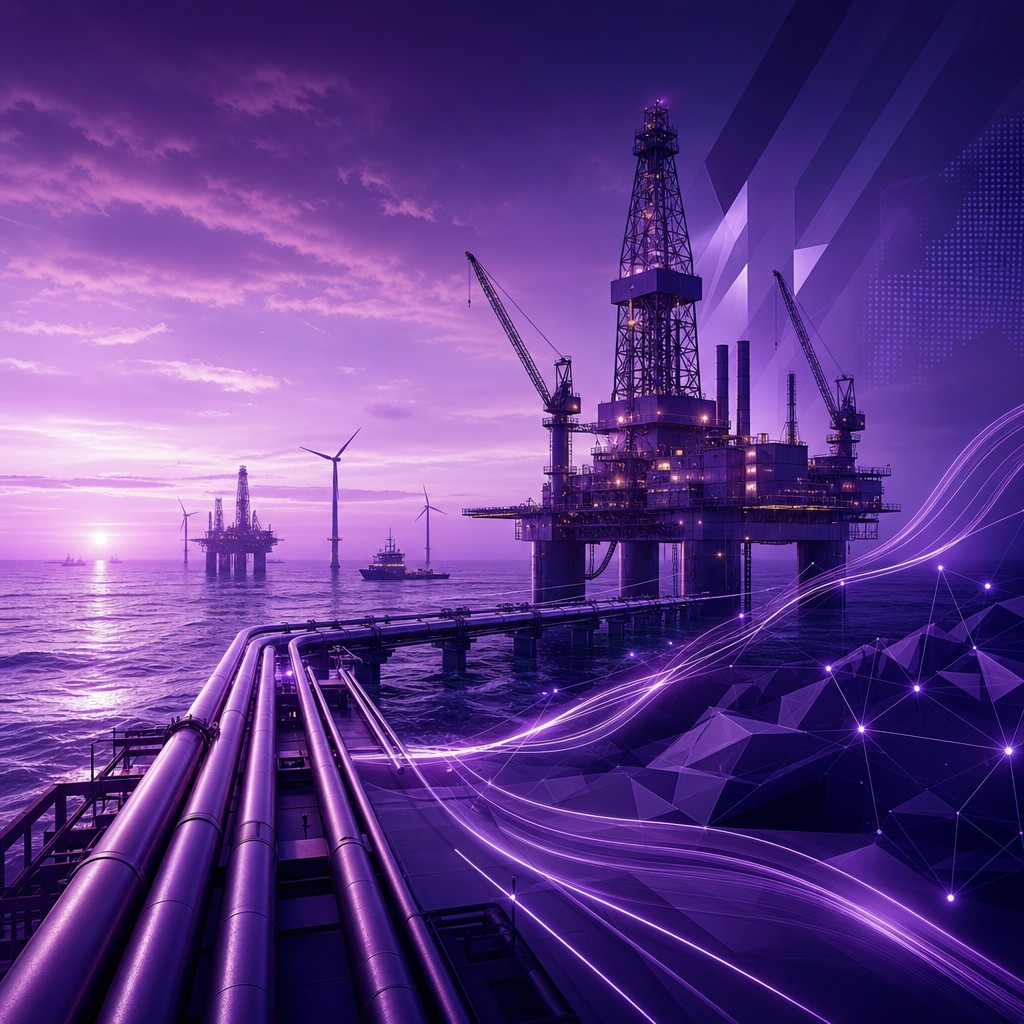
Denmark's Place in North Sea Energy
While Denmark is celebrated for its leadership in renewable energy, oil and gas have long played an important role in the nation's economy and energy security. The Danish sector of the North Sea has produced hydrocarbons for decades, supporting jobs, generating government revenue, and contributing to the country's industrial base. Today the sector occupies a fascinating position: still economically significant, yet operating within a country that has committed to ending new oil and gas exploration and reaching climate neutrality. The companies active in this space are navigating a managed transition, balancing continued production with investments in cleaner technologies.
A Sector in Transition
Denmark has made a landmark decision to phase out fossil fuel extraction in the North Sea over the coming decades, setting a clear end date for new exploration. This bold policy positions Denmark as a leader among oil-producing nations willing to align extraction with climate goals. As a result, the companies operating in Danish waters increasingly focus on maximising the efficiency of existing fields, reducing the emissions of their operations, and repurposing infrastructure for carbon capture and storage. The sector is therefore not simply declining but evolving, with expertise and assets being redirected toward the energy systems of the future.
Leading Oil and Gas Companies
TotalEnergies is the principal operator in the Danish North Sea, managing major producing fields and leading redevelopment projects that extend the life of key assets. The company combines hydrocarbon production with growing investment in renewables and low-carbon solutions, reflecting the broader industry shift.
Noreco, the Norwegian Danish Oil Company, holds significant interests in Danish offshore production and is one of the larger independent players focused on the region. Its portfolio centres on mature North Sea fields managed for efficient, responsible output.
Other important participants include partners in joint ventures that operate Danish fields, along with international majors holding stakes in production licences. Energy services and engineering firms such as Semco Maritime and Welltec provide critical technology and support, from offshore construction and maintenance to advanced well intervention tools used worldwide. Ramboll and COWI, leading Danish engineering consultancies, advise on offshore infrastructure, decommissioning, and the conversion of platforms for new uses. Maersk, through its broader industrial heritage, has historically been deeply connected to Danish offshore energy, and related ventures continue to influence the sector. Supply chain companies producing pipes, pumps, and control systems round out a robust ecosystem.
Exploration, Production, and Services
The Danish oil and gas value chain spans several activities. Production remains concentrated in established North Sea fields, where operators apply advanced recovery techniques to extract remaining reserves efficiently. Redevelopment projects modernise ageing platforms, improving safety and reducing operational emissions. Natural gas continues to play a role in heating and industry, providing flexibility as renewables scale up.
Equally important is the services segment. Danish engineering, maritime, and technology firms supply expertise that is valued not only at home but across global energy markets. Their capabilities in offshore construction, subsea engineering, well technology, and decommissioning represent a durable competitive strength, increasingly applicable to offshore wind and carbon storage as well.
Carbon Capture and the New Frontier
Perhaps the most significant development in the Danish oil and gas sector is the pivot toward carbon capture and storage. The depleted reservoirs and existing infrastructure of the North Sea are ideally suited to storing carbon dioxide safely underground. Danish projects aim to inject captured emissions from industry into former oil and gas fields, turning the region into a hub for permanent carbon storage.
This transformation allows companies to repurpose decades of offshore experience for a climate-positive purpose. Operators, engineering firms, and service providers are collaborating on the technical, regulatory, and commercial frameworks needed to make large-scale storage a reality. In this way, the very fields that once produced hydrocarbons may help neutralise emissions from hard-to-abate sectors.
Economic and Strategic Importance
The oil and gas sector continues to contribute meaningfully to the Danish economy through employment, tax revenue, and a highly skilled workforce. It supports energy security by providing domestic supply and infrastructure that complements imports and renewables. The expertise developed over decades is a national asset, transferable to emerging fields such as offshore wind, hydrogen, and carbon storage.
Strategically, Denmark's approach demonstrates how a responsible producer can wind down extraction while preserving value and protecting communities dependent on the industry. The careful management of this transition is closely watched by other nations facing similar choices.
Balancing Heritage and the Future
Denmark's oil and gas companies occupy a pivotal moment in the country's energy story. They continue to deliver reliable production and world-class services while embracing the inevitability of a low-carbon future. By focusing on efficiency, emissions reduction, and pioneering carbon storage, these organisations are redefining their purpose. The skills, infrastructure, and innovation built over decades in the North Sea are now being channelled toward Denmark's climate ambitions. In doing so, the sector exemplifies a thoughtful, responsible transition, honouring its industrial heritage while helping to build the sustainable energy system of tomorrow.