
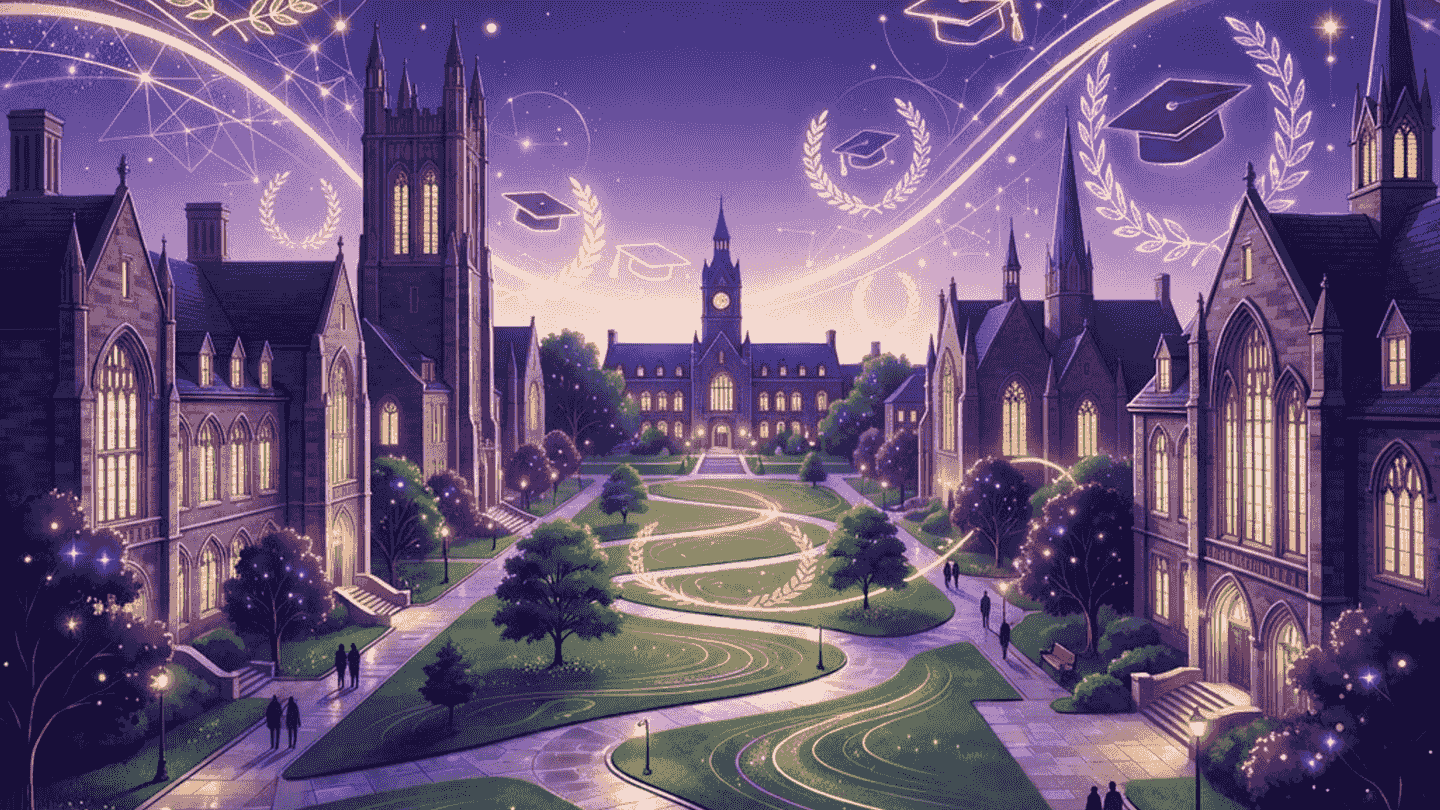
A Capital City Built Around Higher Education
Few cities of St. Paul's size host as many colleges. Within a short drive you will find nationally ranked liberal arts institutions, Catholic universities with century-long histories, technical colleges training the region's skilled workforce and specialized schools in art and design. The result is a city where academic calendars shape neighborhood rhythms and where students have unusual access to internships in state government, health care, financial services and nonprofits.
This density benefits students directly. Cross-registration agreements, shared library resources and consortium arrangements mean a student enrolled at one institution can often take courses at another. Employers in the Twin Cities recruit locally and consistently, which makes internship-to-career pipelines shorter than in many markets.
What to Weigh When Comparing Colleges
Look past prestige rankings and examine outcomes that matter for your situation. Four-year graduation rates, average net price after aid, faculty-to-student ratios and the strength of specific departments tell you more than a single composite score. Ask about undergraduate research access, advising quality and whether popular majors have capacity constraints.
Culture matters as much as curriculum. A residential liberal arts campus feels very different from a commuter-heavy technical college, and neither is inherently better. The right answer depends on whether a student wants immersion, flexibility or a direct route into a credentialed trade.
Top 10 Best Colleges in St. Paul
1. Macalester College
Macalester is among the most selective liberal arts colleges in the Midwest, known for internationalism, economics, political science and environmental studies. The Grand Avenue campus is compact and residential, class sizes are small, and students frequently pursue research alongside faculty. A strong culture of civic engagement connects coursework to the surrounding city.
2. University of St. Thomas
The largest private university in Minnesota, St. Thomas combines Catholic identity with strong programs in business, engineering, education and law. Its scale allows for extensive facilities and Division I athletics while retaining substantial undergraduate teaching focus. Twin Cities employer connections are notably deep.
3. Hamline University
Minnesota's first university, Hamline offers a liberal arts foundation with well-regarded programs in education, criminal justice, creative writing and public administration. Its Midway location provides easy Green Line access, and graduate programs allow accelerated paths from bachelor's to master's study.
4. Concordia University, St. Paul
Concordia serves traditional undergraduates and a large population of working adults through flexible evening and online formats. Business, kinesiology and nursing are among its strongest programs, and the university has built a reputation for affordability relative to other private institutions.
5. Saint Paul College
A community and technical college with strong transfer pathways and career programs, Saint Paul College trains students in health care, manufacturing, information technology and the trades. Low tuition, downtown proximity and articulation agreements with four-year institutions make it a practical launching point.
6. St. Catherine University
St. Kate's is one of the largest women's universities in the nation, with nationally recognized nursing, occupational therapy and health sciences programs. Clinical partnerships across the metro give students substantial hands-on training, and graduate programs extend the pipeline into advanced practice roles.
7. Metropolitan State University
Designed for working adults and transfer students, Metro State offers evening, weekend and online coursework across business, nursing, law enforcement and liberal arts. Credit for prior learning and competency-based options help students finish degrees they started elsewhere.
8. Bethel University
Located just north of the city, Bethel provides an evangelical Christian educational environment with strong programs in nursing, business and the sciences. Community life is central, and its seminary and graduate offerings serve students well beyond traditional undergraduate age.
9. Northwestern Health Sciences University
This specialized institution focuses on chiropractic, acupuncture, Chinese medicine and integrative health. Its clinical training model gives students substantial patient contact hours, and graduates enter a growing integrative care sector across the region.
10. William Mitchell College of Law Tradition at Mitchell Hamline
Mitchell Hamline School of Law carries forward a long St. Paul legal education tradition, notable for pioneering hybrid enrollment options that combine online and in-person study. Clinics, dispute resolution programs and strong ties to Minnesota's legal community define the experience.
Cost, Aid and Return on Investment
Sticker price rarely reflects what families actually pay. Minnesota's state grant program, institutional scholarships and need-based aid can substantially reduce private college costs, sometimes bringing them close to public alternatives. Request a full financial aid comparison rather than comparing published tuition figures.
Consider the two-year to four-year route seriously. Starting at Saint Paul College and transferring with an established articulation agreement can cut total cost significantly while preserving degree quality, provided credits are mapped carefully from the beginning.
Trends Shaping Local Higher Education
Flexible delivery has become standard rather than exceptional, with hybrid courses now common even at traditionally residential institutions. Employers increasingly value demonstrable skills, prompting colleges to embed certificates and micro-credentials inside degree programs. Mental health services and basic needs support, including food security programs, have expanded considerably.
How to Choose Well
Visit campuses during the academic year, sit in on a class and eat in the dining hall. Ask current students what they would change, not just what they like. Meet with a department faculty member in your intended major, since departmental culture varies within the same institution.
Finally, think about the four years after graduation, not just the four years enrolled. Alumni networks, internship placement rates and regional employer relationships compound over a career, and St. Paul institutions generally perform well on that dimension within the Upper Midwest.
Final Thoughts
From selective liberal arts education at Macalester to technical training at Saint Paul College, the capital city offers an unusually complete range of higher education options. Compare net cost honestly, evaluate departments rather than brands, and prioritize the environment where a student will engage fully.