
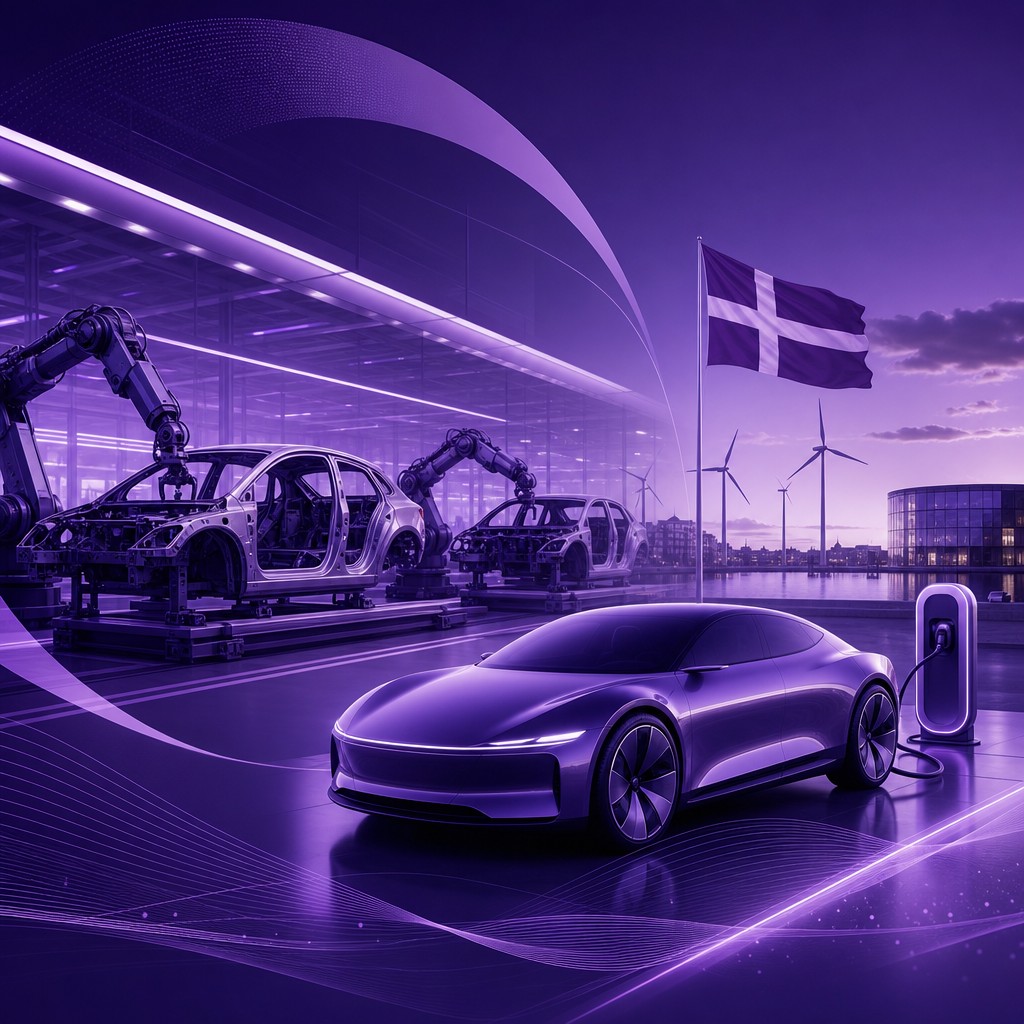
A Different Kind of Automotive Industry
Denmark does not have a large domestic car brand in the way Germany or Italy does, yet its automotive sector is dynamic, innovative, and increasingly important. Rather than mass-producing passenger vehicles, Danish companies specialise in components, electric mobility solutions, charging infrastructure, specialist vehicles, and advanced transport technology. This reflects the nation's strengths in engineering, design, and sustainability. As the global automotive industry undergoes a historic shift toward electrification and connectivity, Denmark's focus on clean transport and smart technology positions its companies to play a meaningful role in the mobility of the future.
Denmark's Automotive Niche
The Danish automotive landscape is shaped by the country's priorities: sustainability, clean energy, urban mobility, and high-quality engineering. With strong environmental policies and a population enthusiastic about cycling and public transport, Denmark has become a natural laboratory for electric vehicles, charging networks, and innovative transport concepts. Rather than competing in conventional car manufacturing, Danish firms add value through specialised components, software, electric drivetrains, commercial and specialist vehicles, and the infrastructure that supports modern mobility. This niche approach allows Danish companies to lead in precisely the areas the industry is moving toward.
Leading Automotive Companies
Several Danish companies stand out in the automotive and mobility space. Clever and similar operators have built extensive electric vehicle charging networks across Denmark, enabling the rapid adoption of electric cars by making charging convenient and reliable. These charging specialists are central to the country's clean transport ambitions.
In commercial and specialist vehicles, companies design and build buses, trucks bodies, trailers, and custom vehicles tailored to specific needs. Manufacturers producing electric buses and zero-emission urban transport solutions contribute to cleaner cities. Firms specialising in trailer and truck body manufacturing supply logistics and transport operators across Europe.
Component and technology suppliers are a major strength. Danfoss develops power electronics, drives, and systems used in electric and hybrid vehicles, contributing critical technology to the global transition. Companies producing sensors, control systems, and connectivity solutions support advanced driver assistance and electric drivetrains. Linak engineers electric actuator systems used in vehicle seating, accessibility, and specialist applications.
The two-wheel and micromobility sector also thrives, with Danish makers of electric bikes, cargo bikes, and urban mobility devices reflecting the country's cycling culture. Companies crafting premium cargo bikes have gained international acclaim, offering practical, sustainable alternatives to cars for urban families and businesses.
Electric Mobility and Charging
Electrification is the defining theme of Denmark's automotive sector. The country has embraced electric vehicles enthusiastically, supported by policy incentives and a strong renewable electricity supply that makes electric driving genuinely clean. Danish companies contribute across the electric value chain, from power electronics and charging hardware to network operation and smart charging software.
Charging infrastructure providers have built dense networks that integrate with the renewable grid, sometimes enabling vehicles to charge when wind and solar generation is abundant. Smart charging and vehicle-to-grid concepts, where electric cars can feed power back into the grid, are areas of active innovation, leveraging Denmark's leadership in flexible energy systems. This integration of transport and energy is a distinctive Danish strength.
Components, Engineering, and Innovation
Beyond vehicles themselves, Danish engineering excellence shines in components and systems. Power electronics, electric actuators, sensors, and control systems developed by Danish firms are used by automakers and suppliers worldwide. These high-value components are essential to electric and increasingly autonomous vehicles, allowing Denmark to participate in the global industry without producing complete cars.
Software and connectivity represent another growth area. As vehicles become rolling computers, demand rises for telematics, fleet management, and mobility services. Danish startups and established firms develop solutions for logistics optimisation, shared mobility, and transport efficiency, aligning with the country's smart and sustainable ethos. Specialist and custom vehicle builders apply precise engineering to create buses, emergency vehicles, and bespoke transport solutions.
Sustainability and Urban Mobility
Sustainability runs through every aspect of Denmark's automotive sector. The emphasis on electric vehicles, cargo bikes, and clean public transport reflects a national commitment to reducing emissions and creating liveable cities. Copenhagen's renowned cycling culture has inspired companies to build world-class electric and cargo bikes, offering compelling alternatives to car ownership.
Urban mobility innovation extends to shared transport, integrated ticketing, and infrastructure designed around people rather than cars. Danish manufacturers and technology firms support this vision with vehicles and systems that are efficient, low-emission, and human-centred. This holistic approach to mobility, blending vehicles, energy, and urban design, distinguishes Denmark from countries focused solely on car production.
Driving Toward the Future
Denmark's automotive industry proves that a nation need not build mass-market cars to be influential in global mobility. Through specialised components, electric drivetrains, charging infrastructure, commercial and specialist vehicles, and a thriving micromobility scene, Danish companies are shaping the future of clean, smart transport. As the world shifts decisively toward electrification and sustainable mobility, Denmark's strengths in engineering, energy integration, and design position its automotive sector for continued success. From the power electronics of Danfoss to the charging networks powering electric cars and the celebrated cargo bikes of Copenhagen, Danish innovation is steering transport toward a cleaner, smarter future.