
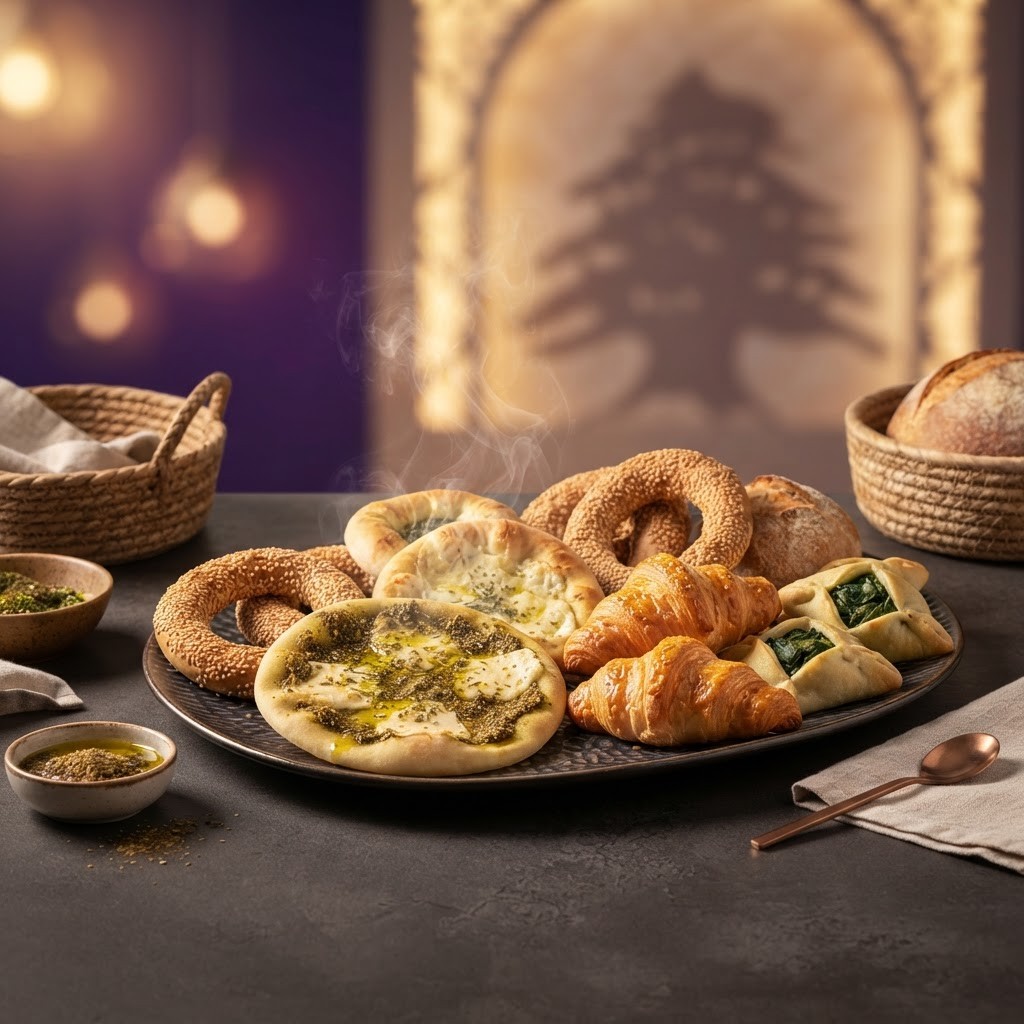
The Heart of Lebanese Food Culture
In Lebanon, bakeries are far more than places to buy bread; they are cherished institutions woven into the fabric of daily life. From the early morning aroma of freshly baked manakish to the golden sweetness of ka'ak sold on street corners, baked goods are central to Lebanese culture and hospitality. The country's bakeries range from humble neighborhood ovens that have served families for generations to elegant patisseries crafting refined French-inspired creations. Together, they offer a delicious window into Lebanon's rich culinary heritage.
Lebanese baking reflects the country's history as a crossroads of civilizations. Centuries of cultural exchange have produced a remarkable variety of breads and pastries, blending Levantine traditions with Ottoman, French, and Mediterranean influences. The result is a bakery scene of extraordinary depth and quality, where time-honored recipes coexist with contemporary innovation.
The Tradition of Lebanese Bread
Bread holds a place of honor in Lebanese cuisine. The thin, soft flatbread known as khubz accompanies nearly every meal, used to scoop dips, wrap grilled meats, and complement mezze. Manakish, flatbread topped with za'atar, cheese, or minced meat, is a beloved breakfast and snack enjoyed throughout the day. Ka'ak, the ring-shaped sesame bread, is a popular street food. These staples are produced fresh daily by countless bakeries, and their quality is taken seriously by a population that knows good bread intimately.
The Leading Bakeries
Wooden Bakery is one of Lebanon's most popular bakery chains, beloved for its wide range of fresh breads, pastries, manakish, and sweets served in a warm, family-friendly atmosphere across numerous locations.
Al Reef Bakery has built a strong reputation for authentic Lebanese baked goods, offering quality manakish and traditional breads that capture the essence of local flavors.
Bread Republic appeals to those seeking artisanal and organic options, focusing on wholesome ingredients and craft baking techniques in a contemporary setting.
Patisserie Suzanne and classic French-style patisseries showcase Lebanon's French culinary influence, producing exquisite cakes, tarts, and delicate pastries.
Douaihy Sweets and heritage sweet makers specialize in traditional Lebanese sweets and baked treats, preserving recipes passed down through generations.
Neighborhood furn bakeries across cities and villages remain the soul of the bakery scene, serving fresh bread and manakish to loyal local communities every single morning.
From large chains to tiny family ovens, each of these establishments contributes to a vibrant and varied bakery landscape.
The Art of the Manakish
No discussion of Lebanese bakeries would be complete without celebrating manakish, perhaps the country's most iconic baked product. This versatile flatbread is topped most famously with za'atar, a fragrant blend of wild thyme, sumac, and sesame mixed with olive oil, but also with cheese, minced meat, or combinations thereof. Eaten fresh from the oven, often folded and enjoyed on the go, manakish is a daily ritual for many Lebanese. The best bakeries take great pride in their dough, their toppings, and the perfect bake that makes each one irresistible.
Sweet Traditions and French Influence
Lebanon's bakeries are equally celebrated for their sweets. Traditional treats such as baklava, ma'amoul, and knafeh delight with their layers of nuts, semolina, and syrup. At the same time, the legacy of French influence has produced a thriving patisserie culture, with bakeries crafting elegant cakes, croissants, and tarts that rival those of Paris. This blend of Eastern and Western sweet traditions gives Lebanese bakeries a distinctive richness, offering something for every taste and occasion.
Bakeries as Community Hubs
Beyond the food itself, bakeries serve as important community gathering places in Lebanon. The neighborhood furn is a social hub where residents meet, chat, and connect over warm bread. Bakeries play a role in celebrations and rituals, providing the breads and sweets that mark holidays, weddings, and family occasions. This social dimension makes bakeries an integral part of Lebanese life, valued not only for what they sell but for the sense of community they foster.
Quality, Freshness, and Pride
What unites Lebanon's best bakeries is an unwavering commitment to quality and freshness. Bakers take genuine pride in their craft, often rising before dawn to ensure that customers enjoy products at their peak. The use of good ingredients, traditional techniques, and careful attention to detail distinguishes the finest establishments. In a culture that deeply appreciates food, this dedication is both expected and rewarded with loyal patronage.
Conclusion
Lebanon's bakeries are a delicious expression of the country's culture, history, and hospitality. From iconic manakish and fresh khubz to refined pastries and traditional sweets, they offer flavors that delight locals and visitors alike. The bakeries celebrated here represent the best of a beloved tradition that continues to bring people together and to fill Lebanese mornings with warmth and aroma. For anyone seeking to taste the heart of Lebanon, its bakeries are the perfect place to begin.