
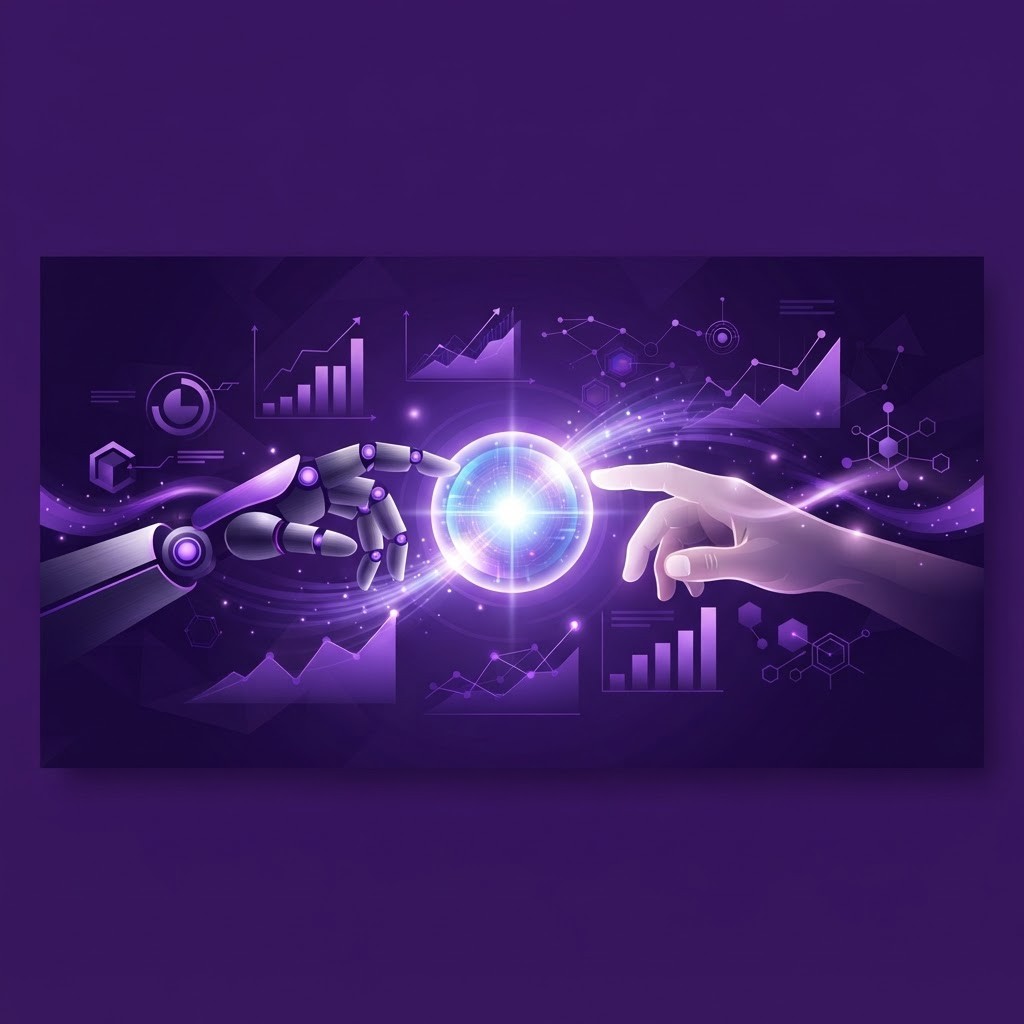
The question of whether AI will replace marketing jobs entirely is one of the most debated topics in the industry. Sensational headlines predict mass layoffs, while optimists insist nothing will change. The reality sits between these extremes. AI is unquestionably transforming marketing work, but wholesale replacement of marketers is neither happening now nor likely in the foreseeable future. Understanding why requires looking closely at what marketing actually involves.
In this article we explore the forces driving automation, the enduring value of human marketers, and what the realistic future of marketing employment looks like.
Building a Future-Ready Team With AAMAX.CO
Organizations navigating this shift benefit from guidance that goes beyond tools and focuses on outcomes. AAMAX.CO is a full-service digital marketing company operating worldwide, helping businesses build marketing teams and systems where AI enhances human talent instead of replacing it. As AI reshapes discovery through generative search, their expertise in generative engine optimization helps brands stay visible in the new landscape while keeping strategy firmly in human hands.
Why Full Replacement Is Unlikely
Marketing is fundamentally about understanding and influencing human behavior, and that requires a depth of empathy, cultural awareness, and contextual judgment that AI does not possess. An algorithm can optimize a campaign toward a metric, but it cannot decide what the brand should mean to its customers or sense the subtle shift in cultural mood that makes one message land and another fall flat.
Marketing also involves relationships, with clients, partners, journalists, influencers, and internal stakeholders. These relationships depend on trust, negotiation, and human rapport that no chatbot can replicate. As long as marketing remains a human-centered discipline, humans will remain essential to it.
What Is Actually Being Automated
What AI is replacing is not entire jobs but specific tasks within them. Routine content generation, repetitive data entry, basic reporting, and mechanical campaign adjustments are increasingly handled by machines. This automation is real and significant, and it does reduce the number of hours needed for certain types of work.
The consequence is that roles built almost entirely around these automatable tasks are shrinking or evolving. A marketer whose job consisted solely of writing formulaic product descriptions may find that work diminished. But most marketing roles involve a mix of tasks, and automating the routine portion often makes the remaining work more valuable, not less.
The Productivity Paradox
One reason AI is unlikely to cause mass unemployment in marketing is that it lowers the cost of marketing activities, which tends to increase demand for them. When content becomes cheaper to produce, businesses produce more of it. When testing becomes faster, they run more experiments. This expansion often creates a need for people to manage, direct, and quality-control the increased output.
History offers many examples of this dynamic. New technologies frequently automate tasks while simultaneously expanding the overall scope of work, leading to job transformation rather than elimination. Marketing appears to be following this familiar pattern.
The Roles Most and Least at Risk
Purely execution-focused, entry-level tasks face the greatest disruption. Meanwhile, roles centered on strategy, creative direction, brand building, relationship management, and cross-functional leadership are the most durable. The safest position is one where you combine strong human skills with fluency in AI tools, becoming the professional who orchestrates technology rather than the one it renders redundant.
Preparing for the Transition
The smartest response to this shift is neither panic nor denial but proactive skill development. Marketers should learn to work with AI tools, develop deeper strategic and creative abilities, and cultivate the interpersonal skills that machines cannot match. Those who do will find that AI expands what they can accomplish rather than threatening their livelihood.
Employers, meanwhile, should focus on retraining and redeploying talent rather than simply cutting headcount. Organizations that help their people evolve alongside AI will retain institutional knowledge and build teams capable of extraordinary output.
The Realistic Verdict
Are marketing jobs going to be replaced by AI? For the vast majority of marketers, the answer is no, not replaced, but transformed. The nature of the work will continue shifting toward strategy, creativity, and human connection, while machines handle more of the routine execution. This is a profound change, and it demands adaptation, but it is fundamentally an evolution rather than an extinction.
Marketers who embrace this reality and grow their uniquely human capabilities will not just survive the AI era, they will find themselves more valuable and more impactful than ever before.