
AI as a Core Layer of Modern Marketing
In 2025 and 2026, artificial intelligence has shifted from an experimental add-on to a foundational layer of the marketing stack. Rather than living in a single tool, AI now touches nearly every stage of the marketing workflow, from strategy and planning to creation, distribution, and measurement. The most successful teams are not asking whether to use AI, but where it delivers the most value and how to integrate it without losing the human touch that builds trust and brand.
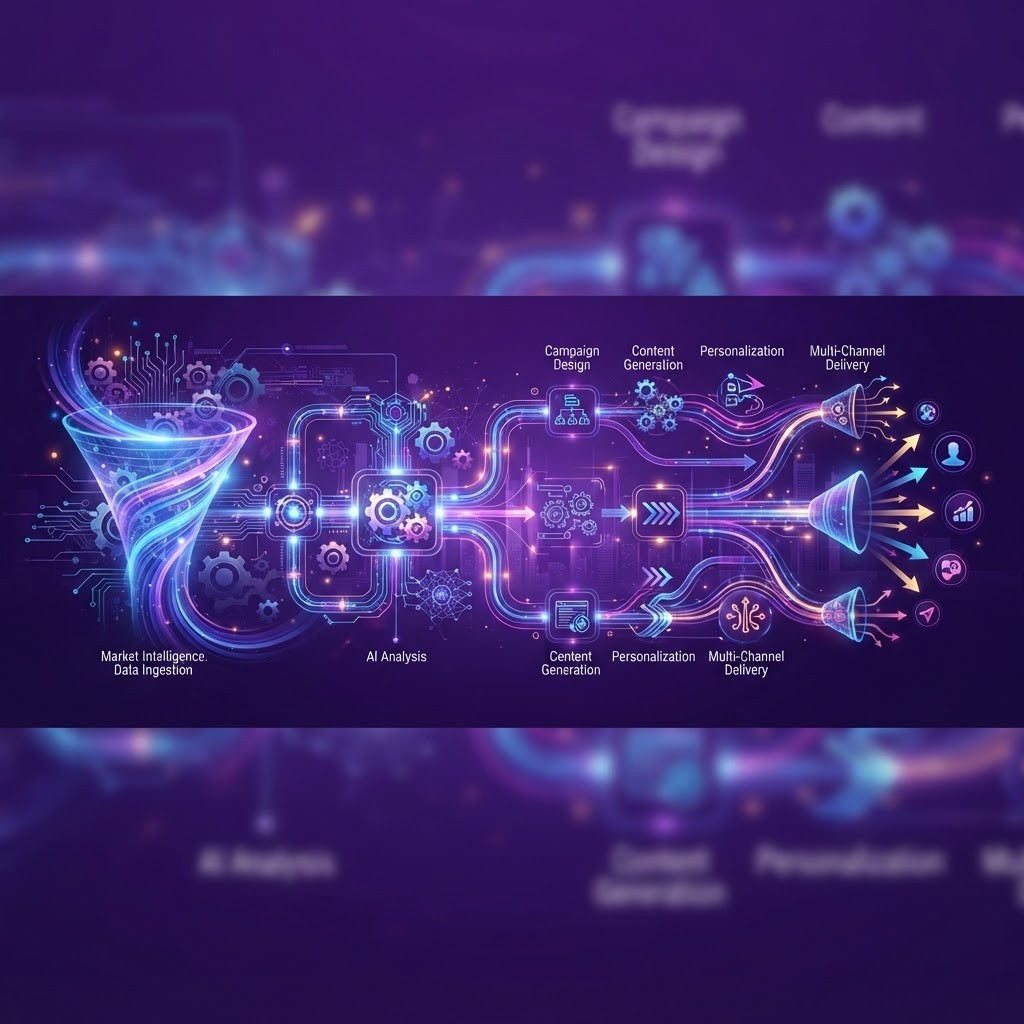
Understanding where AI fits requires viewing marketing as a connected workflow rather than a set of isolated tasks. AI adds value at each stage, but the compounding benefit comes from connecting those stages into a smooth, data-informed pipeline. When insight from analytics feeds content creation, and content performance feeds future strategy, AI turns marketing into a continuously improving system.
How AAMAX.CO Streamlines AI-Powered Marketing
Adopting AI across a marketing workflow can feel overwhelming, especially for teams juggling many tools and priorities. AAMAX.CO is a full-service digital marketing company that helps businesses worldwide integrate AI into their marketing operations in a practical, results-focused way. They help teams identify where automation saves time, where AI improves quality, and where human expertise remains essential. Their digital marketing services span strategy, content, campaigns, and analytics, giving clients a unified partner rather than a patchwork of disconnected tools. You can hire AAMAX.CO to design an AI-enhanced workflow that fits your goals and scales with your growth.
AI in Strategy and Planning
The workflow begins with strategy, and AI has become a powerful planning ally. AI tools can analyze market trends, competitor activity, and audience behavior to inform positioning and messaging. They can segment audiences with greater precision, predict which segments are most likely to convert, and simulate the potential impact of different campaign approaches before a dollar is spent. This reduces guesswork and helps teams allocate budget where it will perform best.
Planning also benefits from AI-assisted forecasting. By analyzing historical performance, AI can project likely outcomes for upcoming campaigns, helping marketers set realistic goals and identify risks early. The human role here is to supply strategic vision and brand judgment, using AI as a decision-support system rather than an autopilot.
AI in Content Creation and Personalization
Content is where many teams first experience AI's impact. Generative tools accelerate drafting, ideation, and variation, allowing marketers to produce more assets in less time. The key is to treat AI output as a starting point that human editors refine for accuracy, brand voice, and originality. This balance preserves quality while dramatically increasing output.
Personalization is another major frontier. AI can tailor messaging, product recommendations, and offers to individual users based on their behavior and preferences. In 2025 and 2026, personalization has moved beyond inserting a name into an email; it now shapes entire experiences dynamically. Done well, this increases relevance and engagement. Done carelessly, it risks feeling intrusive, which is why thoughtful human oversight remains essential.
AI in Distribution and Campaign Management
Once content is ready, AI helps distribute it effectively. Advertising platforms use machine learning to optimize targeting, bidding, and placement in real time, adjusting campaigns faster than any human could. AI can determine the best times to publish, the channels most likely to reach a given audience, and the creative variations that perform best, continuously reallocating resources toward what works.
Email and social workflows also benefit. AI can schedule content, test subject lines, and segment audiences automatically. This frees marketers from repetitive tasks and lets them focus on creative and strategic work. The result is a distribution engine that runs efficiently while humans guide its direction and guard its quality.
AI in Measurement and Optimization
The final stage of the workflow is measurement, and this is where AI closes the loop. AI analytics tools can process large volumes of performance data, identify what drove results, and surface insights that would take humans far longer to find. They can detect anomalies, attribute conversions across channels, and recommend optimizations for future campaigns.
Crucially, these insights feed back into the strategy stage, creating a continuous improvement cycle. When measurement informs planning, and planning informs creation, marketing becomes a learning system that gets smarter over time. This connected loop is where AI delivers its greatest compounding value.
Final Thoughts
In 2025 and 2026, AI fits into virtually every stage of the marketing workflow, from strategy and content to distribution and measurement. The greatest gains come not from adopting isolated tools but from connecting them into a cohesive, human-guided system. By partnering with an experienced team like AAMAX.CO, businesses can integrate AI thoughtfully, boosting efficiency and results while preserving the authenticity that customers value.